Unfortunately, the B2B lubricants landscape is highly competitive, technical, and capital-intensive. Many new wholesalers fail within their first few years not because there isn't a market, but because they stumble into avoidable traps.
Whether you're supplying local independent garages, regional transport fleets, or large industrial plants, your clients rely on you for timely, accurate, and cost-effective lubricant solutions. A single misstep in inventory management or technical compliance can cost you a client for life.
In this comprehensive guide, you'll uncover the top ten mistakes new engine oil wholesalers make and discover actionable strategies to navigate the complex world of B2B lubricant distribution successfully.
Quick Summary: How to Avoid Wholesale Failures
Starting an engine oil wholesale business offers lucrative B2B margins, but long-term success depends on mastering working capital management, strict OEM specification compliance, heavy-duty commercial fleet requirements, and technical advisory services.
Capital
Lines of Credit
Compliance
OEM Approvals
Inventory
80/20 Fast Movers
Logistics
On-Time Delivery
Segment
PCMO + HDEO
Services
Value Add
Avoiding these 10 critical pitfalls enables distributors to build reliable supplier partnerships, protect cash flow, and secure high-margin commercial fleet contracts.
Table of Contents
- 1 1. Severe Undercapitalization
- 2 2. Ignoring OEM Approvals and Specifications
- 3 3. Stocking Rare Viscosities and Dead Inventory
- 4 4. Poor Logistics and Delivery Inconsistencies
- 5 5. Ignoring Local Commercial Fleet Needs
- 6 6. Inadequate Storage and Handling Infrastructure
- 7 7. Focusing Solely on Price Rather Than Value-Added Services
- 8 8. Neglecting a B2B Digital Presence
- 9 9. Failing to Establish Strong Supplier Relationships
- 10 10. Lacking Technical Knowledge
1. Severe Undercapitalization
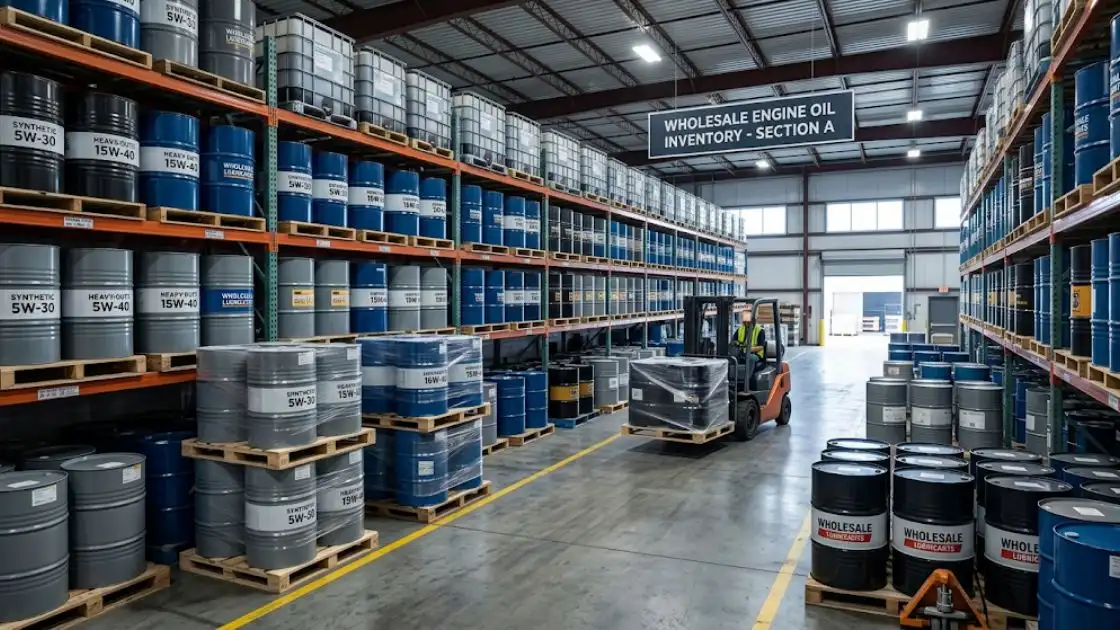
The most common killer of new wholesale businesses is a lack of sufficient working capital. The engine oil distribution business requires significant upfront investment. You aren't just buying a few cases; you are purchasing totes, drums, and bulk tanks.
Suppliers often demand fast payment terms from new distributors, while your B2B customers—such as large fleet operators or commercial garages—will expect net-30, net-60, or even net-90 payment terms.

This mismatch between your payables and receivables creates a massive cash flow gap. If you are undercapitalized, you won't be able to restock your inventory while waiting for your clients to pay their invoices.
Successful wholesalers secure adequate lines of credit, factoring services, or substantial cash reserves before they make their first sale. Failing to plan for this cash flow valley of death is a guaranteed recipe for failure.
The Financial Trap
Upfront bulk container purchases (drums/totes) combined with short supplier payment terms vs. B2B clients expecting Net-30 to Net-90 credit terms.
The Strategy
Secure credit lines, invoice factoring, or liquid capital reserves covering 60–90 days of operational inventory before making your first sales pitch.
2. Ignoring OEM Approvals and Specifications
Modern engines are incredibly complex and operate under immense stress. Because of this, Original Equipment Manufacturers (OEMs) like Mercedes-Benz, Volkswagen, Ford, and BMW issue strict specifications for the engine oils used in their vehicles.

A major mistake new wholesalers make is stocking generic, low-cost oils that lack official OEM approvals, assuming that "5W-30 is just 5W-30."
This is a dangerous misconception. If a garage uses an unapproved oil in a vehicle under warranty and the engine fails, the warranty may be voided, leading to catastrophic liability issues for the garage—and ultimately, for you.
B2B clients demand proof of OEM approvals to protect themselves and their customers. Stocking officially certified products builds trust and establishes your reputation as a reliable, quality-focused distributor.
Critical OEM Approvals Your Clients Require
3. Stocking Rare Viscosities and Dead Inventory
When starting out, it's tempting to offer a massive catalog to cater to every possible request. You might decide to stock rare, specialty viscosities or obscure racing oils to differentiate yourself. However, tying up your precious capital in slow-moving or dead inventory is a critical error.

The engine oil market operates on the Pareto principle: 80% of your sales will likely come from 20% of your product lines (such as popular 0W-20, 5W-30, and 5W-40 synthetic formulations). Stocking massive quantities of niche products takes up valuable warehouse space and suffocates your cash flow.
Start by aggressively stocking the fastest-moving, high-demand products in your specific region. Once your cash flow is stable, you can cautiously introduce specialty lines based on explicit, recurring customer requests.
The 80/20 Inventory Blueprint
Focus 80% of your working capital on high-velocity formulations (e.g. 0W-20, 5W-30, and 5W-40). Reserve rare niche viscosities for special pre-paid backorders. Learn more about the 80/20 inventory rule
4. Poor Logistics and Delivery Inconsistencies
In the B2B engine oil market, you are not just selling oil; you are selling uptime. When a transport fleet runs out of heavy-duty diesel engine oil, their trucks stop moving, and they lose money by the minute. If a busy repair shop runs out of bulk 5W-30 on a Friday afternoon, they have to turn away lucrative jobs.
Many new wholesalers rely on patchwork logistics, using inappropriate vehicles or failing to establish robust route planning. If you promise next-day delivery but consistently deliver three days late, your clients will quickly switch to a more reliable competitor.
Investing in reliable delivery vehicles equipped with liftgates, employing professional drivers with hazardous materials (HazMat) endorsements if necessary, and utilizing modern routing software are non-negotiable requirements for success. If you plan to source or sell across international borders, review our complete guide on how to ship engine oil internationally and understand what documents are needed to import engine oil smoothly.
Liftgate Delivery
Safe offloading of 208L drums without needing dedicated docks.
Route Optimization
Scheduled regional deliveries ensuring 100% on-time fulfillment.
HazMat Compliance
Certified drivers adhering to liquid transport regulations.

5. Ignoring Local Commercial Fleet Needs
While selling packaged quarts and 5-liter jugs to small independent garages is a good start, the real volume and steady revenue in engine oil wholesale come from commercial fleets. Heavy-duty trucks, construction equipment, and agricultural machinery consume oil by the drum or tote.
New wholesalers often focus too heavily on the passenger car motor oil (PCMO) segment and entirely ignore the heavy-duty engine oil (HDEO) market. Fleet managers value relationships, bulk pricing, and consistent availability above all else. Compare packaging configurations by checking our guide on drums vs. IBC totes for fleet engine oil and learn how to reduce fleet procurement costs.
Failing to analyze the local industrial and commercial landscape means leaving the most lucrative, high-volume contracts on the table. Take the time to understand local fleet operations, their specific API (American Petroleum Institute) requirements, and offer them bulk fluid management solutions.
PCMO (Passenger Cars)
1L & 5L bottles, retail garages, highly fragmented demand across dozens of OEM specs.
HDEO (Commercial Fleets)
208L drums & 1000L IBC totes, high-volume recurring orders, heavy-duty API CK-4 / ACEA E9 standards. Discover how to choose the right engine oil for commercial fleets
6. Inadequate Storage and Handling Infrastructure
Engine oil is messy, heavy, and subject to strict environmental regulations. Storing hundreds of drums or thousands of gallons of bulk oil requires specialized infrastructure. A common mistake is leasing a standard dry-goods warehouse without considering floor load capacities, spill containment requirements, or fire safety codes.
A minor forklift accident that punctures a drum can lead to an environmental hazard and massive cleanup fines if you lack proper spill pallets or berms. Furthermore, if you plan to deal in bulk oils, you need clean, dedicated tanks and pumping equipment to avoid cross-contamination. Learn more in our detailed operational guide on how to store engine oil properly in a warehouse and check engine oil shelf life standards.
Mixing a synthetic 0W-20 with a conventional 15W-40 due to poorly labeled or shared hoses will ruin the product and your reputation.
Storage Best Practices
- Secondary containment bunding and spill pallets for liquid control.
- Dedicated color-coded pumps and hoses for each oil grade to eliminate cross-contamination.
- Temperature-controlled environment avoiding moisture ingress and oxidation.
7. Focusing Solely on Price Rather Than Value-Added Services
Competing strictly on price is a race to the bottom that a new, independent wholesaler will almost always lose to massive national distributors. If your only selling point is being $0.10 cheaper per quart, your customers will leave you the moment someone offers them $0.11 cheaper.
Instead of just selling cheap oil, successful wholesalers sell solutions. Offer value-added services like used oil analysis programs, providing and installing bulk tanks and dispensing equipment at the customer's location (often tied to a supply contract), or offering technical training for their mechanics. Read our complete B2B engine oil wholesale guide to build sustainable value-add models and avoid hidden traps when buying engine oil in bulk.
By becoming an indispensable partner in their fluid management rather than just a vendor, you build immense customer loyalty that transcends minor price fluctuations.
Used Oil Sampling
Provide lab wear-metal analysis to extend fleet drain intervals.
Bulk Tank Placement
Supply bulk fluid storage equipment tied to multi-year supply contracts.
Technical Seminars
Train customer mechanics on low-SAPS oils and DPF protection.
8. Neglecting a B2B Digital Presence
There is a persistent myth that the automotive and industrial sectors are entirely "old school" and don't care about digital tools. This is completely false. Today's procurement managers and garage owners are tech-savvy. If they have to call you and wait on hold just to check if a specific oil is in stock, they will find a supplier with an online portal.

New wholesalers often fail to invest in a robust B2B e-commerce platform. A strong digital presence allows your clients to check live inventory, place orders 24/7, review their order history, and download essential documents like Safety Data Sheets (SDS) and Technical Data Sheets (TDS). Making it exceptionally easy to do business with you is a massive competitive advantage.
Essential B2B Portal Capabilities
9. Failing to Establish Strong Supplier Relationships
Your business is entirely dependent on the reliability of your upstream suppliers (blenders or major brands). Some new wholesalers jump from supplier to supplier, constantly chasing the lowest bulk price. This transactional approach prevents you from building strategic partnerships.
During times of supply chain disruption or base oil shortages, blenders will prioritize their loyal, consistent partners. Learn how to vet and establish long-term partnerships in our guide on how to find a reliable wholesale engine oil supplier.
Furthermore, strong relationships can lead to better marketing support, co-op advertising funds, and more flexible credit terms. Choose a reputable supplier, commit to their brand, and work collaboratively to grow market share in your region.
Strategic Supplier Partnership Advantages
Strategic distributors receive guaranteed stock allocation during global base oil shortages, co-op advertising budgets, technical lab backing, and extended credit facilities.
10. Lacking Technical Knowledge
Engine oil is no longer a simple commodity; it is a highly engineered chemical component of the engine. When a customer calls asking for an alternative to a back-ordered specific ACEA specification, or wondering if a certain low-SAPS (Sulphated Ash, Phosphorus, and Sulphur) oil is compatible with their diesel particulate filter (DPF), you must have the answer.
A lack of technical knowledge destroys credibility. If your sales team cannot confidently discuss the differences between API SP and API SN, or the importance of HTHS (High-Temperature High-Shear) viscosity, they will be dismissed by professional mechanics. Protect your supply chain and brand reputation by learning how to spot counterfeit engine oil and how to inspect engine oil quality before buying in bulk.
Key Technical Parameters Your Staff Must Master
Understanding API SP, CK-4, ACEA C3 low-SAPS standards.
High-Temperature High-Shear film strength under extreme heat.
Distinguishing Group I–III mineral/hydrocracked vs Group IV PAO synthetics.
Wholesale Engine Oil Execution Checklist
Before scaling your lubricant distribution business, verify these ten critical operational checkpoints:
Frequently Asked Questions
How much capital is needed to start an engine oil wholesale business?
Initial capital requirements vary, but distributors typically need sufficient liquidity to purchase bulk container inventory (drums/IBC totes) while supporting 30 to 90-day receivables for B2B fleet clients.
Why are OEM approvals more important than standard viscosity ratings?
Viscosity ratings like 5W-30 only describe flow characteristics. Official OEM approvals (e.g. MB 229.5 or VW 504.00) certify that the oil formula protects specific engine materials and satisfies warranty requirements.
What engine oil viscosities should a new wholesaler stock first?
Focus on high-demand passenger car synthetic oils like 0W-20, 5W-30, and 5W-40, alongside heavy-duty diesel 15W-40 or 10W-40 for commercial fleets. Learn more about engine oil viscosity
How can independent engine oil wholesalers compete with national distributors?
Rather than competing solely on price, focus on value-added services such as rapid emergency delivery, used oil lab analysis, bulk tank equipment installation, and dedicated technical training.
Final Verdict
Building a successful engine oil wholesale business requires far more than just buying low and selling high. It demands significant capital planning, flawless logistics, a deep understanding of complex technical specifications, and a commitment to providing real value to your B2B customers.
By acknowledging and actively avoiding these ten common mistakes, you can position your distribution company for sustainable growth, high customer retention, and long-term profitability in this demanding but rewarding industry.