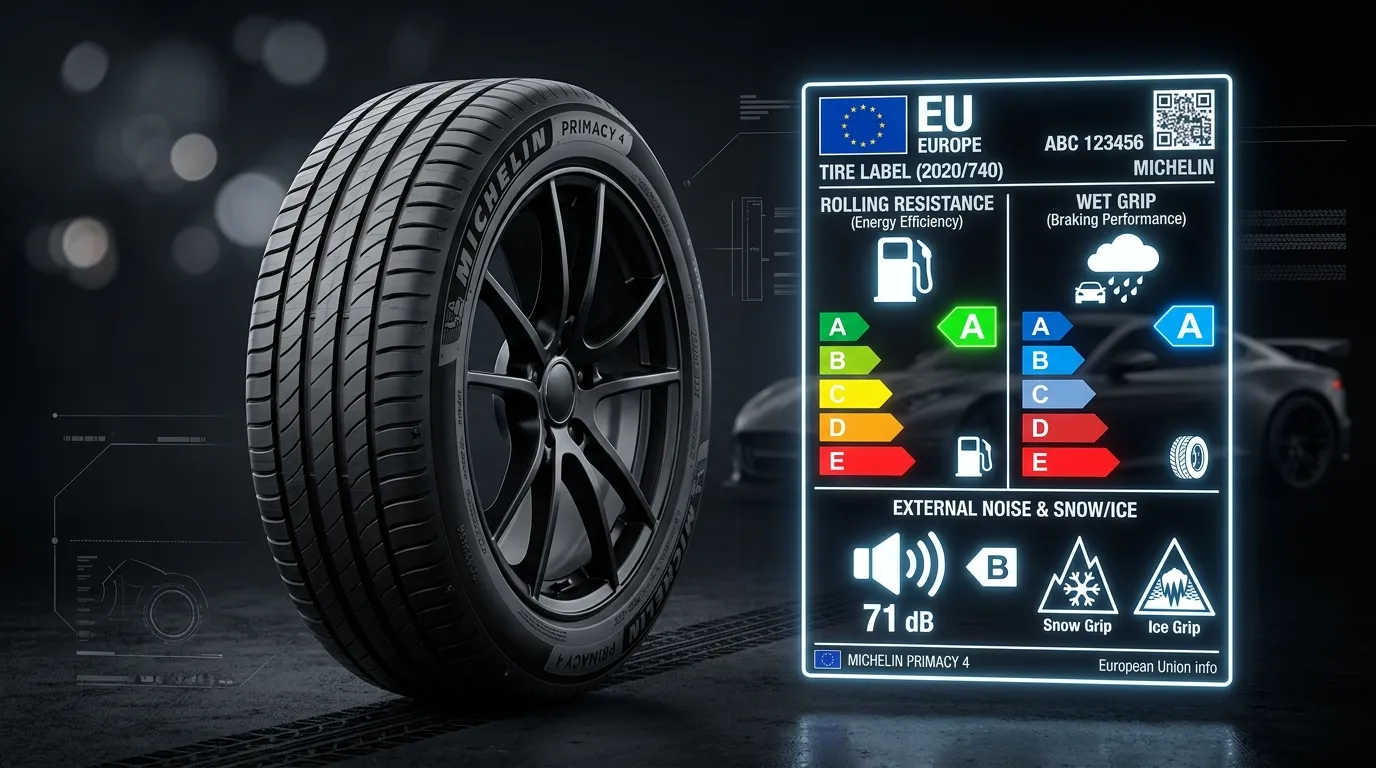
When shopping for tyres, you have likely seen a small sticker displaying coloured ratings from A to E, a speaker sound wave symbol, and, on certain tyres, snow or ice pictograms. This is the EU Tyre Label.
Introduced by the European Union to help drivers compare energy efficiency, wet safety, and environmental noise, the current standardized regulation (EU 2020/740) has applied across Europe since 1 May 2021.
The Golden Rule of the EU Tyre Label
The EU tyre label is a comparative tool — not an overall tyre quality score. A tyre with an "A" rating in wet grip is not automatically superior in dry cornering, aquaplaning resistance, or mileage life. Understanding what the label measures—and what it leaves out—is the key to making a smart buying decision.
How to Read the Label in 10 Seconds
What Information Is on the EU Tyre Label?
The European tyre label standardizes 5 critical performance metrics using strict laboratory and track testing procedures:
| Label Parameter | Scale / Metric | What It Measures | Why It Matters |
|---|---|---|---|
| Rolling Resistance | A to E | Energy loss through tyre deformation per km | Directly influences fuel economy & EV battery range |
| Wet Grip | A to E | Straight-line braking distance on wet asphalt | Crucial active safety parameter in emergencies |
| External Noise | A, B, C & dB | Pass-by roadside rolling sound level in dB(A) | Reduces urban environmental noise pollution |
| Snow Pictogram | 3PMSF (Yes/No) | Certified snow traction test (UNECE R117) | Legally required for German/EU winter driving |
| Ice Pictogram | ISO 19453 (Yes/No) | Pure ice braking distance for Nordic soft tyres | Specialist Arctic and Scandinavian winter safety |
Swipe horizontally on mobile to view the full specification table.
Rolling Resistance: Energy Efficiency & EV Range
Rolling resistance describes the mechanical energy a tyre absorbs and dissipates as heat while rolling under the weight of the vehicle. Every revolution compresses and flexes the rubber tread and internal carcass.
Combustion Cars (Petrol & Diesel)
Tyres account for up to 20% to 30% of a vehicle's total fuel consumption. Choosing an A-rated tyre over an E-rated tyre can save approximately 0.5 litres of fuel per 100 km, amounting to substantial financial savings over a 40,000 km tyre lifespan.
Electric Vehicles (EVs)
In electric vehicles, rolling resistance directly influences single-charge range. An A-rated tyre can boost overall EV battery range by up to 7% to 10% compared to lower-rated tyres, reducing charging frequency during highway driving.
Does an A-Rated Tyre Always Guarantee Massive Fuel Savings?
No. The label measures rolling resistance under standardized drum test conditions. Real-world energy consumption also depends on driving style, tyre inflation pressure, vehicle payload, road topography, ambient temperature, and aerodynamic drag.
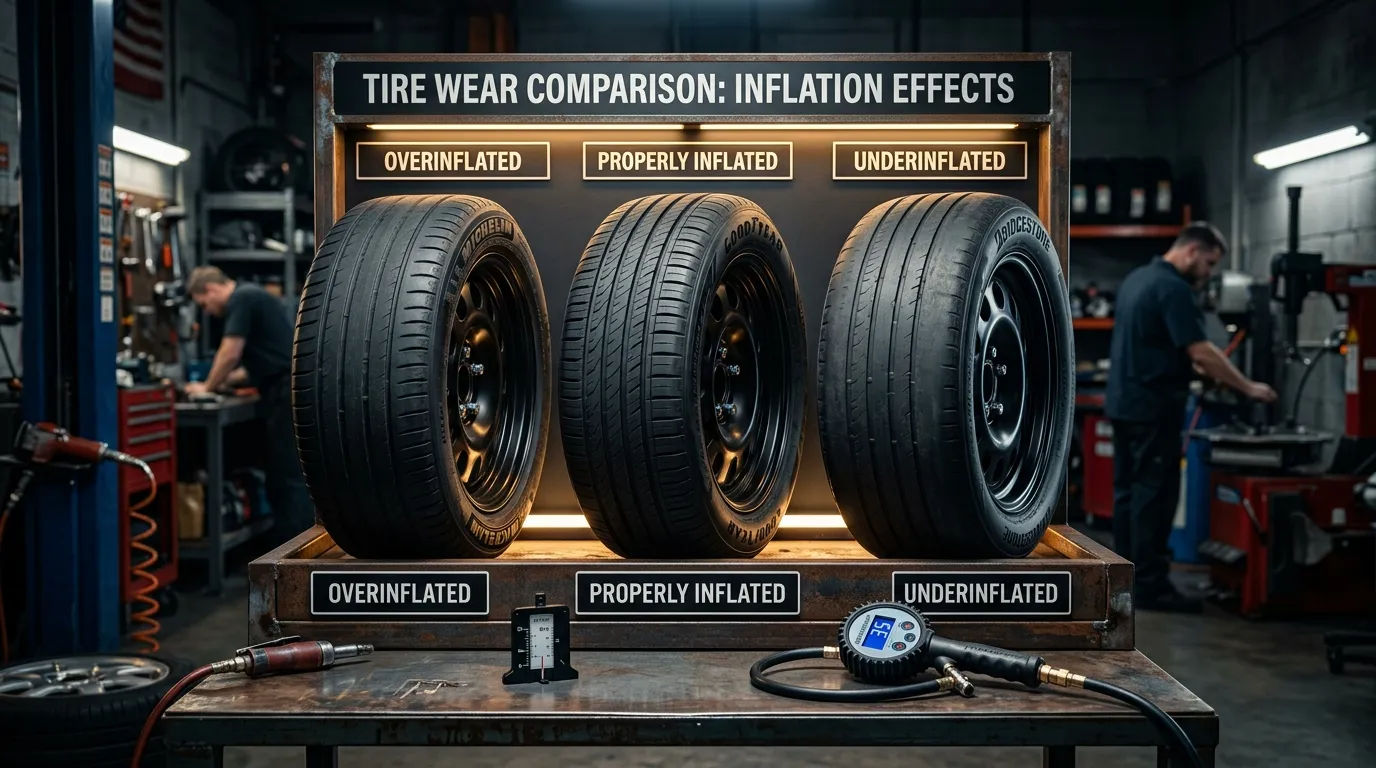
💡 Tyre Pressure Tip: Driving on tyres underinflated by just 0.5 bar increases rolling resistance by up to 10% and causes rapid shoulder wear. Always follow the placard on your car's B-pillar.
Wet Grip: The Most Critical Safety Rating
For everyday motorists, the Wet Grip rating is the single most important safety metric on the label. It evaluates straight-line emergency braking distance on wet asphalt from 80 km/h to 20 km/h.
Stopping Distance from 80 km/h on Wet Roads
According to European Commission data, each letter class difference represents roughly 3 to 6 metres of additional stopping distance:Does Wet Grip Tell You Everything About Wet Performance?
No. This is one of the most common misconceptions. The wet grip rating tests straight-line braking on wet asphalt. It does not measure:
External Rolling Noise (Decibels & Classes)
The third major rating is External Rolling Noise. It measures the acoustic noise produced by the tyre as the car drives past an external roadside microphone at 80 km/h.
Quiet Exterior
At least 3 dB below the statutory EU limit
Standard Exterior
Complies with statutory EU noise threshold
Higher Noise
Meets older limit, rarely populated today
The Catch: External Noise vs Interior Cabin Noise
A 68 dB tyre is not guaranteed to sound quieter inside your car than a 71 dB tyre. The EU label measures roadside pass-by noise. Cabin comfort is governed by tyre cavity resonance, chassis acoustic insulation, suspension bushings, rim diameter, and wheel arch dampening.The Engineering Trade-Off: Why No Tyre Has "A" in Everything
Tyre design involves the fundamental "Magic Triangle" of tyre physics: balancing Grip, Rolling Resistance, and Tread Longevity. Maximizing one attribute often requires trade-offs in another:
Eco-Focused
- Rolling Resistance: A
- Wet Grip: C
- Noise: Class B (70 dB)
Safety & Performance
- Rolling Resistance: B
- Wet Grip: A
- Noise: Class B (69 dB)
Comfort & City
- Rolling Resistance: C
- Wet Grip: A
- Noise: Class A (68 dB)
What Is the QR Code on the EU Tyre Label? (EPREL)
Every modern EU tyre label features a QR code in the top right corner. Scanning this code with your smartphone camera connects directly to the European Product Registry for Energy Labelling (EPREL) database.
What Information Can You Verify on EPREL?
6 Common Mistakes When Reading the EU Tyre Label
Avoid these widespread traps when analyzing tyre stickers:
- Choosing the Cheapest Tyre With an "A" Rating: An "A" in one isolated parameter does not guarantee quality in unmeasured areas like dry grip, durability, or aquaplaning.
- Assuming "A" Means a "Premium" Tyre: The label tests standardized metrics, not overall compound quality, casing durability, or steering precision.
- Focusing Solely on Fuel Economy Over Wet Braking: Saving a fraction of a litre of fuel is not worth sacrificing emergency stopping distance in heavy rain.
- Assuming Low dB Means a Silent Car Cabin: The label records external pass-by sound, not the acoustic frequencies transmitted into your car's passenger cabin.
- Ignoring the 3PMSF Snow Symbol on All-Season Tyres: If driving in winter conditions in Germany or Europe, always verify the 3PMSF snowflake pictogram on the label.
- Treating the Label as a Complete Test: Always cross-reference the label with independent magazine tyre tests (ADAC, AutoBild, Tyre Reviews).
Buyer's 4-Step Strategy When Evaluating Tyres
- Vehicle Compatibility: Verify correct dimensions (e.g. 195/65 R15), load rating (91/95 XL), and speed index (H/V).
- EU Label Baseline: Filter by Wet Grip (target Class A or B) and Rolling Resistance (A-C).
- Winter Markings:Check for 3PMSF snowflake if purchasing all-season or winter tyres for European roads.
- Independent Tests: Consult comparative tests for dry handling, aquaplaning resistance, and tread mileage life.
Frequently Asked Questions
What is the EU tyre label?
The EU tyre label is a standardized label that provides information about tyre performance, including rolling resistance, wet grip, and external rolling noise. The current updated version has applied since May 2021.
What does an A rating mean on a tyre?
A is the highest classification for that parameter on the label scale. For rolling resistance and wet grip, the scale runs from A (best) to E (lowest).
Is A wet grip better than B?
Yes. Class A indicates shorter tested braking distances on wet asphalt compared to Class B—typically representing a 3 to 6 metre difference in stopping distance from 80 km/h.
What does rolling resistance mean?
It describes the mechanical resistance created as the tyre deforms upon rolling. Lower rolling resistance requires less engine or battery energy to move the car forward.
Does lower rolling resistance save fuel?
Yes, it contributes directly to lower fuel and energy consumption over the tyre's life. However, actual consumption is also influenced by driving style, tyre pressure, vehicle weight, and road conditions.
What does the tyre noise rating mean?
It measures external pass-by rolling noise produced outside the vehicle in decibels (dB(A)) and classes A to C. It does not measure the internal cabin noise experienced by the driver.
Is 68 dB quieter than 72 dB?
Yes. A 3 dB difference represents roughly a doubling of external acoustic sound energy. A 68 dB tyre emits significantly less roadside noise than a 72 dB tyre.
What does the snowflake symbol mean?
The 3PMSF Alpine symbol (mountain with snowflake) indicates that the tyre has passed certified testing on compacted snow under UNECE Regulation 117.
Does the EU label show tyre mileage or tread life?
No. Tread life and tyre longevity are not currently rated on the EU consumer label. Consult independent test publications for wear performance.
Does the EU label show dry grip?
No. Dry braking, dry handling, and aquaplaning resistance in standing water are not shown on the label.
Does the label tell me how good a tyre is on ice?
The label can show a separate Ice Grip pictogram for qualifying Nordic passenger tyres, but this is distinct from the 3PMSF snow symbol.
Should I always choose an A-rated tyre?
No. Choose the combination of characteristics that best matches your vehicle type, driving style, climate, and safety priorities.
Final Verdict
The EU tyre label is one of the most practical tools available for comparing tyres—provided you use it with the right perspective:
The Simple Decision Guide:
- Rain & Everyday Safety? → Target Wet Grip Class A or B
- Fuel Economy or EV Range? → Target Rolling Resistance Class A or B
- Low Roadside Noise? → Compare Noise Class & dB Rating
- Winter Safety? → Verify the 3PMSF Alpine Symbol
- Best Overall Choice? → Cross-reference with independent professional tyre tests
By looking beyond isolated grades and balancing safety, efficiency, and real-world performance, you can turn the EU tyre label from a confusing sticker into a powerful buying tool.
Source High-Performance Tyres with REIFTEIL
Looking for container-load wholesale pricing on Class-A wet grip and eco-efficient PCR, SUV, and TBR tyres from premium and value brands? Connect with our technical export team today.