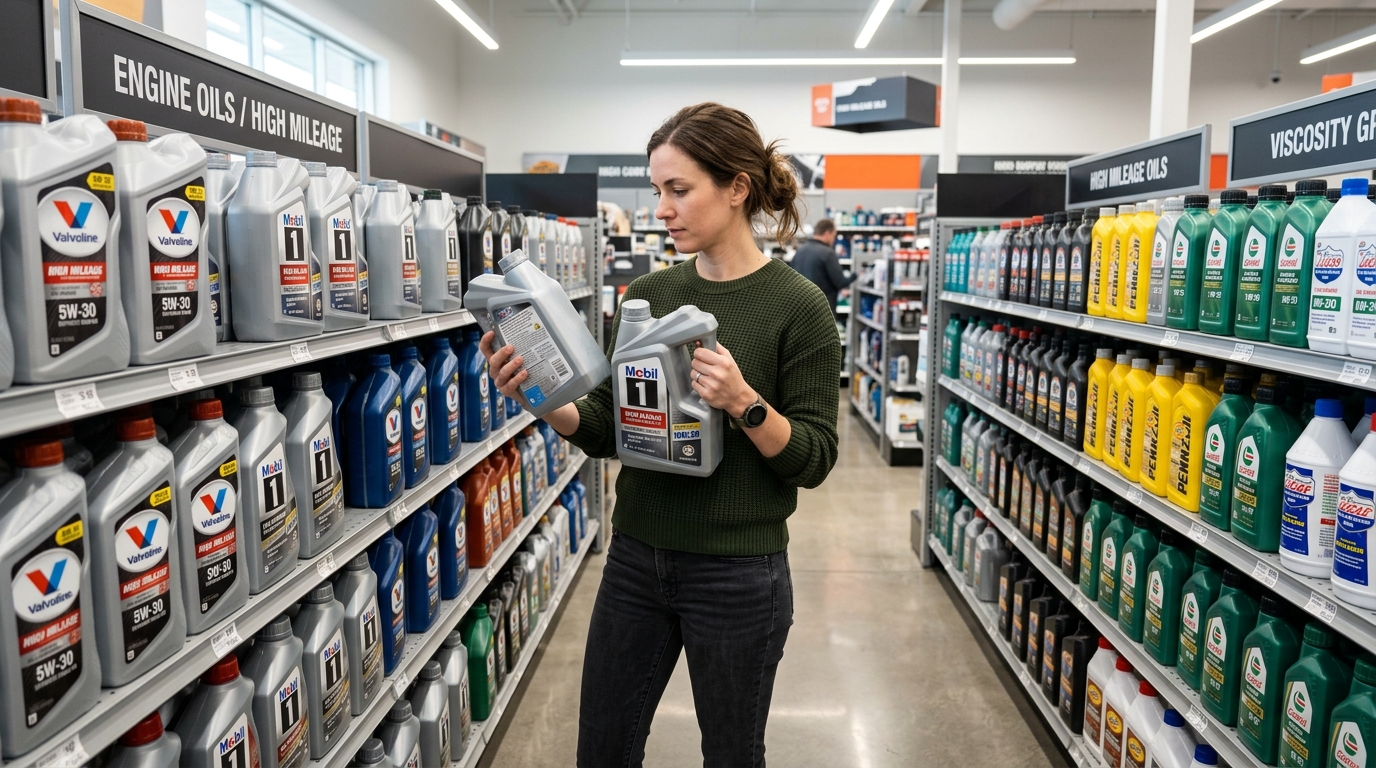
For workshops, fleet operators, distributors and lubricant wholesalers, understanding engine oil shelf life is important for two reasons: protecting engine performance and protecting inventory value.
Proper storage can help prevent contamination and deterioration, while good inventory management ensures older stock is used or sold before newer stock. In this guide, we'll explain how long engine oil can be stored, what causes lubricant degradation, how to inspect older oil, and how businesses should manage bulk and packaged lubricant inventory.
Quick answer: There is no single shelf-life period that applies to every engine oil. Always use the lubricant manufacturer's stated storage-life recommendation as the primary reference. Properly sealed containers stored under suitable conditions generally provide much better protection against contamination and deterioration than opened or poorly stored products.

Quick Summary: Lubricant Storage & Inventory Rules
Maximizing engine oil storage life requires prioritizing official manufacturer recommendations, strictly controlling indoor storage environments, enforcing proper sealed container protocols, and rotating stock using structured FIFO/FEFO procedures.
Guidance
Manufacturer First
Formulation
Synthetic vs Mineral
Risks
Heat & Water
Opened Oil
Reseal & Label
Rotation
FIFO / FEFO
QA Test
Visual & Batch Code
Following proper lubricant storage guidelines protects engine performance, prevents costly equipment claims, and preserves valuable wholesale inventory investment.
Table of Contents
- 1 1. How Long Does Unopened Engine Oil Last?
- 2 2. Does Engine Oil Expire?
- 3 3. Does Synthetic Oil Last Longer Than Mineral Oil?
- 4 4. What Causes Engine Oil to Deteriorate During Storage?
- 5 5. Can Engine Oil Separate During Storage?
- 6 6. How to Tell If Stored Engine Oil Is Still Usable
- 7 7. Can You Use Old Engine Oil?
- 8 8. How Long Does Opened Engine Oil Last?
- 9 9. How to Store Engine Oil Correctly
- 10 10. How Should Engine Oil Drums Be Stored?
- 11 11. How Should Engine Oil Be Stored in IBCs?
- 12 12. Bulk Storage & Cross-Contamination
- 13 13. Inventory Management for Wholesalers
- 14 14. FIFO vs FEFO for Engine Oil
- 15 15. How to Read Engine Oil Date Codes
- 16 16. Engine Oil Storage for Workshops
- 17 17. Engine Oil Storage for Commercial Fleets
- 18 18. Common Engine Oil Storage Mistakes
- 19 19. Engine Oil Storage Checklist
- 20 20. What to Do With Very Old Engine Oil
- 21 21. Does Proper Storage Really Matter?
- 22 22. Final Summary & Key Takeaways
- FAQ Frequently Asked Questions
How Long Does Unopened Engine Oil Last?
The shelf life of unopened engine oil depends on the specific product and manufacturer's recommendation. Some lubricant manufacturers specify a defined storage period for their products, while others provide storage recommendations based on the formulation and packaging.
For this reason, it is better to avoid treating a fixed number of years as a universal expiration date. Instead, check:
Key Storage Evaluation Factors
Why does this matter?
Two engine oils can have the same viscosity, such as 5W-30, but have completely different:
Their storage characteristics may therefore differ. The manufacturer's recommendation should always take priority over a generic shelf-life rule. Learn more in our guide to how to store engine oil properly in a warehouse.
Does Engine Oil Expire?
Engine oil does not necessarily "expire" on a single universal date in the way food products do. Instead, lubricant quality can gradually change depending on:
Storage Temperature
Thermal stress accelerates chemical degradation.
Moisture & Air Exposure
Causes oxidation and additive breakdown.
Contamination & Packaging
Dust, dirt, or compromised seals lower quality.
Formulation & Duration
Additive package stability over time.
An unopened container that has been stored correctly may remain in suitable condition for a considerable period. However, older stock should be evaluated against the manufacturer's storage-life recommendation before it is sold or used.
Important Distinction: Manufacturing Date vs Expiration Date
Manufacturing date is not necessarily an expiration date. Lubricant manufacturers may print:
The format varies between manufacturers. If you cannot determine the age or identity of a lubricant from its packaging, contact the supplier or manufacturer rather than guessing.
Does Synthetic Oil Last Longer Than Mineral Oil?
Not necessarily. Synthetic and mineral-based engine oils can both remain stable during storage when they are properly formulated, packaged and stored under appropriate conditions.
Synthetic base oils can provide advantages in certain areas of engine performance, but shelf life is not determined by the base oil alone. The overall formulation also includes an additive system designed to provide essential properties:
False Assumption 1
"Synthetic oil has an unlimited shelf life."
False — Additive package degradation still occurs over
time.
False Assumption 2
"Mineral oil automatically has a short shelf life."
False — High-quality sealed mineral oil remains stable
for years.
The stability of the complete formulation matters. For inventory management, follow the product manufacturer's storage recommendation rather than choosing a storage period based solely on whether the oil is synthetic or mineral. Read our breakdown on synthetic vs. semi-synthetic vs. mineral oil for deeper performance context.
What Causes Engine Oil to Deteriorate During Storage?
Several critical environmental and physical factors can affect lubricant condition over time.
1. Temperature
Extreme temperatures can affect both the lubricant and its packaging. Prolonged high temperatures can accelerate chemical degradation, while very low temperatures can affect oil flow and may influence the behaviour of certain formulations. The best approach is to follow the manufacturer's specified storage conditions and avoid prolonged exposure to extreme heat or cold.
2. Moisture
Water contamination is one of the most important concerns when storing lubricants. Moisture can enter through damaged seals, poorly closed containers, condensation, damaged drum fittings, outdoor storage, or humid environments.
Water can negatively affect lubricant performance and contribute to corrosion, additive depletion and other problems once the oil is used. For this reason, lubricant containers should be kept sealed and protected from rain and excessive humidity.
3. Contamination
Dust, dirt, rust particles and other foreign materials can contaminate engine oil. This is particularly important for open containers, partially used drums, bulk storage tanks, and workshop dispensing systems. A clean storage environment is therefore essential.
4. Direct Sunlight
Prolonged exposure to direct sunlight can heat lubricant containers and increase the temperature of the product. Where possible, store engine oil indoors or under suitable protection from direct sunlight.
5. Temperature Fluctuations
Repeated heating and cooling can increase the risk of condensation and moisture entering containers or storage systems. For bulk lubricant storage, controlling the storage environment is particularly important because large volumes can remain in storage for extended periods.
Can Engine Oil Separate During Storage?
Engine oil is formulated to remain a stable mixture during its intended storage life. However, significant changes in appearance can be a warning sign.
Potential Separation & Degradation Signs
Not every change in appearance means the oil is unusable, and not every formulation looks identical. For example, different oils can naturally have different colours and appearances.
What should you do if you see separation?
Don't automatically assume that shaking or stirring the container makes the product suitable for use. Instead:
- Stop dispensing the product immediately.
- Check the manufacturer's storage guidance.
- Verify the product and batch information.
- Inspect the container for damage or contamination.
- Contact the supplier or manufacturer if the condition is uncertain.
For commercial inventory, questionable stock should be quarantined until its suitability has been established.
How to Tell If Stored Engine Oil Is Still Usable
Before using older lubricant stock, conduct a structured inspection of both the product and the container.
1. Check Container
- • Look for leaks & damaged caps
- • Check for broken seals & cracks
- • Inspect for severe dents & rust
- • Check swelling & unreadable ID
2. Check Oil Fluid
- • Check cloudiness & moisture
- • Look for visible particles
- • Check significant sediment
- • Inspect for gel-like separation
3. Check History
- • Duration of storage?
- • Was container ever opened?
- • Stored indoors or outdoors?
- • Exposed to extreme heat/freezing?
Note on oil color: Do not judge an oil solely by its color. Oil color varies naturally between formulations and additive packages and is not, by itself, a reliable indication of lubricant quality. Learn how to verify stock before bulk buying in our guide on how to check engine oil quality before buying in bulk.
Can You Use Old Engine Oil?
Potentially, but age alone does not determine whether stored oil is suitable for use. Before using older stock, systematically verify these 5 critical checkpoints:
Product Identity
Confirm brand, viscosity, API/ACEA & OEM approvals.
Storage Rec.
Check recommended storage period compliance.
Container State
Ensure container remains fully sealed & intact.
Environment
Verify no heat, freezing, or moisture exposure.
Fluid Quality
Confirm absence of separation or contamination.
If the product is outside the manufacturer's recommended storage period or its condition is uncertain, contact the manufacturer or supplier before using it. For commercial businesses, this is especially important because using questionable lubricant can create much greater costs than simply replacing an old container.
How Long Does Opened Engine Oil Last?
There is no universal "one-year rule" that applies to every opened engine oil. Once a container is opened, however, the product is far more exposed to:
Best Practices for Opened Containers
- Close container immediately after dispensing.
- Keep cap, bung, or lid completely clean.
- Store containers indoors where practical.
- Keep away from water and workshop dust.
- Do not leave dispensing funnels exposed.
- Clearly label partially used containers.
For large drums and bulk systems, use clean and suitable dispensing equipment and prevent cross-contamination between different lubricants.
How to Store Engine Oil Correctly
Good storage is one of the simplest ways to protect lubricant quality and prevent inventory loss.
1. Clean, Dry Environment
Keep engine oil indoors in a dry area. Avoid standing water, high humidity, dust, chemical contamination, and direct sunlight.
2. Protect From Temperature Extremes
Avoid prolonged exposure to heat, freezing conditions, direct sunlight, and rapid temperature changes. A stable indoor environment is ideal.
3. Keep Properly Sealed
Reseal containers immediately after dispensing to eliminate entry pathways for moisture, dust, dirt, and foreign particles.
4. Keep Containers Off the Floor
Use pallets or racking to protect packages from standing water, concrete moisture, dirt, forklift traffic, and accidental damage.
How Should Engine Oil Drums Be Stored?
Drums require particular attention because they can remain in storage for long periods.
Indoor Storage (Preferable)
- Store under a protective roof.
- Keep away from direct solar radiation.
- Place on stable pallets or racks.
- Protect from rain and chemical contamination.
If Stored Outdoors (Precautions)
- Protect from direct weather exposure.
- Position drums horizontally (bungs at 3 & 9 o'clock).
- Prevent rainwater pooling around drum caps.
- Transition to indoor storage as soon as possible.
For comprehensive bulk comparison, check our detailed guide on bulk engine oil for fleets: drums vs IBC.
How Should Engine Oil Be Stored in IBCs?
Intermediate Bulk Containers (IBCs) are commonly used for larger-volume lubricant distribution. When storing engine oil in IBCs:
For high-volume operations, the storage system should be designed around the specific lubricant products being handled.
Bulk Engine Oil Storage: Avoid Cross-Contamination
Bulk storage requires even greater attention to product identification and cleanliness. Different lubricants should not simply be transferred into the same tank because they have similar names or viscosities.
Example: 5W-30 Oils Are Not Universal
Two 5W-30 oils are not necessarily the same product. They can differ significantly across:
API's bulk lubricant handling guidance recommends separate storage for different brands or grades and warns that different additive systems can react adversely when products are commingled.
Best Practice: Mandatory Bulk Identification Parameters
Maintain clear identification for every bulk product tank and tote:
If a tank is being changed from one lubricant to another, follow an appropriate cleaning and changeover
procedure rather than assuming the products can simply be mixed. Read about common traps in our guide to
Engine Oil Inventory Management for Wholesalers
For lubricant distributors and B2B suppliers, storage is only one part of the problem. You also need to manage inventory age. A comprehensive lubricant inventory system should track the following parameters:
| Information Parameter | Inventory Management Purpose |
|---|---|
| Product Name | Identifies lubricant formula and branding |
| Viscosity Grade | Prevents product mix-ups (e.g. 5W-30 vs 5W-40) |
| API / ACEA Specification | Confirms vehicle application compatibility |
| OEM Approvals | Confirms manufacturer warranty compliance |
| Batch / Lot Number | Provides full quality control traceability |
| Manufacturing Information | Helps determine exact product age |
| Receiving Date | Facilitates stock rotation schedule |
| Stock Quantity | Controls warehouse stock levels and reorders |
| Storage Location | Prevents picking errors in large warehouses |
| Recommended Storage Life | Helps prioritize stock for immediate dispatch |
This becomes particularly important when you carry many different lubricant products. Learn more strategies in our guide on engine oil FIFO: how to manage lubricant inventory.
FIFO vs FEFO for Engine Oil
Two highly effective inventory-management methods for lubricant distributors are:
First In, First Out
The oldest received stock is used or sold first. Ideal for standard lubricant lines where manufacturer guidance relies on receiving dates.
First Expired, First Out
Stock with the nearest manufacturer-recommended expiry or use-by date is prioritized first. Especially useful for specialty products with strict storage limits.
Practical Warehouse Approach
Organize warehouse stock so that older or earlier-dated products are easy to identify and access. This reduces the risk of having lubricant sit forgotten at the back of the warehouse for years.
How to Read Engine Oil Date Codes
Don't assume that every number printed on an oil container represents an expiration date. Manufacturers may use different systems for manufacturing date, batch number, production code, lot identification, or internal traceability.
6 Steps Before Making Decisions About Old Stock
- Identify the manufacturer.
- Identify the exact product name and specification.
- Locate the printed batch/date code on the bottle, drum, or tote.
- Check the manufacturer's official technical documentation.
- Confirm the recommended storage life period.
- Contact the manufacturer or supplier if the code cannot be interpreted confidently.
Rule of thumb: Never invent an expiration date from an unfamiliar batch code.
Engine Oil Storage for Workshops
Workshops often face different challenges from large distributors. They manage multiple viscosities, several brands, partially used containers, small bottles, drums, and varying OEM specifications.
Recommended Workshop Organization System
Separate products systematically by:
Example (5W-30): Group 5W-30 stock, then distinguish by ACEA/OEM specification, passenger-car application, commercial-vehicle application, or other approved applications. Do not place products together simply because they share the same viscosity rating. Read our full business guide on choosing the right engine oil.
Engine Oil Storage for Commercial Fleets
Fleet operators should monitor oil inventory as part of their broader vehicle maintenance system. Maintain precise records for:
Diagnostic Value of Inventory Tracking
Unexpected increases in oil consumption can reveal fluid leaks, mechanical wear, maintenance issues, or incorrect stock recording. Inventory management provides operational value beyond knowing warehouse stock levels. Check out our guide on how to choose engine oil for commercial fleets.
Common Engine Oil Storage Mistakes
Avoid these eight common errors to preserve lubricant quality and avoid costly losses:
Assuming a Universal 5-Year Shelf Life
There is no single universal shelf-life period. Always follow specific manufacturer recommendations.
Treating Manufacture Date as Expiration
A printed date or batch code does not mean automatic expiration on that date. Verify what the code signifies.
Storing Drums Outdoors Indefinitely
Weather exposure increases container degradation and water contamination risk. Use indoor storage.
Leaving Opened Containers Unsealed
Open containers are vulnerable to humidity and airborne dust. Reseal immediately after dispensing.
Mixing Different Lubricants
Matching viscosity does not mean identical chemistry. Do not commingle without compatibility confirmation.
Using Color as the Only Quality Test
Oil color varies naturally between formulations. Color alone does not prove lubricant degradation.
Ignoring Damaged Packaging
A damaged container indicates potential contamination or unsuitable storage conditions. Inspect before use.
Keeping Old Inventory Hidden
Without proper stock rotation, older stock sits forgotten. Enforce strict FIFO/FEFO protocols.
Engine Oil Storage Checklist
Before placing engine oil into long-term storage, verify this 16-point quality assurance checklist:
What Should You Do With Very Old Engine Oil?
If you discover lubricant that has been sitting in storage for many years, don't immediately assume that it is usable—or that it must automatically be thrown away. First establish:
What product is it?
Identify the exact lubricant brand, viscosity grade, and specification.
When was it manufactured?
Use the manufacturer's batch/date information to calculate age.
How was it stored?
Determine if stored indoors, outdoors, exposed to heat, freezing, moisture, opened or unopened.
What condition is the container in?
Look for leaks, corrosion, damaged closures, denting, or swelling.
What condition is the oil in?
Inspect for visible contamination, sediment, or abnormal phase separation.
What does the manufacturer say?
If outside recommended storage period or condition is uncertain, contact the manufacturer or supplier before using or selling it.
For commercial inventory, questionable products should be isolated in quarantine until their status is officially established.
Does Proper Storage Really Matter?
Yes. The purpose of good lubricant storage isn't simply to make oil "last longer." It helps preserve:
For a workshop with a few bottles, poor storage might result in a small loss. For a distributor holding thousands of litres of lubricant, poor inventory management can turn into a significant financial problem.
That is why lubricant storage should be treated as part of quality control and inventory management, not simply warehouse housekeeping.
Final Answer: How Long Does Engine Oil Last?
There is no single shelf-life number that applies to every engine oil. The correct storage life depends on the specific lubricant, manufacturer recommendation, packaging and storage conditions.
Summary Best Practices to Maximize Useful Life
- Follow the manufacturer's storage recommendation.
- Keep containers properly sealed.
- Protect oil from moisture and contamination.
- Avoid prolonged exposure to extreme heat and cold.
- Avoid direct sunlight and temperature swings.
- Track batches and receiving dates.
- Use FIFO or FEFO where appropriate.
- Inspect older stock before use or sale.
- Do not assume a manufacturing code is an expiration date.
- Do not mix unidentified or incompatible lubricants.
For wholesalers and distributors, good storage practices protect more than the lubricant itself—they protect inventory value, product quality and customer trust.
Need Wholesale Engine Oil?
REIFTEIL supplies engine oils and lubricants for wholesalers, distributors, workshops and commercial buyers.
If you're purchasing engine oil in bulk, provide:
We can help identify suitable wholesale lubricant options based on your application and purchasing requirements. Also explore our complete B2B guide to buying engine oil wholesale.
Frequently Asked Questions
How long does unopened engine oil last?
There is no universal shelf-life period for all engine oils. The manufacturer's stated storage-life recommendation should be used as the primary reference.
Does engine oil expire?
Engine oil can deteriorate over time, but there is no universal expiration date that applies to every product. Storage conditions, formulation, packaging and manufacturer guidance all matter.
Does synthetic engine oil last longer in storage?
Not necessarily. Synthetic base oils can provide certain performance advantages, but shelf stability depends on the complete formulation, additive system, packaging and storage conditions.
Can I use engine oil that has been stored for several years?
Potentially. Check the manufacturer's storage recommendation, product age, storage history, container condition and oil condition before use.
How long does opened engine oil last?
There is no universal period that applies to every opened lubricant. Once opened, the product has greater exposure to moisture and contamination, so it should be resealed immediately and managed according to the manufacturer's guidance.
Can engine oil go bad from heat?
Prolonged exposure to excessive heat can accelerate lubricant degradation and can also affect packaging. Store oil according to the manufacturer's recommended conditions and protect it from prolonged extreme temperatures.
Can engine oil freeze?
Low temperatures can significantly increase oil viscosity and may affect certain formulations. Follow the manufacturer's storage recommendations and avoid exposing lubricant inventory to unsuitable freezing conditions.
Should engine oil be stored indoors?
Indoor storage is generally preferable for long-term inventory because it provides better protection from sunlight, rain, temperature extremes and contamination.
Can I mix different engine oils?
Do not assume that different oils are compatible simply because they have the same viscosity. Differences in specifications, approvals and additive systems can make products unsuitable for commingling. Follow the relevant manufacturer guidance.
What is FIFO in lubricant inventory management?
FIFO means First In, First Out. The oldest suitable stock is used or sold first, helping prevent older inventory from remaining in storage unnecessarily.
What is FEFO?
FEFO means First Expired, First Out. Products with the nearest applicable expiry or recommended-use date are prioritized first.
How should engine oil drums be stored?
Keep drums in a clean, dry, protected environment whenever possible. Protect them from direct sunlight, rain, moisture and extreme temperatures, and inspect closures and containers regularly.
How should I store engine oil in an IBC?
Keep the IBC sealed, clean and protected from direct sunlight, moisture and extreme temperatures. Use compatible dispensing equipment and maintain clear product and batch identification.
What should I do if old engine oil looks cloudy or has visible sediment?
Do not automatically use it. Stop dispensing the product, verify the product and batch information, inspect the container and consult the manufacturer or supplier if the condition is uncertain.