In automotive supply chain management, discovering multiple part numbers for the same mechanical component is standard practice. Automakers update engineering indexes, share components across subsidiary brands, and multi-source production across competing factories.
This guide analyzes why one auto part carries multiple numbers and explains how to map supersessions in your inventory software. Explore our unified catalog on the REIFTEIL Wholesale Auto Spare Parts Portal.
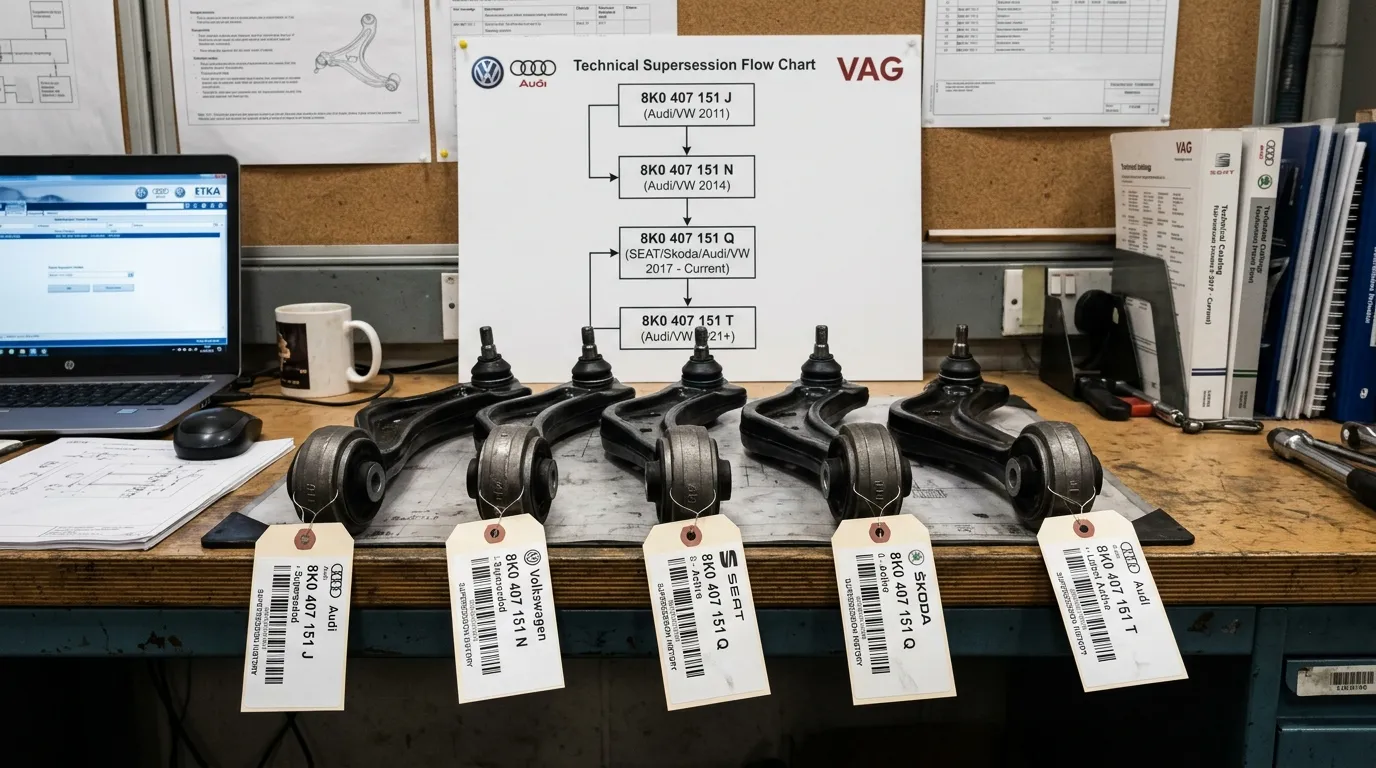
Supersession Flow Chart: A VAG front suspension control arm showing four historical OE index revisions (J -> N -> Q -> T) across Audi, VW, SEAT, and Skoda models.
Quick Summary: The 4 Causes of Multiple Part Numbers
Factory design updates fix warranty issues or upgrade materials (e.g. VAG 8K0 407 151 J → T).
Shared modular platforms (VAG MQB, BMW UKL) assign unique brand OE numbers to identical physical components.
Automakers contract dual suppliers (e.g. Bosch & Valeo) to prevent assembly line shortages, generating multiple MPNs.
Regional emissions, lighting, or crash-test specs assign unique OE numbers for USDM vs EUDM market vehicles.
The Confusion of Multiple Part Numbers in Auto Logistics
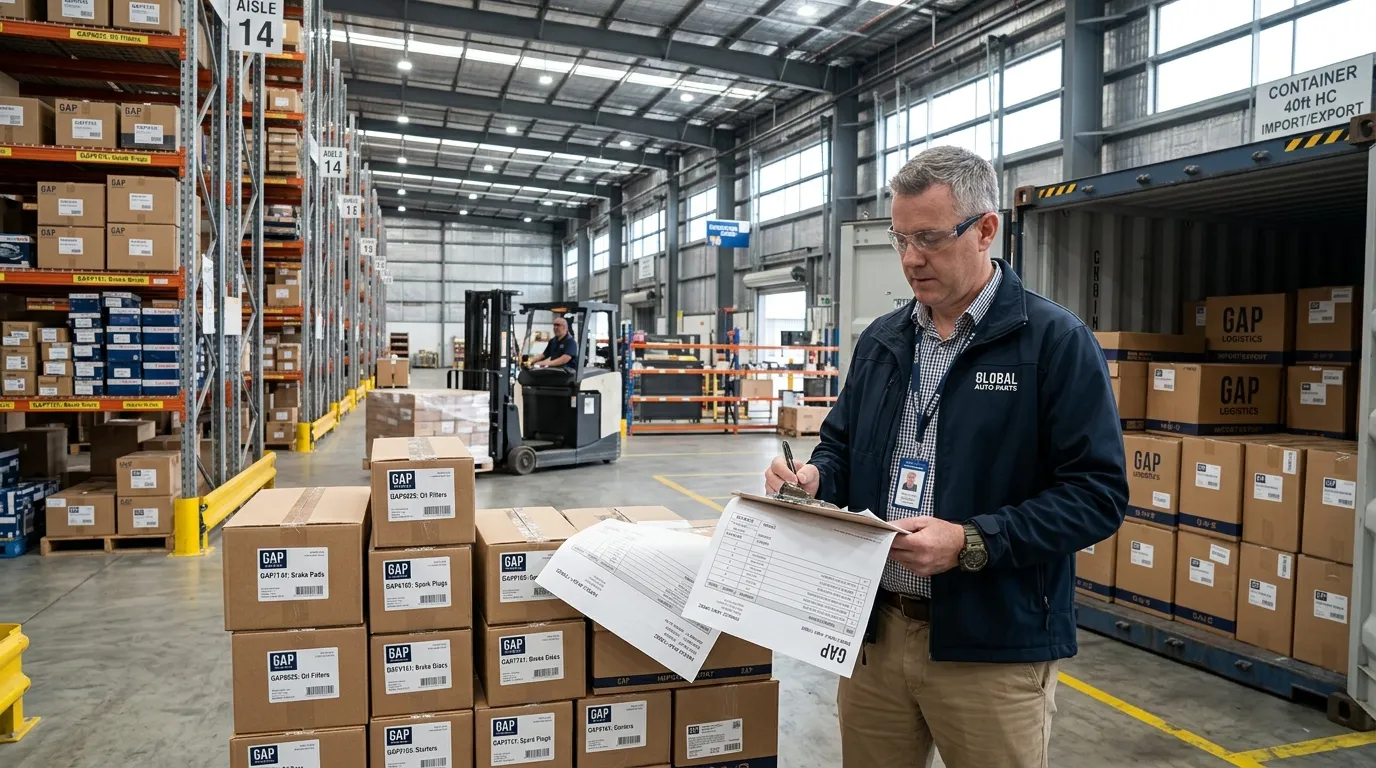
If an inventory system treats historical OE numbers as separate SKUs without supersession linking, warehouse staff will misreport stock shortages. A distributor might turn down a customer order for part number 8K0 407 151 J believing it is out of stock, even though 10 units of the updated supersession 8K0 407 151 T are sitting on the warehouse shelf!
To learn how part numbers are formatted across manufacturers, read OE Number vs OEM Number vs Aftermarket Part Number Explained.
Engineering Supersessions: Technical Revisions
During a vehicle platform's 7-year production lifecycle, automakers continuously update component designs to resolve field warranty claims, improve durability, or lower manufacturing cost. Each revision triggers an OE part number supersession:
VAG Control Arm Revision Chain (Audi A4 / VW Passat):
All four part numbers describe the exact same physical fitting control arm. Automakers mandate that updated supersessions remain 100% backward-compatible with older vehicle models.
Multi-Brand Platform Tooling Sharing
Global automotive conglomerates utilize shared modular platforms across multiple vehicle brands to maximize manufacturing efficiency:
VAG MQB Platform
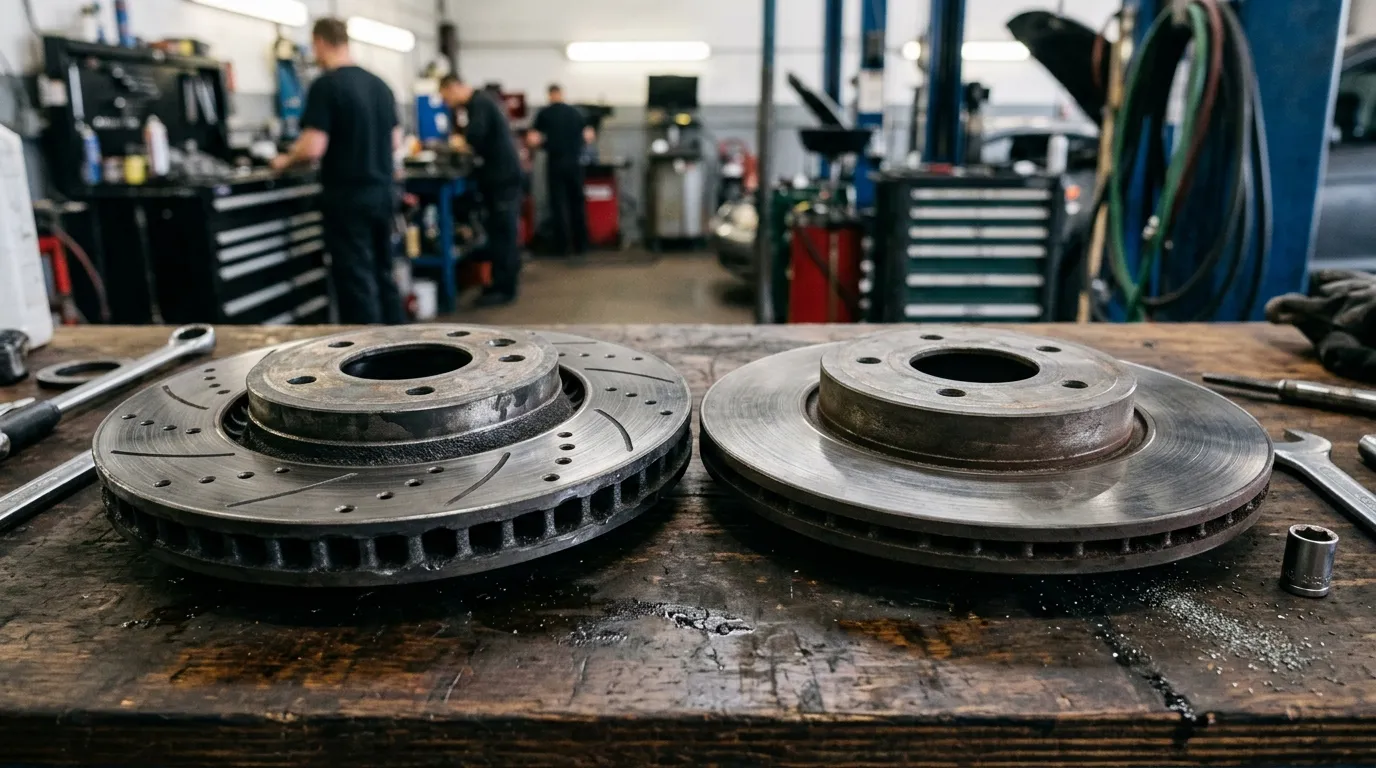
Shared front brake discs and hub bearings across Audi A3, VW Golf VII, SEAT Leon, and Skoda Octavia generate 4 separate brand catalog entries for 1 mechanical part.
BMW Group UKL Platform
Shared engine mounts and sway bar links across BMW 1 Series (F40), BMW X1 (F48), and MINI Cooper Countryman (F60).
To learn how to cross-reference parts across platform models, see How to Cross Reference Auto Parts Before Ordering.
Tier-1 Supplier Multi-Sourcing
To prevent assembly line shutdowns caused by factory fires or logistics strikes, car manufacturers contract dual or triple Tier-1 suppliers to produce identical components.
For example, an automaker might source oxygen sensors simultaneously from both Bosch and NTK/NGK. While both sensors meet identical electrical resistance curves and mounting threads, Bosch assigns MPN 0 258 017 025 while NTK assigns MPN OZA659-EE12—resulting in multiple catalog numbers for identical fitments.
How ERP Inventory Systems Should Handle Supersessions
Proper inventory management requires configuring your ERP warehouse software to handle supersession logic automatically:
Search Auto Parts across All Supersession Numbers
Don't double-order stock. REIFTEIL's B2B portal automatically consolidates all active and superseded OE numbers under single master SKUs at competitive wholesale rates.
Frequently Asked Questions
What is an engineering supersession in auto parts?
An engineering supersession occurs when a car manufacturer replaces an existing OE part number with a new part number to reflect design improvements, material upgrades, or supplier changes.
Is a superseded part backward-compatible with older vehicle models?
Yes, in almost all cases. Automakers design superseded parts to fit all vehicles previously specified for the older OE number.
Why do Audi, VW, SEAT, and Skoda share identical part numbers?
As members of the Volkswagen Audi Group (VAG), these brands utilize shared vehicle platforms (such as MQB or MLB). A single control arm or wheel bearing is manufactured for use across all four brands under a unified VAG OE part number.
What is supplier multi-sourcing?
To prevent supply chain bottlenecks, automakers contract multiple Tier-1 manufacturers (e.g. Bosch and Valeo) to produce identical components. Each manufacturer assigns its own MPN.
Can a superseded part number cause inventory discrepancies in ERP software?
Yes. If an ERP system treats historical OE numbers as separate SKUs without supersession linking, warehouse staff may misreport stock shortages.
What does a letter suffix change mean on a VAG part number (e.g. 8K0 407 151 J to 8K0 407 151 Q)?
The trailing letter represents the engineering revision index. A change from J to Q signifies a design revision (such as upgraded rubber bushing durometer or improved anti-corrosion coating).
Are North American vehicle part numbers different from European market part numbers?
Yes. Vehicle market variants (USDM vs EUDM) often assign unique OE numbers to reflect regional emissions standards, lighting regulations, or bumper crash test specs.
How does REIFTEIL handle supersession numbers in wholesale pricing?
REIFTEIL automatically links all historical and active supersession OE numbers in our catalog, ensuring distributors always receive the latest revised component at wholesale pricing.