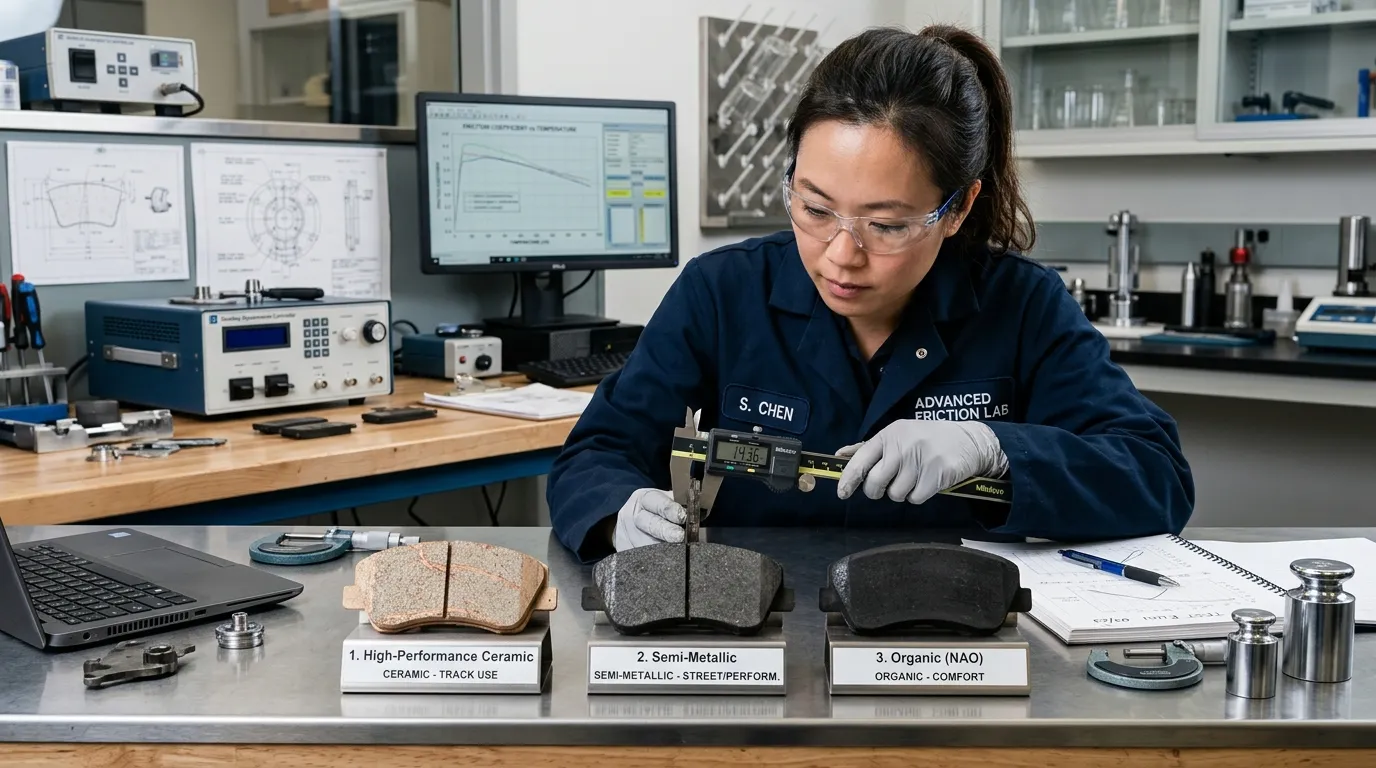
In this master engineering guide, we clarify terminology, compare GG15 vs GG20 vs GG25 high-carbon cast iron alloys, analyze internal cooling vanes, contrast drilled vs slotted face designs, and outline precision machining tolerances. Source wholesale brake discs on the REIFTEIL Wholesale Auto Spare Parts Portal.
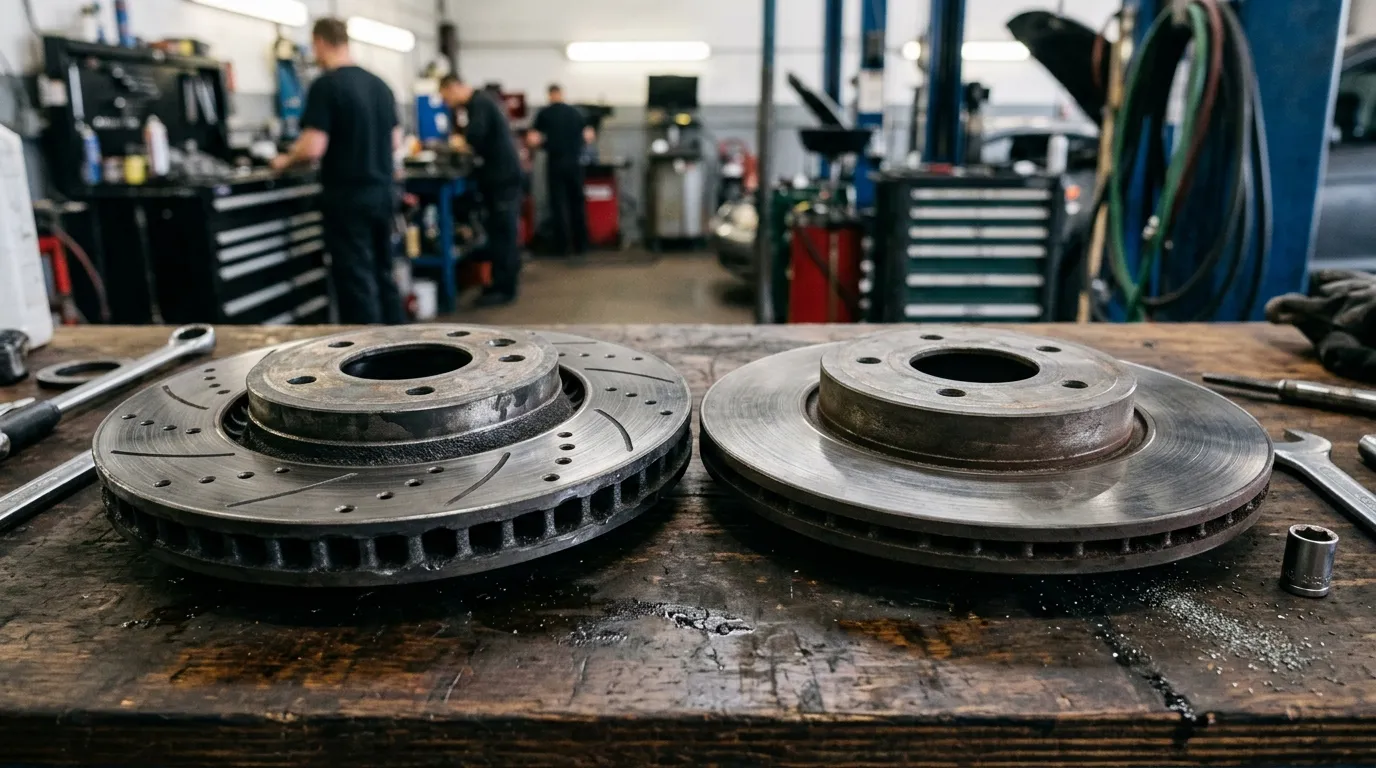
Disc Metallurgy Architecture: Vented high-carbon cast iron brake rotor featuring internal cooling vanes and Geomet zinc flake protective coating.
1. Terminology & Cast Iron Metallurgy Grades
Mechanically, Brake Discs and Brake Rotors are identical components. European standards (DIN EN ISO) utilize "Brake Disc," whereas North American specifications (SAE J431) use "Brake Rotor." However, chemical metallurgy varies significantly across grey cast iron alloy grades:
| Cast Iron Grade | Carbon Content (% C) | Thermal Conductivity | Damping Capacity | Performance Application |
|---|---|---|---|---|
| GG15 (Standard Grey Iron) | 3.0% – 3.2% | 42 W/m·K | Standard | Low-cost economy aftermarket replacement |
| GG20 (Mid-Carbon Alloy) | 3.2% – 3.5% | 46 W/m·K | High Damping | Standard OEM passenger cars & light trucks |
| GG25 (High-Carbon Alloy) | 3.5% – 3.8% | 52 W/m·K | Maximum Noise / Judder Damping | Premium European OE, heavy SUVs, performance sports cars |
High-Carbon GG25 cast iron features lamellar flake graphite microstructures that rapidly draw heat away from the friction face, suppressing hot spots and thermal distortion.
2. Solid vs Vented & Internal Cooling Vane Design
Solid Brake Discs
Consists of a single solid cast plate (typically 9 mm to 12 mm thick). Used primarily on rear axles where thermal braking loads represent only 20% to 30% of total vehicle stopping effort.
Straight Radial Vented Discs
Features straight internal air channels running radially from the center hat to the outer perimeter, acting as a centrifugal fan to draw cooling air through front brakes.
Curved Directional Vanes
Curved vanes slope backward relative to wheel rotation, increasing airflow velocity and heat dissipation by up to 15% compared to straight radial vanes.
Pillar / Matrix Venting (Kangaroo Paw)
Replaces continuous vanes with a grid of sculpted diamond and teardrop pillars. Increases internal surface area, improving heat transfer by 25% and eliminating directional left/right inventory stocking.
3. Precision Machining Tolerances & Quality Limits
Excessive machining runout or thickness variation creates brake pedal pulsation and steering wheel shake. OE-quality brake discs adhere to tight precision tolerances:
| Precision Parameter | OE Tolerance Threshold | Measurement Method | Symptom of Out-of-Spec Limit |
|---|---|---|---|
| Lateral Runout | ≤ 0.03 mm (0.0012 in) | Dial indicator mounted 10mm from outer edge | Steering wheel wobble under braking |
| Disc Thickness Variation (DTV) | ≤ 0.01 mm (0.0004 in) | Micrometer measured at 8 circumferential points | Pulsating brake pedal feeling |
| Surface Roughness ($R_z$) | 3.0 μm – 5.0 μm | Surface profilometer trace | Extended pad bedding-in period |
| Dynamic Balancing | ≤ 50 g·cm | Dual-plane dynamic spin balance machine | High-speed vehicle vibration without braking |
To learn how to diagnose worn Brake Pads Need Replacing" class="internal-link font-semibold text-blue-600 hover:text-blue-800 hover:underline decoration-blue-300 decoration-2 underline-offset-2 transition-colors" data-inlink="true">brake pads and thickness thresholds, read How to Know When Brake Pads Need Replacing.
Source Wholesale Brake Discs with REIFTEIL
Equip your Auto Parts for Your Market" class="internal-link font-semibold text-blue-600 hover:text-blue-800 hover:underline decoration-blue-300 decoration-2 underline-offset-2 transition-colors" data-inlink="true">auto parts business with high-carbon GG25 Geomet coated brake discs and rotors engineered to strict OEM tolerances.