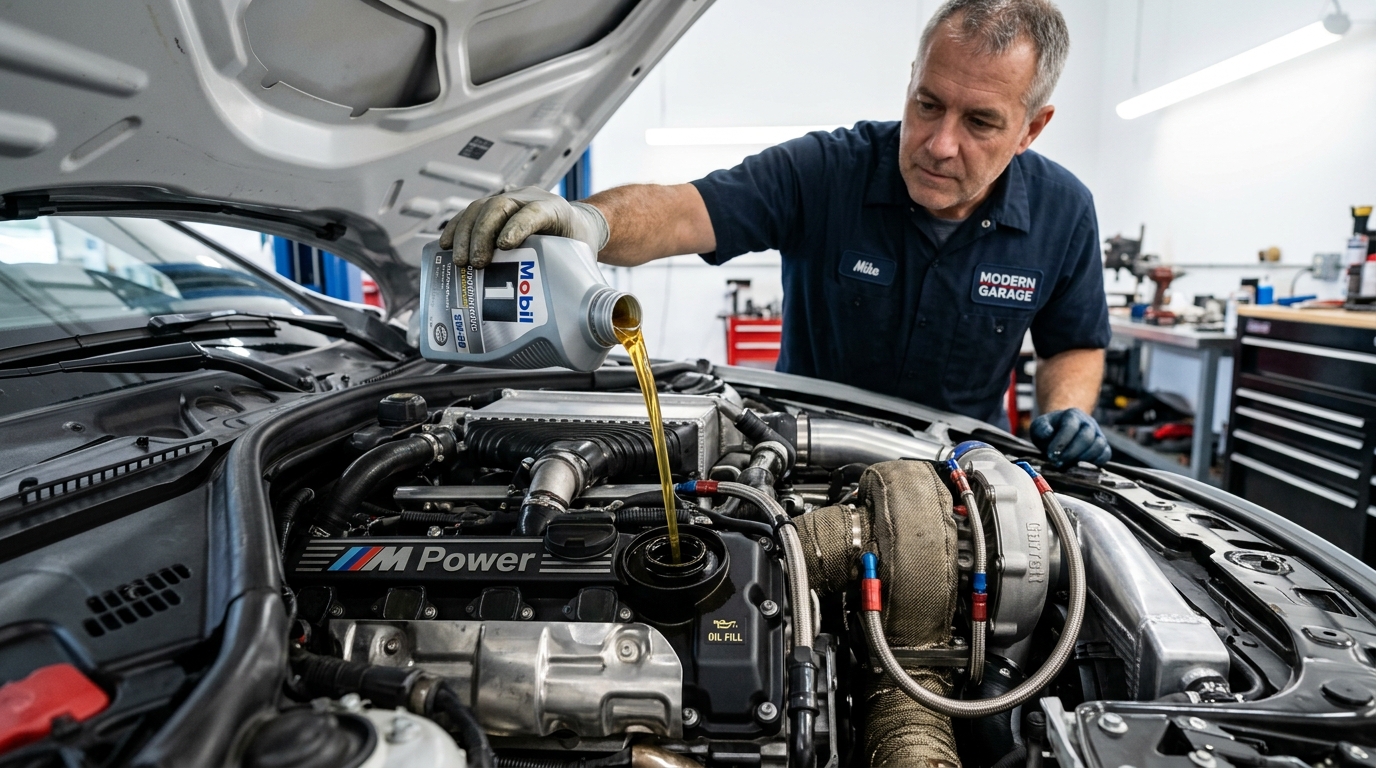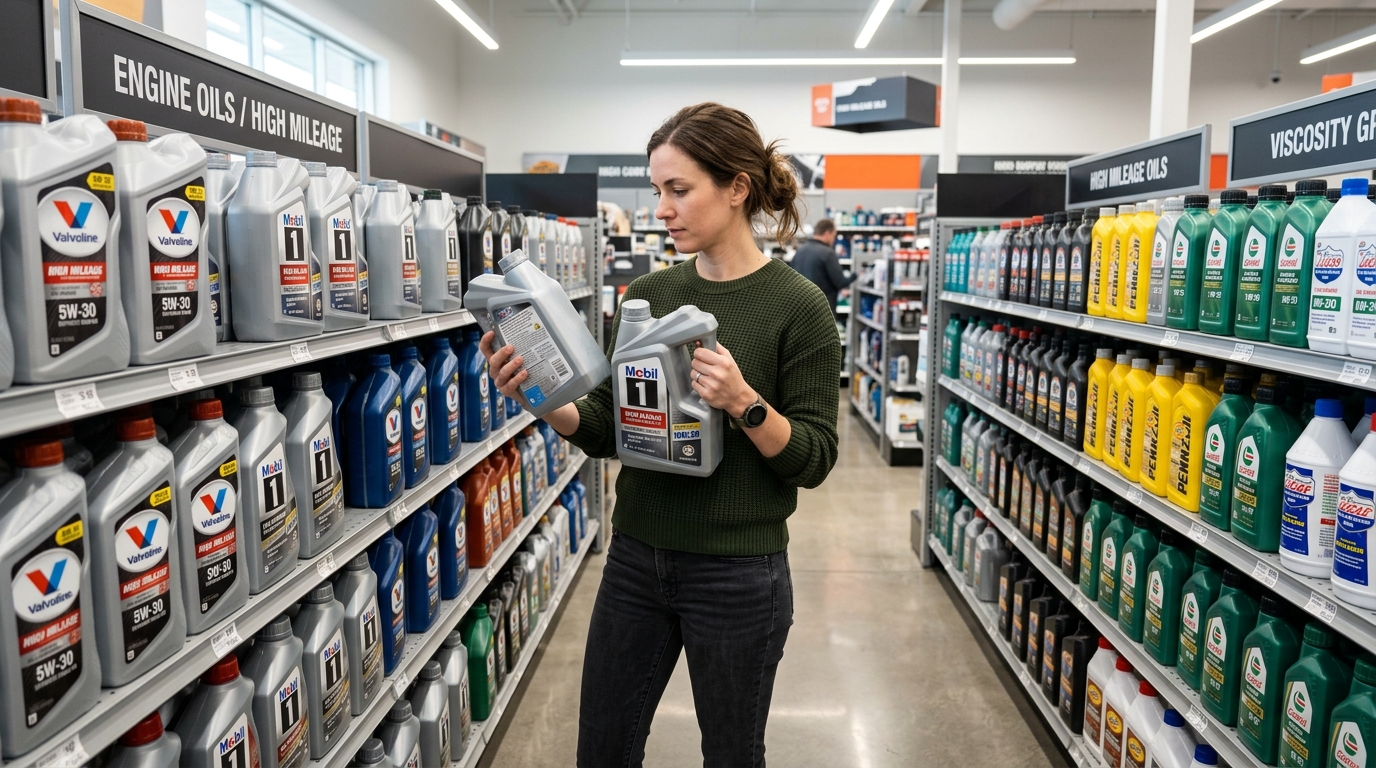
If your car has covered 75,000 miles (approximately 120,000 km) or more, you may have come across motor oils marketed specifically for high-mileage vehicles. These products are formulated for the maintenance needs of older engines and may contain additives designed to condition seals, control deposits and protect against wear.
However, high mileage alone does not mean your engine needs a thicker oil or a different lubricant specification. The correct choice depends on the manufacturer's requirements, the engine's condition, the driving environment and any symptoms the vehicle has developed.
This guide explains how high-mileage engine oils work, which specifications to check, when a different formulation may help and how to maintain an older car's engine effectively.
Quick Answer: What Is the Best Engine Oil for a High-Mileage Car?
The best engine oil for a high-mileage car is one that meets the vehicle manufacturer's required viscosity grade, performance specification and approval, while addressing the engine's current condition.
A high-mileage formulation may be worth considering if your vehicle has significant mileage, minor seal seepage or increased oil consumption. It is not automatically superior to every standard engine oil.
Before buying, check these five factors:
-
Manufacturer specification: Confirm the required oil standard and any mandatory OEM approval.
-
SAE viscosity grade: Use the grade specified for your engine and operating conditions.
-
Oil consumption: Monitor how much oil the engine uses between services.
-
Seal and deposit protection: Consider a high-mileage formulation where appropriate.
-
Engine design: Check whether the car has a turbocharger, particulate filter or other equipment requiring a particular lubricant.
The key principle is simple: choose oil for the engine you have, not just the number on the odometer.
1. What Is High-Mileage Engine Oil?
High-mileage engine oil is motor oil marketed for vehicles with substantial accumulated mileage, often around 75,000 miles (120,000 km) or more. That threshold is a common marketing guideline, not a universal mechanical or regulatory cutoff.
These oils may contain additive combinations intended to address issues that become more common as some engines age, including minor seal seepage, oil consumption and deposit formation.
The precise formulation varies by product. Some high-mileage oils are fully synthetic, others are synthetic blends or conventional formulations.
How can a high-mileage formulation help?
Seal conditioning: Certain formulations contain additives intended to help maintain the flexibility of compatible elastomer seals. They may help reduce minor seepage in some circumstances, but cannot repair a damaged seal or gasket.
Wear protection: Anti-wear additives help protect metal surfaces under operating conditions where the lubricating oil film may be under stress. Their composition and concentration vary, and more additive is not always better.
Deposit control: Detergents and dispersants help manage deposits and keep contaminants suspended so they can be removed during oil changes and filtration.
Oxidation resistance: Base oils and antioxidants help resist oil degradation caused by heat and oxygen. Actual performance depends on the formulation and the engine's operating conditions.
A high-mileage label alone does not guarantee better protection. Always verify the product's specifications and approvals.
2. Signs Your High-Mileage Car May Need Closer Oil Monitoring
Mileage is only one indicator of engine condition. Two cars with identical odometer readings may have very different maintenance needs depending on their service histories, driving patterns and engine designs.
Watch for the following signs.
Increasing oil consumption
If you need to top up the oil more frequently than before, record the quantity added and the distance driven. Increased consumption may result from worn piston rings, valve stem seals, external leaks, a crankcase ventilation problem or a turbocharger fault.
A suitable high-mileage oil may help in some cases, but it will not correct every underlying cause.
Minor oil seepage
Age-related gasket or seal deterioration can cause oil to seep around the valve cover, oil pan or crankshaft seals.
Seal-conditioning additives may help with certain minor seepage issues. Persistent leaks, falling oil levels or oil reaching hot exhaust components require proper diagnosis and repair.
Dark deposits or sludge
Engine oil naturally darkens during use, so colour alone is not a reliable indicator that the oil is unsuitable. Sludge, thick deposits or evidence of restricted lubrication require closer inspection.
Follow the recommended service schedule and investigate suspected sludge rather than relying on an oil change to resolve a serious deposit problem.
Unusual engine noise
New knocking, persistent ticking or other unusual sounds should not simply be attributed to high mileage. They may indicate a lubrication problem or mechanical wear. Check the oil level promptly and seek professional diagnosis where necessary.
Important: If an oil-pressure warning appears, follow the vehicle manufacturer's instructions and stop the engine when it is safe to do so. Continuing to drive with inadequate oil pressure can cause severe damage.
3. How to Choose the Correct Viscosity for a High-Mileage Engine
One of the most common mistakes in maintaining an older car is switching to thicker oil simply because the engine has accumulated more miles.
Engine oil viscosity describes how readily the oil flows at different temperatures. The SAE grade, such as 0W-20, 5W-30 or 5W-40, identifies its viscosity classification.
The correct grade depends on the engine's design, specified tolerances, operating temperatures and manufacturer recommendations.
Should you switch from 5W-20 to 5W-30?
Not automatically.
A different viscosity may be permitted for some engines under certain operating conditions, but it should be selected only when allowed by the vehicle manufacturer's guidance.
Using an unapproved grade may affect cold-start lubrication, oil flow, fuel economy, variable valve timing or other engine systems.
What do the numbers mean?
For a grade such as 5W-30:
-
5W: Indicates the oil's winter viscosity performance under standardized cold-temperature tests.
-
30: Indicates its high-temperature viscosity classification.
The lower winter number does not mean the oil is universally better in cold weather, and the higher second number does not mean it is always better for an older engine.
What if the engine burns oil?
First, confirm the correct oil specification and establish the rate of consumption. Check for leaks and have the engine inspected if consumption is excessive or increasing.
If the manufacturer permits more than one viscosity grade, a qualified technician can help determine whether another approved grade is suitable for the engine and climate.
Do not use viscosity as a substitute for diagnosing mechanical wear.
4. Full Synthetic vs. Synthetic Blend vs. Conventional Oil
High-mileage formulations are available in several base-oil types. The best choice depends on the product's performance specifications, the engine's requirements and your maintenance budget.
Full synthetic high-mileage oil
Full synthetic high-mileage oils are designed to combine the features of a high-mileage formulation with the performance characteristics of the particular synthetic base oils and additive package used.
Depending on the product, advantages may include strong oxidation resistance, good low-temperature performance and resistance to deposit formation.
This may be a suitable option for cars exposed to frequent short journeys, demanding temperatures or other challenging conditions, provided the oil meets the required specifications.
Synthetic-blend high-mileage oil
Synthetic blends combine synthetic and other base oils. They may provide a practical balance of cost and performance for vehicles whose manufacturers permit the relevant product specification.
Compare the actual approvals and performance claims rather than assuming that every blend offers identical protection.
Conventional high-mileage oil
Conventional high-mileage oils may be suitable for some older engines where the formulation meets the manufacturer's requirements.
The fact that an oil is conventional rather than synthetic does not, by itself, determine whether it is suitable for a particular vehicle.
Comparison at a glance
| Feature | Full synthetic | Synthetic blend | Conventional |
|---|---|---|---|
| Base-oil formulation | Synthetic base oils | Blend of base oils | Conventional base oils |
| Cold-start performance | Product-dependent; often a strength | Product-dependent | Product-dependent |
| Oxidation resistance | Formulation-dependent | Formulation-dependent | Formulation-dependent |
| High-mileage additives | Available in dedicated products | Available in dedicated products | Available in dedicated products |
| Suitable applications | Depends on specifications and approvals | Depends on specifications and approvals | Depends on specifications and approvals |
Buying tip: Compare the complete specification, viscosity grade, OEM approvals and service requirements. The word “synthetic” or “high-mileage” should not be the only basis for your decision.
5. Seal Conditioners, Anti-Wear Additives and Detergents Explained
High-mileage formulations may include additive combinations intended to support older engines. Understanding their roles helps separate realistic product benefits from exaggerated claims.
Seal conditioners
Elastomer seals and gaskets can change with age, temperature and exposure to oil. Some lubricant additives are designed to help maintain seal flexibility and compatibility.
They may reduce certain minor seepage issues, but they do not reliably reverse all seal deterioration. Cracked, torn or badly worn components generally need repair or replacement.
Anti-wear additives
Anti-wear chemistry helps protect metal components where the oil film is insufficient to prevent all surface contact.
Zinc dialkyldithiophosphate (ZDDP) is one established anti-wear additive used in engine oils. However, its concentration and the overall additive balance vary according to the oil specification and intended application.
Do not assume that a high-mileage oil necessarily contains more ZDDP than a standard oil. Excessive or unsuitable additive levels can be inappropriate for some engines and emissions-control systems.
Detergents and dispersants
Detergents help control deposits on engine surfaces, while dispersants help suspend contaminants in the oil.
These additives support cleanliness during normal operation, but a lubricant should not be expected to remove severe sludge safely in every situation. Engines with substantial deposits may require professional inspection and a carefully chosen maintenance approach.
Antioxidants and base oils
Heat and oxygen gradually degrade engine oil. Antioxidants and suitable base oils help resist oxidation and maintain lubricant performance.
Oil quality, operating temperature, service interval and engine condition all influence how well a lubricant performs over time.
6. High-Mileage Cars With Turbochargers and Emissions Systems
Older cars may have turbochargers, catalytic converters, gasoline particulate filters or diesel particulate filters. These systems can impose additional lubricant requirements.
A turbocharged engine may expose oil to high temperatures, while certain particulate filters require lubricants with controlled levels of ash-forming additives.
Why API SP or ACEA C3 may matter
API SP is a performance category that includes protections relevant to modern gasoline engines, including resistance to low-speed pre-ignition in applicable engines. It is not a universal substitute for the vehicle manufacturer's required specification.
ACEA C3 is a distinct European performance category for certain catalyst-compatible, mid-SAPS engine oils. It is not automatically suitable for every gasoline or diesel vehicle.
The two specifications are not interchangeable. A product's actual approvals and required viscosity grade must match the vehicle's requirements.
Before buying oil for a high-mileage turbocharged car, check:
-
The specified SAE viscosity grade.
-
The required API or ACEA performance category, where applicable.
-
Any mandatory manufacturer approval.
-
Compatibility with the vehicle's emissions-control equipment.
-
The recommended oil-change interval and any severe-service requirements.
Never choose an oil solely because it advertises high-mileage protection or a particular API category.
7. How to Maintain a High-Mileage Engine
Selecting the right oil is only one part of maintaining an older vehicle. Consistent monitoring and appropriate servicing can help identify developing problems before they become more expensive.
Check the oil level regularly
Use the procedure specified in the owner's manual and park the vehicle as directed for an accurate reading. Record any top-ups so that changes in consumption can be identified.
Follow the correct oil-change interval
Use the vehicle manufacturer's recommended service interval, taking account of severe-use conditions where applicable. Frequent short trips, repeated cold starts, heavy loads and certain operating environments can increase the demands placed on engine oil.
Do not extend oil-change intervals solely because the oil is fully synthetic or marketed for high-mileage engines.
Replace the oil filter as required
Use a filter that meets the vehicle's specifications and follow the manufacturer's service instructions. The filter is an important part of the engine's lubrication and contamination-control system.
Investigate leaks and consumption
A steadily falling oil level, oil spots beneath the vehicle or recurring low-oil warnings should not be ignored. Record the symptoms and have the cause identified.
Keep service records
Record the oil brand and product name, viscosity grade, specification, oil-change date, mileage and any top-ups. These details help establish consumption trends and support better maintenance decisions.
8. Common Mistakes When Choosing Oil for High-Mileage Cars
Avoid these common errors:
Choosing a thicker oil without checking the manual. An unsuitable viscosity can affect lubrication and engine operation.
Assuming high-mileage oil will fix leaks. Some formulations may help with minor seal seepage, but damaged components require repair.
Paying more for a label rather than the specification. The correct performance category and approvals matter more than marketing language alone.
Ignoring oil consumption. Frequent top-ups can indicate a developing mechanical problem and should be monitored.
Extending oil-change intervals without justification. Follow the specified maintenance schedule and account for operating conditions.
Using an unsuitable oil in an engine with a particulate filter or turbocharger. Verify all required specifications and approvals before purchase.
Frequently Asked Questions
At what mileage should I start using high-mileage engine oil?
There is no universal mileage at which a switch becomes necessary. Some products are marketed for cars above 75,000 miles (120,000 km), but the engine's condition and the manufacturer's specifications matter more than a fixed threshold.
What is the best engine oil for a car with over 100,000 miles?
The best oil is one that meets the manufacturer's required viscosity grade, performance specification and approvals. A high-mileage formulation may be useful for certain older engines, but a standard approved oil may also be entirely suitable.
Does high-mileage engine oil stop oil leaks?
It may help reduce some minor seepage associated with compatible seals, depending on the formulation and condition of the engine. It cannot be relied on to repair damaged gaskets, cracked seals or other mechanical faults.
Should I use thicker oil in an older car?
Not simply because the car is older. Use only viscosity grades permitted by the manufacturer for the engine and operating conditions. If oil consumption increases, investigate the cause before changing grades.
Is synthetic oil better for high-mileage cars?
A suitable synthetic oil may offer advantages in oxidation resistance and low-temperature performance, depending on its formulation. However, it must meet the vehicle's specifications, and synthetic oil is not automatically the right choice for every older engine.
Can I use high-mileage oil in a turbocharged engine?
Yes, if the particular product meets the engine's required viscosity grade, performance category and manufacturer approvals. Check the manual carefully, especially for engines with turbochargers or emissions-control equipment.
Does high-mileage oil contain more ZDDP?
Not necessarily. Additive levels vary by product and specification. Choose an oil approved for your engine rather than assuming that a higher ZDDP concentration will provide better overall protection.
Can high-mileage oil restore engine compression?
No lubricant can be relied on to restore compression lost through serious mechanical wear, damaged valves or worn piston rings. Compression problems require proper diagnosis.
How often should I change oil in a high-mileage car?
Follow the vehicle manufacturer's recommended service interval and adjust for specified severe-use conditions. Mileage alone does not determine the correct interval.
Final Takeaway: Choose Engine Oil Based on Condition and Specifications
High mileage does not automatically mean an engine needs thicker oil, a stronger additive package or a different lubricant specification.
The most reliable approach is to confirm the manufacturer's requirements, monitor oil consumption, address leaks and mechanical faults, and choose a product that matches the engine's design and condition.
A high-mileage formulation may offer useful seal-conditioning or deposit-control features in some situations. Its benefits, however, depend on the product and the engine. Correct specifications and consistent maintenance remain the foundation of long-term engine protection.
Looking for Engine Oil for Your Business?
REIFTEIL supports B2B sourcing of automotive lubricants for wholesalers, workshops and other professional buyers.
When comparing products for your inventory, verify viscosity grades, performance specifications, manufacturer approvals, packaging formats and suitability for the vehicles your customers maintain.
Explore REIFTEIL Engine Oil & Lubricants or request a wholesale quotation to discuss your business requirements.
Always consult the vehicle manufacturer's documentation and the lubricant product data sheet before selecting engine oil.