Fleet managers and heavy-duty mechanics know that engine oil is the lifeblood of their commercial vehicles. However, the operational logistics of how that oil is purchased, stored, and dispensed are often overlooked.
The choice between 1000-liter Intermediate Bulk Containers (IBCs), standard 208-liter drums, and smaller 20-liter pails is more than just a matter of preference—it is a strategic decision that affects your workshop's workflow, real estate, dispensing equipment compatibility, and overall budget.
To structure your procurement, start with our guide on how to choose engine oil for commercial fleets and learn how to reduce fleet oil procurement costs while evaluating b2b bulk engine oil buying strategies.

Quick Summary: Bulk Container Strategy Matrix
1000L IBC totes provide maximum price-per-liter savings and floor space efficiency for primary fleet oils, while 208L drums offer versatile stocking for secondary grades. 20L pails serve specialty fluids and mobile service vehicles.
Volume Tier
1000L / 208L / 20L
Price / Liter
IBC Lowest
Floor Space
IBC Square Stack
Handling
Forklift vs Dolly
Dispensing
Centralized Reels
Strategy
Hybrid Mix
Aligning packaging selection with workshop real estate and dispensing equipment prevents capital lockup, product contamination, and labor waste.
Table of Contents
1000L Intermediate Bulk Containers (IBCs): The High-Volume Heavyweights
For large-scale commercial fleets, transit authorities, and major logistics hubs, the 1000-liter IBC (often referred to as a tote) is the undisputed king of bulk fluids.
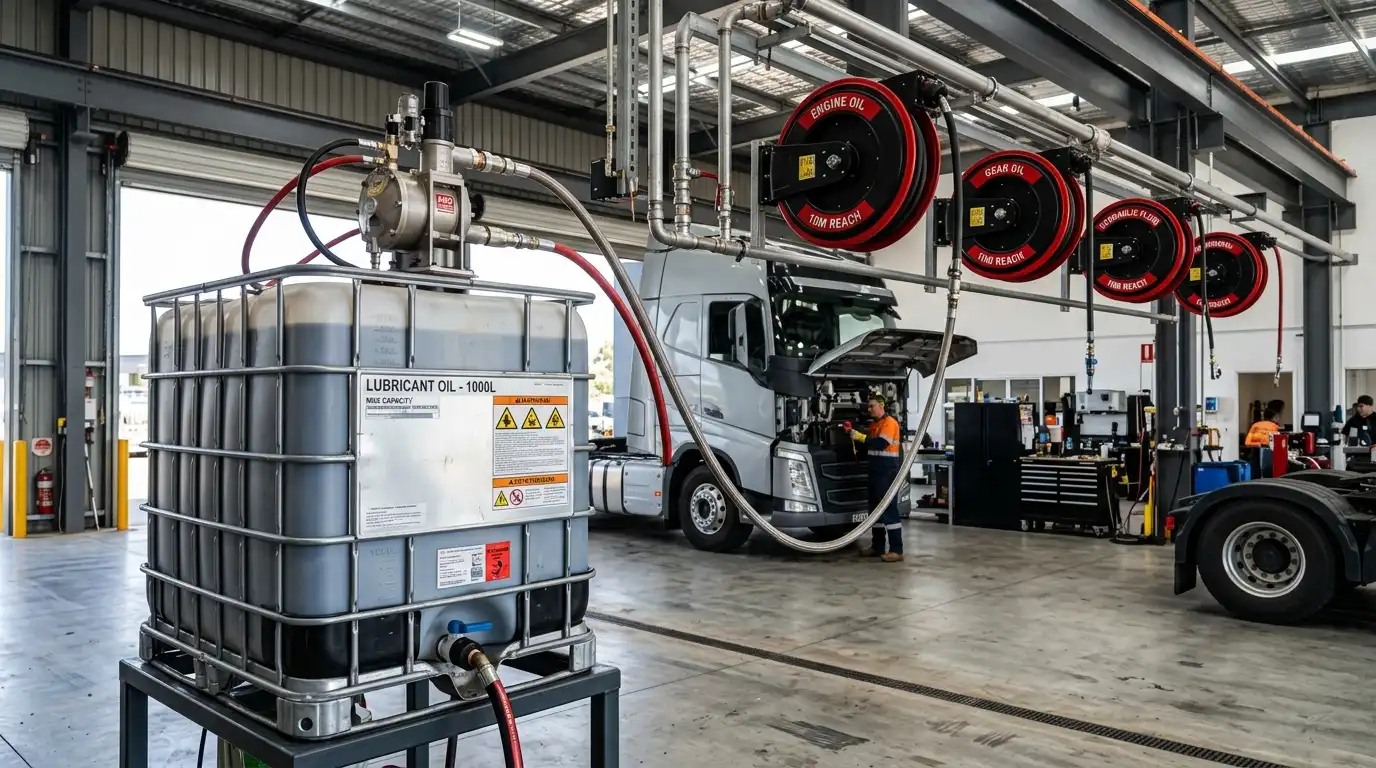
Mounted on a pallet base and enclosed in a protective metal cage, an IBC is designed for maximum volume and efficiency. Calculate overall fleet volume requirements using our guide on how much engine oil a fleet actually needs and evaluate shipping terms in fob vs cif vs ddp shipping terms.
Advantages of IBCs
Maximum Volume Discounts
Purchasing oil by the IBC yields the lowest price per liter. For fleets using hundreds of liters weekly, savings compound rapidly.
Space Efficiency
Square footprints allow flush wall placement and vertical stacking, eliminating dead spaces created by round drums.
System Integration
Direct connection to high-flow diaphragm or piston pumps feeding overhead hose reels across multiple service bays.
Fewer Changeovers
With 5x the capacity of a drum, mechanics spend significantly less time swapping containers and bleeding lines.
Drawbacks to Consider
IBCs require specialized handling equipment, such as a forklift or heavy-duty pallet jack. Additionally, committing to 1000 liters of a single oil grade ties up working capital and is only viable for the primary engine oil used across a homogeneous fleet. If you operate a mixed fleet requiring multiple viscosities or low-ash specifications, buying IBCs for every grade is impractical.
208L (55-Gallon) Drums: The Industry Standard
The 208-liter drum is the ubiquitous symbol of automotive and heavy-duty workshops worldwide. Striking a balance between bulk savings and logistical flexibility, drums remain the go-to choice for the vast majority of mid-sized to large fleets.
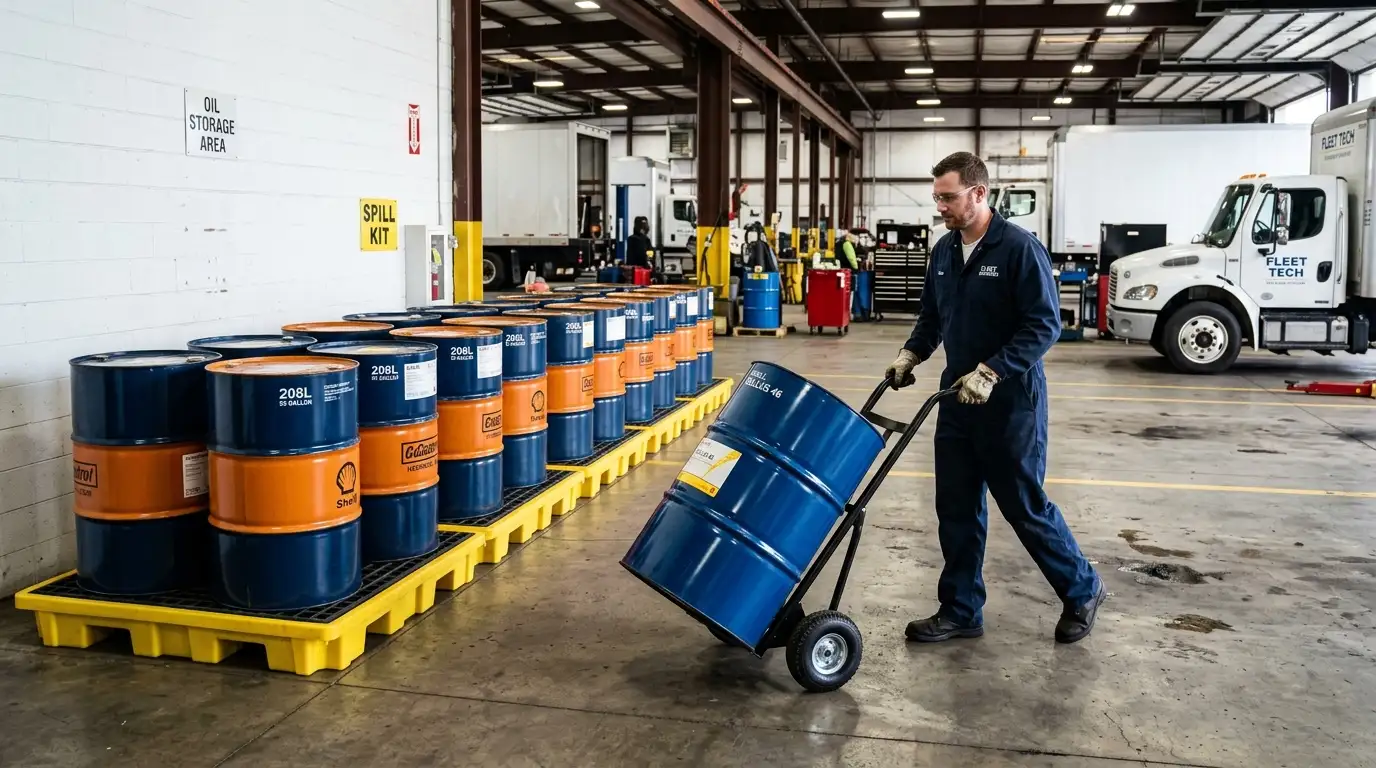
Maintain stock rotations with FIFO inventory control and prevent quality loss with proper warehouse oil storage techniques.
Advantages of 208L Drums
Mixed Fleet Versatility
Stock 15W-40, 5W-30, and 10W-30 CK-4 side-by-side without excessive space.
Manual Handling
Moved manually by a single technician using a drum dolly or tilter truck.
Dispensing Flexibility
Accommodates rotary hand pumps up to air-operated metering pumps.
Drawbacks to Consider
The cylindrical shape of drums is inherently inefficient for storage. Storing multiple drums creates unused gaps, taking up valuable workshop real estate. Furthermore, frequent changeovers introduce the risk of contamination if pumps and bung holes are not kept meticulously clean.
20L (5-Gallon) Pails and Smaller Containers: The Flexible Fallback
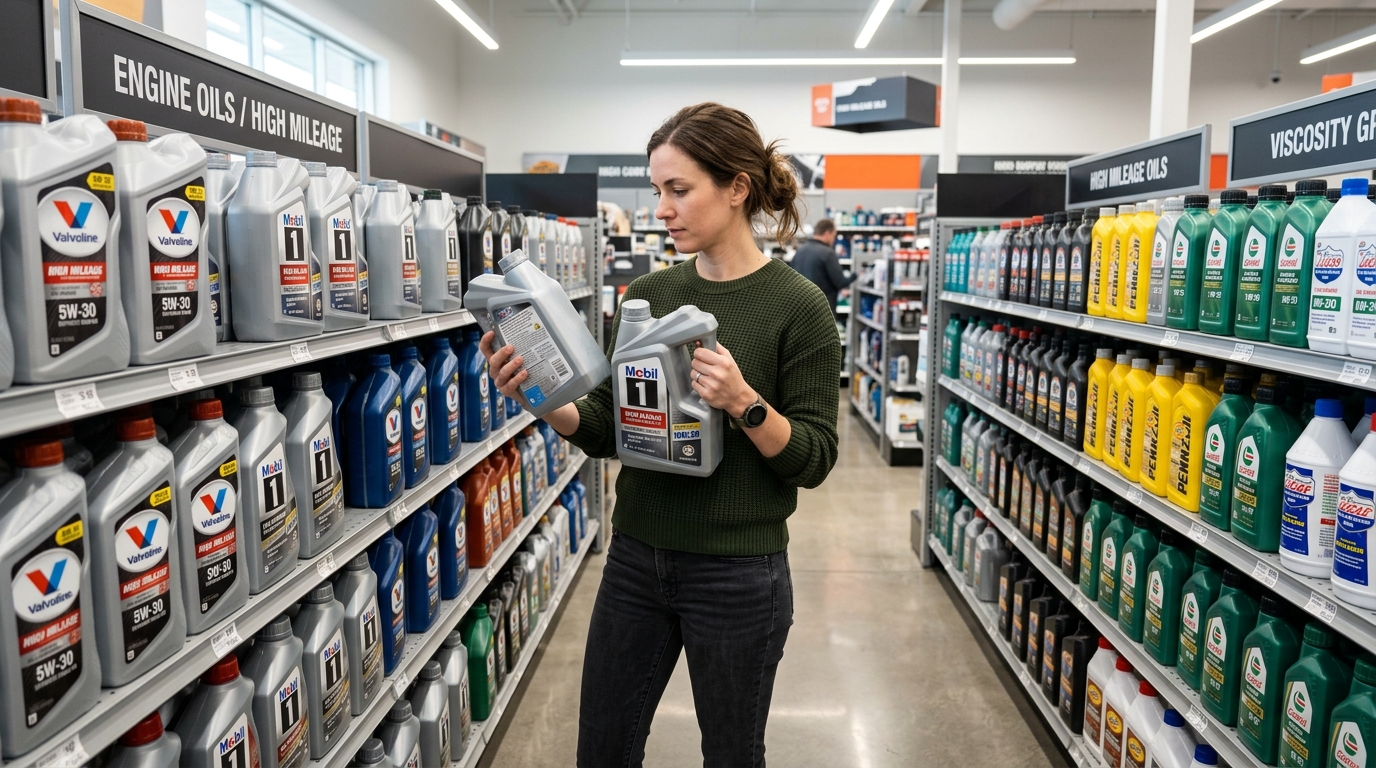
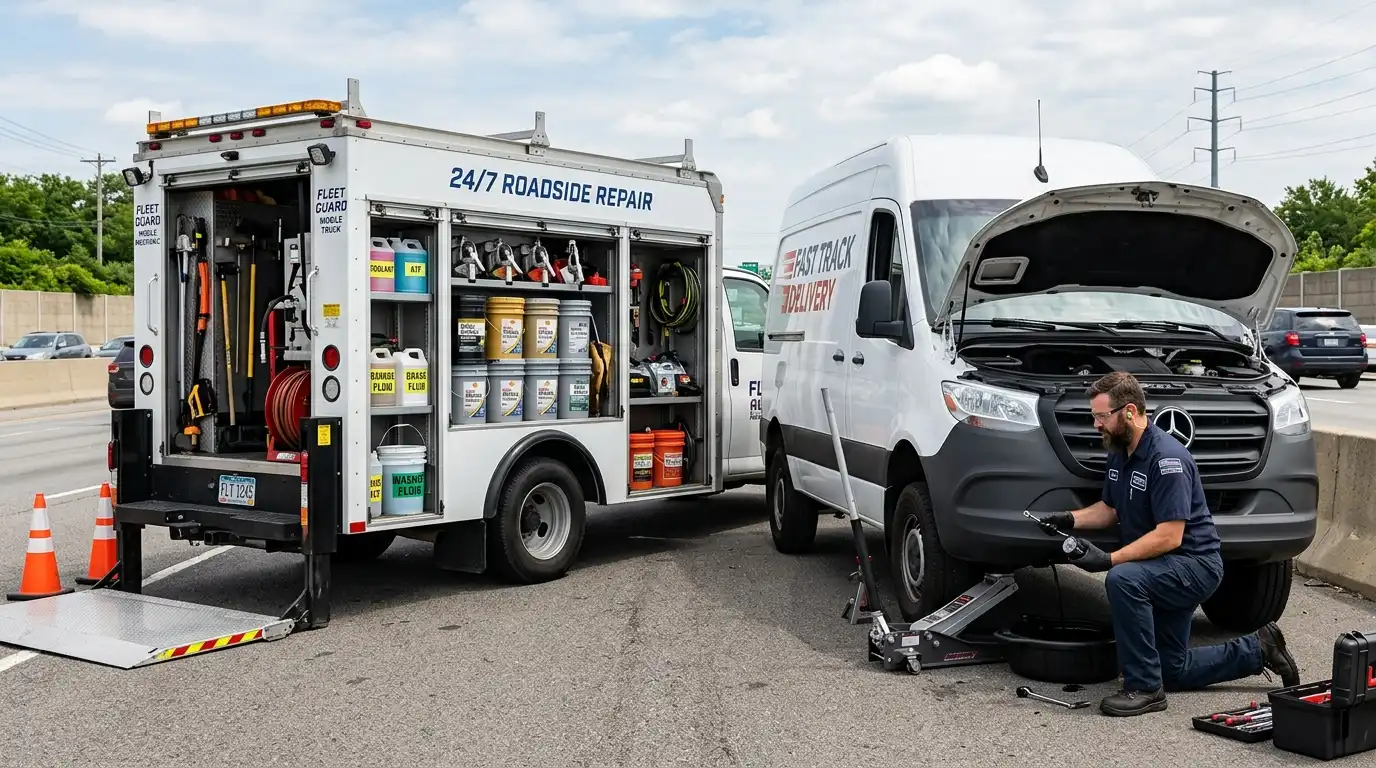
While rarely the primary source of engine oil for a large fleet, 20-liter pails, 5-liter jugs, and 1-liter bottles play a crucial supplemental role in modern workshop operations. Review van engine oil specs in our van and light commercial vehicle oil guide and check shelf life guidelines in engine oil shelf life & storage guide.
When to Use Smaller Containers
Key Factors in Choosing Your Bulk Oil Strategy
To design the most efficient fluid storage system, fleet managers should evaluate the following criteria:
Dispensing Equipment and Shop Layout
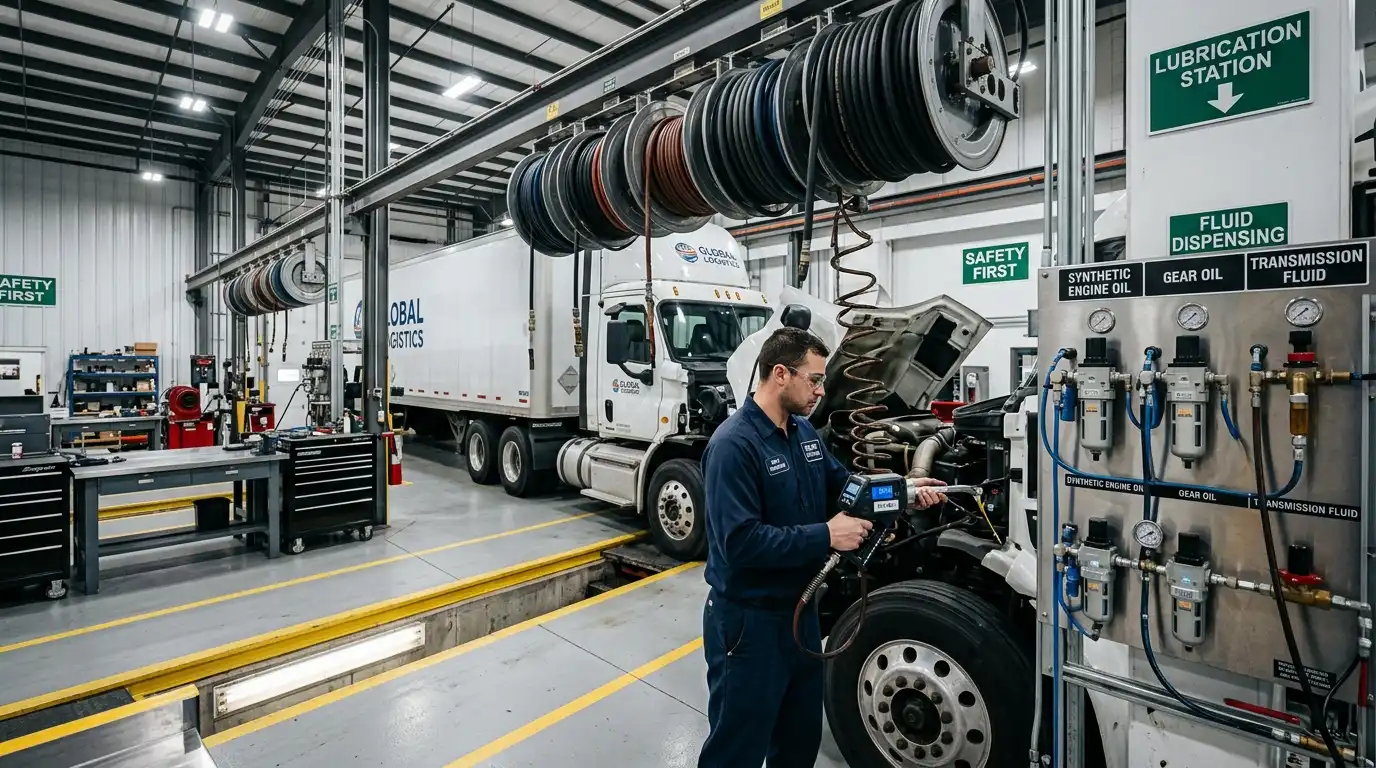
Your choice of container must align with your dispensing hardware. If you have invested in a centralized lubrication system with overhead reels, IBCs or bulk tanks are the logical choice. If your mechanics rely on mobile oil carts rolling from bay to bay, 208L drums are the perfect fit. Always ensure your pumps are rated for the oil's viscosity rating and the pumping distance.
Inventory Management and Turnover Rate
Engine oil doesn't spoil quickly, but it can absorb moisture or become contaminated if stored improperly for years. A good rule of thumb is to purchase volumes that your fleet will consume within 6 to 12 months.
Tying up capital in a 1000L IBC of a specialty oil that takes three years to use is poor inventory management. Calculate exact landed prices with landed cost calculations for wholesale oil.
Environmental Regulations and Spill Containment
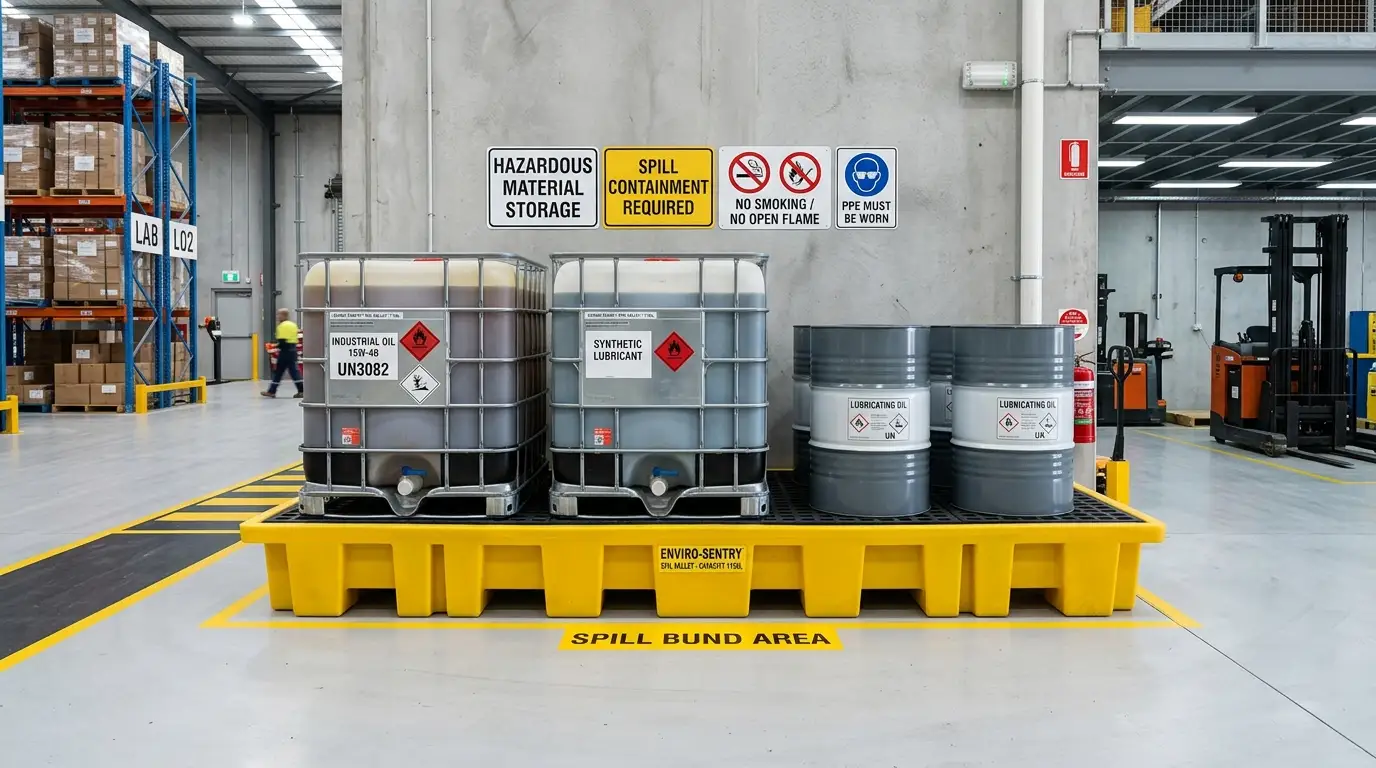
Local environmental regulations dictate how bulk fluids must be stored. Both drums and IBCs require secondary containment (spill pallets or bunded flooring) to capture leaks. IBCs, due to their larger volume, often require more substantial and expensive containment systems than a few 208L drums.
Bulk Container Execution Checklist
Audit these 8 critical factors before ordering bulk engine oil containers:
Frequently Asked Questions
How much money can a fleet save buying IBC totes vs drums?
Buying engine oil in 1000L IBC totes typically saves 10% to 18% per liter compared to 208L drums due to lower packaging, filling, and handling costs passed on by lubricant manufacturers.
Can 1000L IBC totes be stored outdoors?
IBC totes can be stored outdoors temporarily if protected by UV-resistant covers and placed on bunded spill pallets, but indoor climate-controlled storage is strongly recommended to prevent thermal cycling and condensation.
What dispensing pumps work best with 208L drums?
For low-volume workshops, 2:1 ratio pneumatic stub pumps or rotary hand pumps work well. High-volume service bays should use 3:1 or 5:1 ratio air pumps connected to overhead hose reels with digital metering guns.
What secondary spill containment is legally required for IBCs?
Most EPA and EU regulations require secondary containment capable of holding at least 110% of the largest single container's capacity (i.e. 1100 liters for a 1000L IBC tote) or 25% of total stored volume.
Conclusion: Finding the Right Hybrid Mix
For most commercial fleets, a hybrid approach works best. Utilizing a 1000L IBC for the primary fleet engine oil maximizes savings and shop efficiency, while utilizing 208L drums for secondary fluids (such as hydraulic fluid or a secondary engine oil grade) maintains flexibility.
Supplementing with 20L pails for mobile service vehicles ensures that every operational need is met. By auditing your fluid consumption and evaluating your workshop infrastructure, you can build a bulk oil storage plan that keeps your fleet moving while protecting your bottom line.