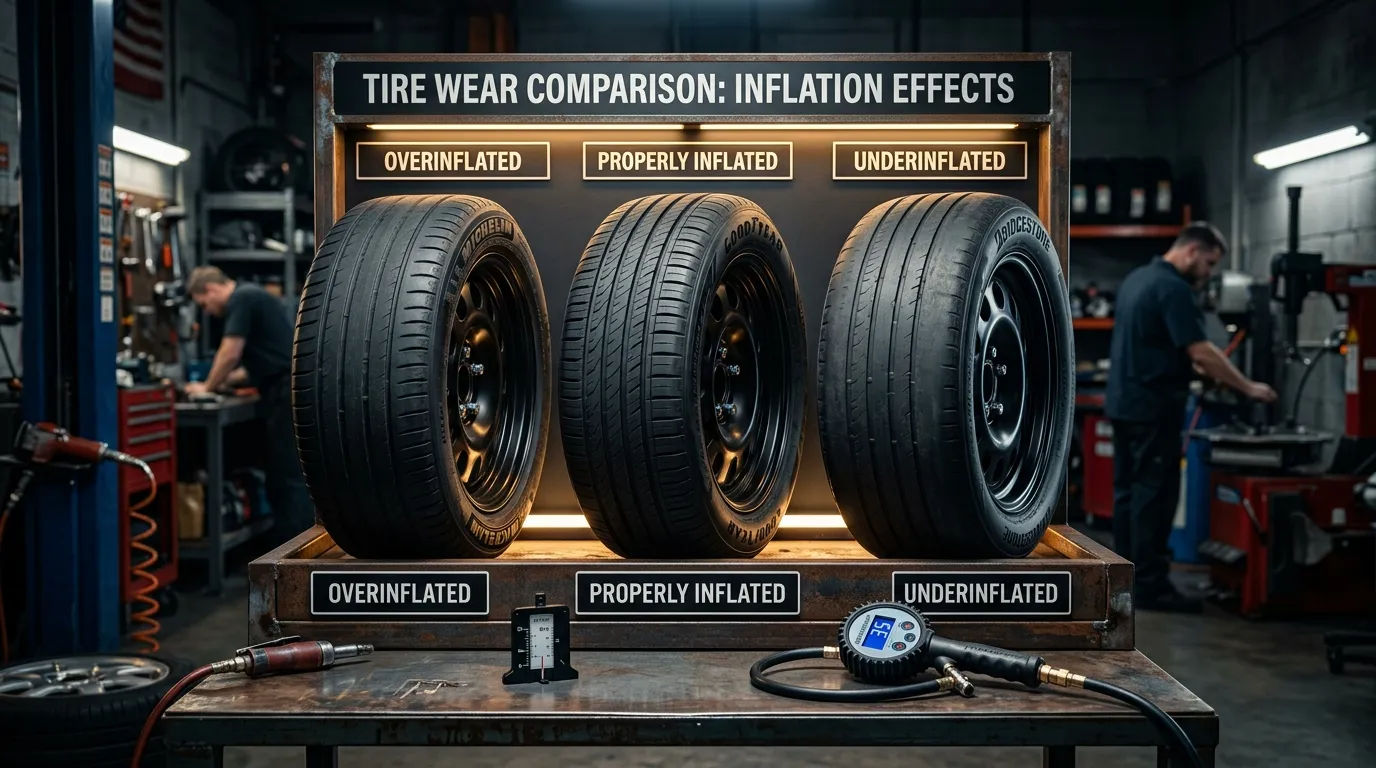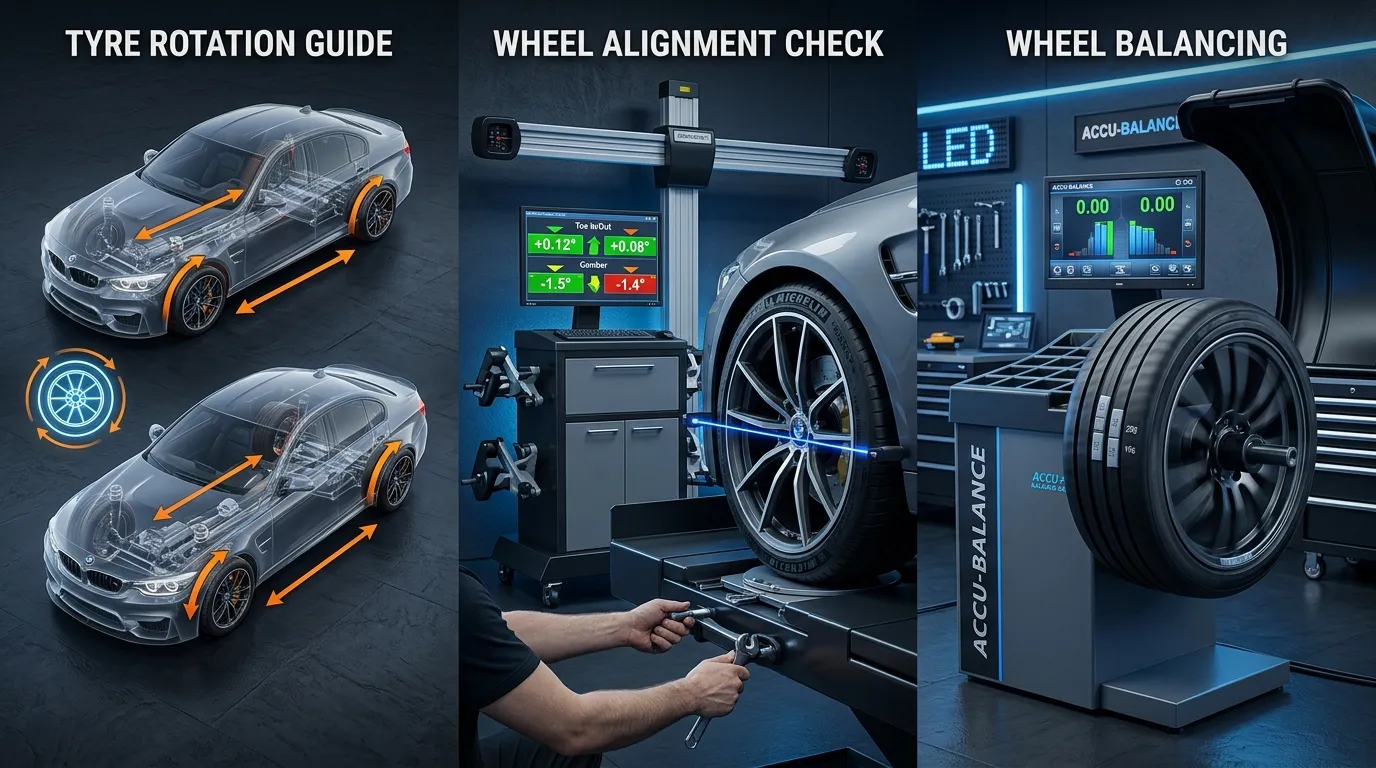
With thousands of sizes, brands, compounds, and ratings on the market, buying tyres can feel overwhelming. Should you choose summer, winter, or all-season tyres? What do codes like 91H, 95H, and XL mean? How important is the 3PMSF Alpine symbol? This comprehensive guide walks you through the entire process step by step.
The 7 Things to Check Before Buying
- Approved Size: e.g. 195/65 R15 (Width / Aspect Ratio / Rim)
- Minimum Load Index: e.g. 91 (615kg) or 95 XL (690kg per tyre)
- Speed Rating: e.g. H (210 km/h) or V (240 km/h)
- Seasonal Type: Summer (>7°C), Winter (<7°C), or All-Season
- 3PMSF Winter Symbol: Mandatory for winter conditions in Germany (StVZO)
- EU Label Ratings: Prioritize Wet Grip Class A/B & Efficiency
- Core Rule: Getting the technical specification right for your specific vehicle and driving conditions is far more important than just choosing a famous brand name or the lowest price.
Start With the Correct Tyre Size
Your vehicle manufacturer homologates specific tyre dimensions engineered for your car's suspension geometry, brake caliper clearance, and electronic stability systems (ABS/ESP).
| Marking | Meaning | Technical Explanation |
|---|---|---|
| 195 | Tyre Width | Nominal width of the tyre from sidewall to sidewall in millimetres (195 mm). |
| 65 | Aspect Ratio | Sidewall profile height expressed as a percentage of width (65% of 195mm = 126.75 mm). |
| R | Construction | Radial internal ply construction (standard across modern road cars). |
| 15 | Rim Diameter | Wheel rim diameter measured in inches (15 inches). |
| 95 | Load Index | Maximum rated carrying capacity per tyre (95 = 690 kg). |
| H | Speed Rating | Maximum certified speed capability category (H = 210 km/h). |
| XL | Extra Load | Reinforced internal plies for higher load-bearing capability. |
Never Buy Based on Dimensions Alone
Two tyres marked 195/65 R15 91H and 195/65 R15 95H XL share identical physical dimensions, but the 95H XL tyre carries +75 kg more weight per tyre with reinforced construction. Always match or exceed the minimum load and speed requirements specified in your vehicle handbook.
Load Index & Speed Rating Rules
The load index (number) and speed rating (letter) form a pair of safety thresholds that prevent tyre overheating and structural casing failure.
Common Passenger Load Indices
✅ Higher load index: Generally allowed.
❌ Lower load index: Strictly prohibited and unsafe.
Common Speed Categories
📌 Rule: Number = Load (kg) | Letter = Speed Category (km/h).
Do You Need XL (Extra Load)?
XL (Extra Load) indicates a reinforced internal carcass designed to support higher weights at higher tyre pressures (up to 2.9 bar). It is commonly specified for estate cars, station wagons, SUVs, EVs with heavy battery packs, and vehicles carrying high payloads.
XL does not automatically mean better grip or puncture-proofing. Choose XL whenever required by your car's homologation or heavy-duty use.
Choose the Right Seasonal Tyre Type
Rubber compounds behave differently at varying temperatures. The 7°C Rule is the international benchmark for seasonal tyre performance:
Summer Tyres
Operating Window: > 7°C
- • Hard compound for stability in heat
- • Shorter braking on dry & warm wet roads
- • Lower rolling resistance & higher mileage
- • ⚠️ Hardens into "glass" below freezing
Winter Tyres
Operating Window: < 7°C
- • High silica compound stays flexible in frost
- • Thousands of 3D sipes bite into snow & ice
- • Maximum safety on alpine & sub-zero roads
- • ⚠️ Wears fast and loses grip in hot weather
All-Season Tyres
Operating Window: -10°C to +35°C
- • Engineered compromise for year-round use
- • Eliminates twice-yearly tyre swap costs
- • Certified 3PMSF snow performance
- • ⚠️ Moderate wear rate in extreme summer heat
The Crucial 3PMSF Alpine Symbol Check
If you choose all-season tyres for year-round driving in Germany or across Europe, always verify that the tyre carries the 3PMSF Alpine Symbol (Three-Peak Mountain Snowflake 🏔️❄️).
Under German traffic law (StVZO § 2 Abs. 3a), M+S markings alone are no longer legally compliant for winter road conditions (ice, snow, slush, frost). Tyres must have certified 3PMSF approval.
Match Tyres to How You Actually Drive
The best tyre for a high-speed motorway commuter is rarely the ideal tyre for an urban family hatchback or an electric SUV. Identify your driving profile:
Prioritize: Class A/B Wet Grip for stop-and-go emergency braking, low rolling noise, and durable rubber compounds resistant to curb scuffs and potholes.
Prioritize: Low Rolling Resistance (Class A/B) for fuel economy, high directional stability, low pass-by noise (dB), and proven tread mileage life.
Prioritize: Dedicated winter tyres with aggressive transverse siping, high aquaplaning resistance, and robust sidewall construction for rough surfaces.
Prioritize: Extra Load (XL) rating for heavy battery packs, high torque wear resistance, Class A rolling resistance for maximum range, and sound-absorbing foam tech.
Price, Brand, Age & Replacement Rules
Avoid these critical traps when making your purchasing decision:
Don't Choose Based Only on Brand Name
Every Tier-1 manufacturer (Michelin, Continental, Goodyear, Bridgestone, Pirelli) produces multiple specialized product lines (e.g. touring, eco, ultra-high-performance, all-season). Compare the specific tyre model and independent test results rather than just the brand badge.
Check the DOT Age Code on the Sidewall
Tyres are perishable rubber products. The last four digits of the DOT code show the week and year of manufacture (e.g. 3525 = Week 35, 2025). Avoid purchasing tyres stored for over 3–5 years, as rubber hardens and loses wet grip over time.
Replacing Only Two Tyres? Put Them on the Rear Axle
If replacing only two tyres, always fit the new pair on the rear axle (regardless of front-wheel or rear-wheel drive). Rear-axle grip provides essential directional stability to prevent dangerous, uncontrollable oversteer skids in wet emergency braking.
10 Mistakes to Avoid When Buying Tyres
Complete Tyre Buyer's Checklist
1. Vehicle Fitment
- ☐ Correct tyre size
- ☐ Approved load index
- ☐ Approved speed rating
- ☐ XL requirement verified
2. Seasonal Type
- ☐ Summer (>7°C)
- ☐ Winter (<7°C)
- ☐ All-Season (Year-round)
- ☐ 3PMSF Alpine symbol
3. Performance
- ☐ Wet grip rating (A/B)
- ☐ Rolling resistance class
- ☐ External noise (dB)
- ☐ Magazine test reviews
4. Installation
- ☐ Recent DOT date code
- ☐ New valves & balance
- ☐ Alignment checked
- ☐ Set correct cold pressure
Frequently Asked Questions
How do I know what tyre size my car needs?
Check your vehicle documentation (V5C / Zulassungsbescheinigung), driver's door B-pillar tyre placard, or fuel filler flap sticker for the manufacturer's officially approved dimensions, load capacity, and speed categories.
Is a more expensive tyre always better?
Not necessarily. A premium high-performance tyre is engineered for aggressive cornering and high speeds, which may be unnecessary for an urban commuter driving moderate annual mileage. The best tyre matches your vehicle's specifications and your driving demands.
Should I buy summer, winter, or all-season tyres?
Choose summer tyres for warm climates (>7°C), dedicated winter tyres for regular snow and sub-zero temperatures, and all-season tyres (with 3PMSF) if you want year-round convenience in moderate European climates.
What does XL mean on a tyre?
XL means Extra Load. It identifies a tyre constructed with reinforced internal plies designed to support higher load capacities at higher operational inflation pressures.
What does 95H mean?
95 is the load index (690 kg maximum capacity per tyre), and H is the speed rating category (certified for up to 210 km/h).
Should I choose the highest EU tyre-label rating?
Not automatically. While Class A wet grip is great for safety, tyre design involves trade-offs. Cross-reference label grades with independent test reviews for dry handling, aquaplaning, and wear life.
Do I need 3PMSF on an all-season tyre?
Yes. If you drive in Germany or countries with winter tyre laws, only tyres carrying the 3PMSF Alpine symbol are legally compliant during winter road conditions.
Can I use a different tyre size?
Only if the alternative size is officially homologated by your vehicle manufacturer. Using non-approved dimensions alters rolling circumference, speedometer readings, and electronic stability calibration.
How often should I check tyre pressure?
Check your cold tyre inflation pressure at least once every two to four weeks using the pressure specifications on your vehicle's B-pillar placard.
Should I replace all four tyres at once?
Replacing all four tyres provides the most balanced handling. If replacing only two tyres, always fit the new pair on the rear axle to maintain vehicle directional stability and avoid dangerous oversteer.
Final Verdict
Choosing the right tyre doesn't need to be intimidating when you follow the right sequence:
The 4-Step Golden Sequence:
- 1. Fitment → Match approved size, minimum load index, and speed rating
- 2. Seasonal Type → Summer (>7°C), Winter (<7°C), or All-Season (3PMSF)
- 3. Performance → Check EU label wet grip & independent comparative test results
- 4. Value → Evaluate price against expected mileage life, fuel savings, and safety
The best tyre is the one that fits your vehicle, suits your local climate, and delivers the optimal balance of safety, comfort, and long-term value.
Source Complete PCR, SUV & TBR Tyres with REIFTEIL
Looking for container-load wholesale supply on certified passenger, all-season, and commercial tyres with tailored load ratings and Tier-1 brand selections? Contact our export specialists today.