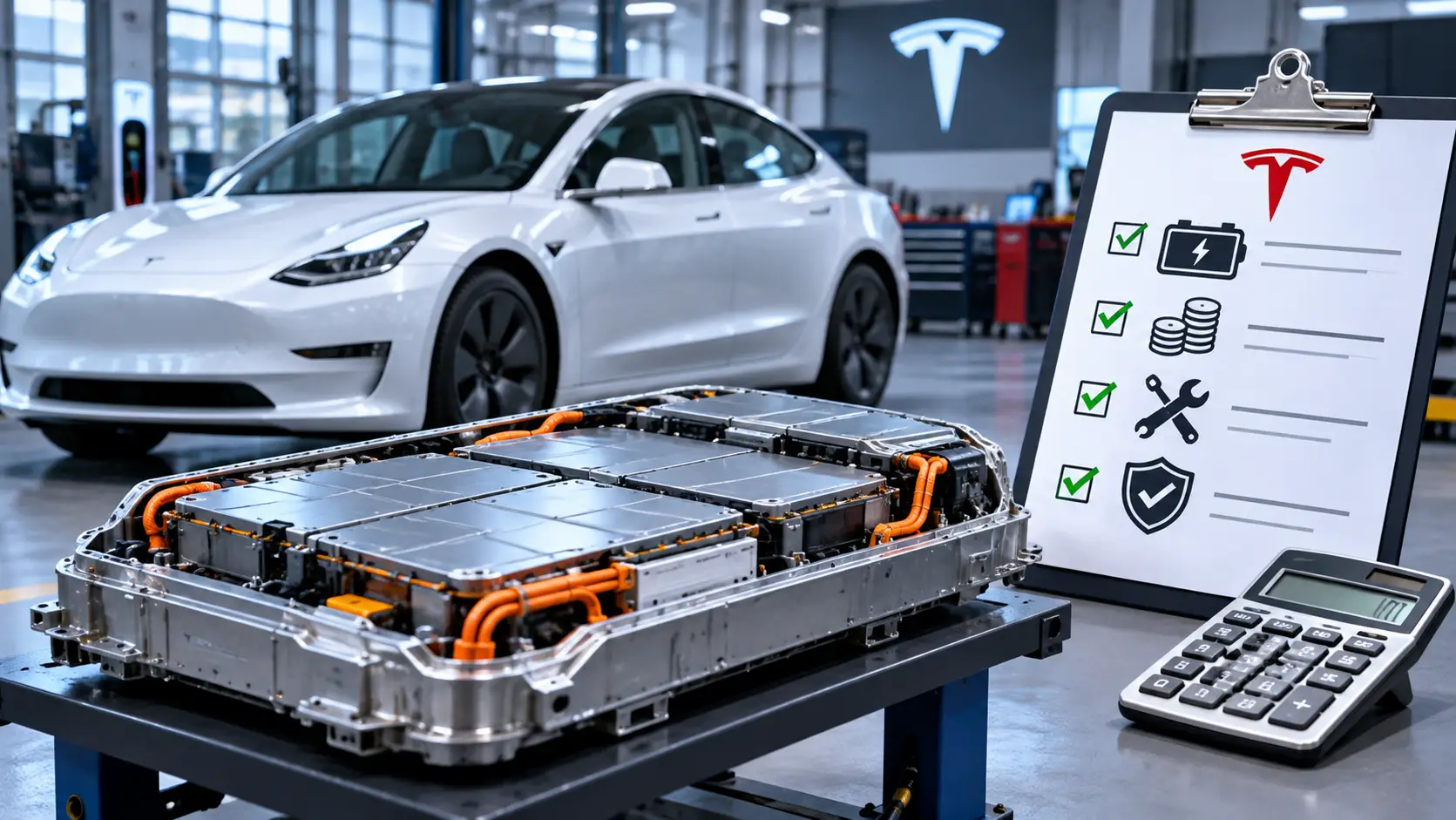
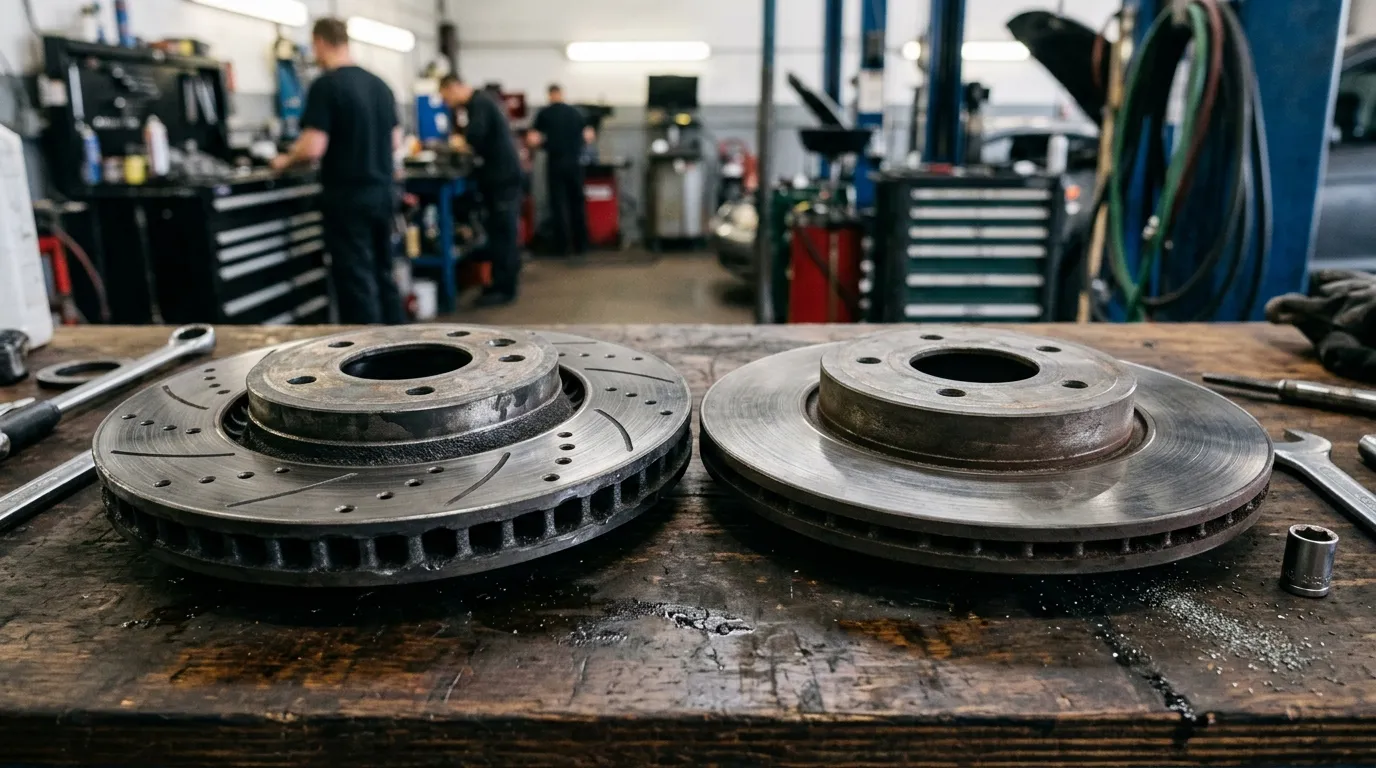
Whether you are launching an automotive distribution warehouse, managing an international fleet, or expanding a regional retail network, this guide details how to build a profitable, low-risk auto spare parts supply chain. Explore our full catalog of genuine and premium replacement parts on the REIFTEIL Wholesale Auto Spare Parts Portal.
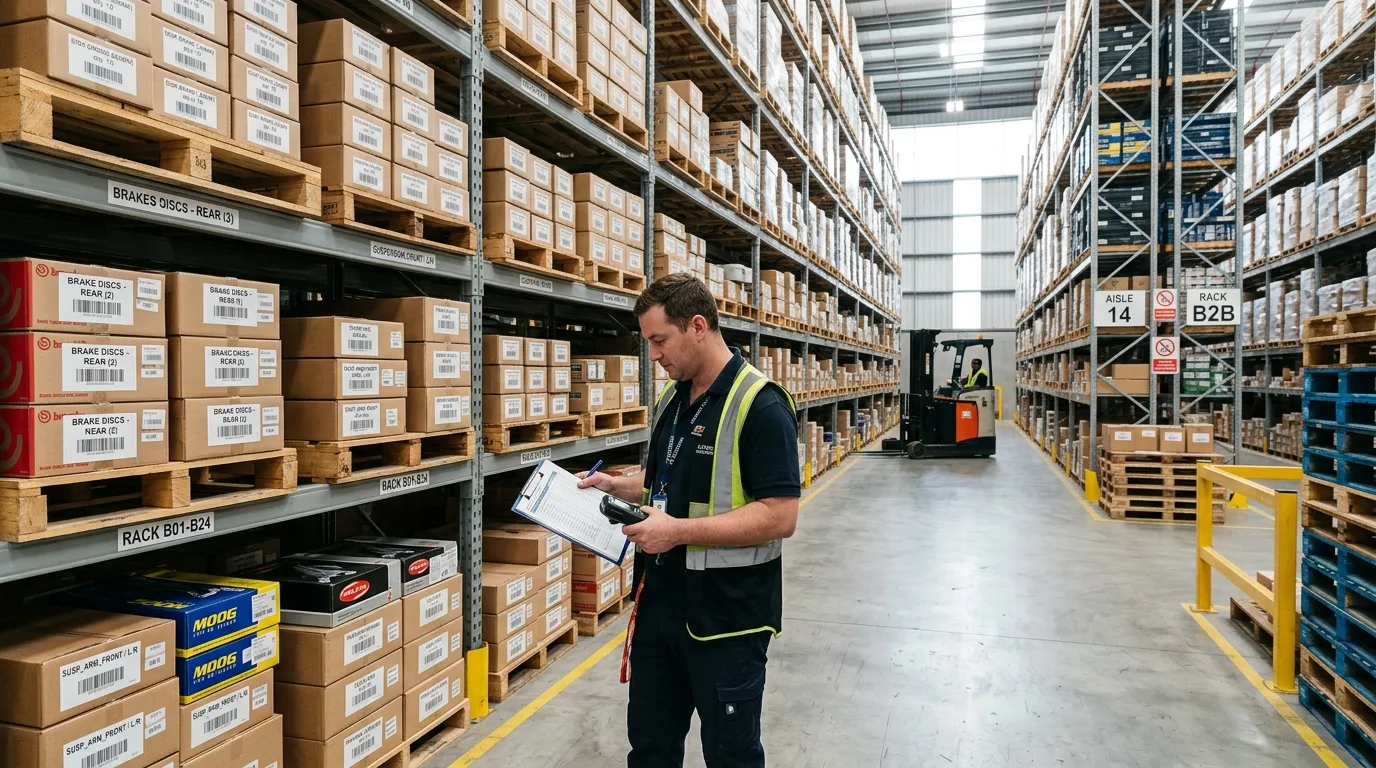
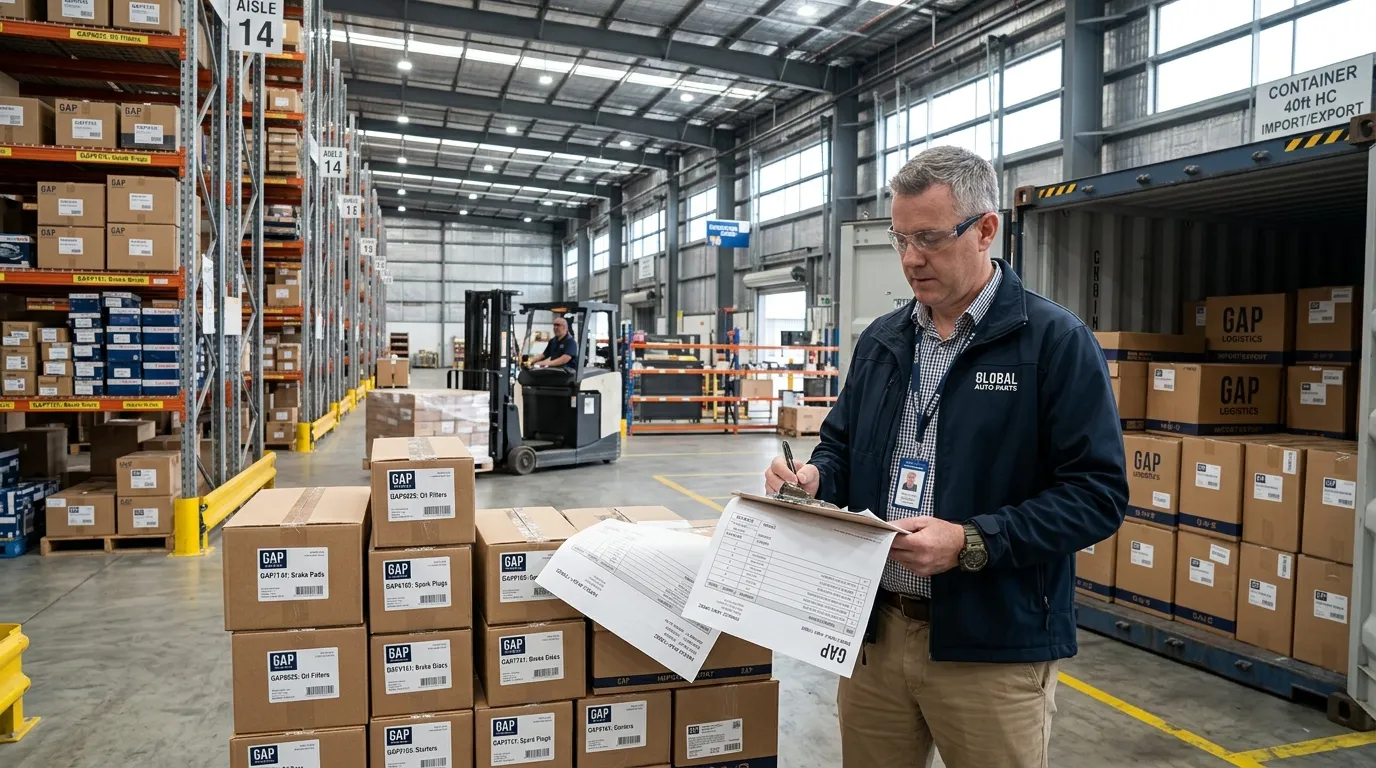
Modern Automotive Distribution Logistics: Container-load palletizing, barcoded inventory auditing, and quality assurance inspection for wholesale brake, suspension, and engine components.
The 5 Pillars of Wholesale Auto Parts Sourcing
Balancing Genuine OE, OEM (Tier-1), and certified aftermarket to match your customer base.
Strict cross-referencing of OEM part numbers and EAN codes to eliminate costly return rates.
Factoring HS customs tariffs, volumetric freight density, and insurance beyond the cif-vs-ddp-vs-exw-when-buying-engine-oil.html" class="text-amber-600 hover:text-amber-700 underline font-medium">FOB invoice.
Auditing IATF 16949 certification, warranty policies, and warehouse consolidation capacity.
Prioritizing high-turnover "A-Items" (brakes, filters, suspension) over slow-moving assemblies.
Combining auto parts with tires in single containers for maximum freight cube utilization.
Understanding the Auto Parts Supply Chain Tiers
Before submitting purchase orders, B2B buyers must understand the hierarchy of automotive parts manufacturing. For an in-depth breakdown of tolerances and margins, read our guide on OEM vs aftermarket auto parts: what’s the difference?
A Tier-1 OEM / OES Suppliers
Global industrial giants (e.g. Bosch, Brembo, Sachs, Valeo, Lemförder, ZF, Schaeffler) that engineer and manufacture parts directly for carmakers. They sell the identical part under their own brand name at 30% to 50% below dealership prices.
Premium Quality & Highest ReliabilityB Certified Aftermarket Manufacturers
Specialized manufacturers operating under ISO 9001 and IATF 16949 standards (e.g. Febi Bilstein, Meyle, TRW, Delphi). They reverse-engineer OE components, often reinforcing known factory weak points at highly competitive wholesale price points.
Maximum Margin & Value BalanceCataloging & Part Number Cross-Referencing
In the spare parts business, ordering the wrong SKU is fatal to profitability. A single vehicle model (e.g. a BMW 3 Series F30) may have 5 different brake caliper and rotor fitments depending on production month, chassis package, and engine displacement.
The Universal Cross-Referencing Protocol:
- OE Number: The automaker's proprietary part number (e.g. VAG
1K0 615 301 T). - Manufacturer Part Number (MPN): The tier-1 brand number (e.g. Brembo
09.9145.11). - TecDoc KType / Article ID: The standardized global aftermarket database number linking the part to thousands of vehicle application variants.
- EAN-13 Barcode: The international retail scanning code printed on the packaging for warehouse automation.
Container Loads vs. Consolidated Mixed Pallets
How you structure your order volume directly impacts your landed margins:
Full Container Loads (FCL - 20ft / 40ft)
Best for high-density, heavy components (e.g. brake discs, control arms, clutch kits). A 20ft container can hold up to 21,000–26,000 kg. Provides the lowest possible freight cost per unit. Calculate container space using our container capacity calculator tool.
Ideal for Large Importers & Tier-1 HubsConsolidated Mixed Pallets (LCL)
Sourcing through a consolidator like Reifteil allows you to combine 50+ different SKUs on standardized Euro-pallets (brakes, suspension, engine oils, filters). This prevents tying up capital in slow-moving inventory. Learn more in our guide on choosing the right auto parts for your market.
Ideal for Retailers & Regional DistributorsInternational Trade Terms (Incoterms) & Risk Management
Avoid misunderstandings by agreeing upon precise Incoterms 2020 definitions with your wholesale supplier:
| Incoterm | Seller Responsibility | Buyer Responsibility | Recommended Use Case |
|---|---|---|---|
| FOB (Free on Board) | Loads goods onto the vessel at export port | Ocean freight, marine insurance, customs duty, port clearance | Standard for container-load sea shipments |
| CIF (Cost, Insurance & Freight) | Covers ocean freight and marine cargo insurance to destination port | Import customs clearance, port terminal handling, inland transport | Best for buyers without existing freight forwarding contracts |
| EXW (Ex Works) | Makes goods available at factory floor | All export transport, export customs, freight, and insurance | Only for buyers with local European logistics teams |
To accurately calculate total import costs including duty and demurrage, review our step-by-step tutorial on how to calculate the real landed cost of wholesale auto parts.
Source Genuine & Aftermarket Auto Spare Parts with REIFTEIL
Access over 50,000+ precision OEM and certified aftermarket SKUs. We consolidate container and mixed-pallet shipments of brake systems, suspension arms, clutch kits, and engine components from our German logistics hub.