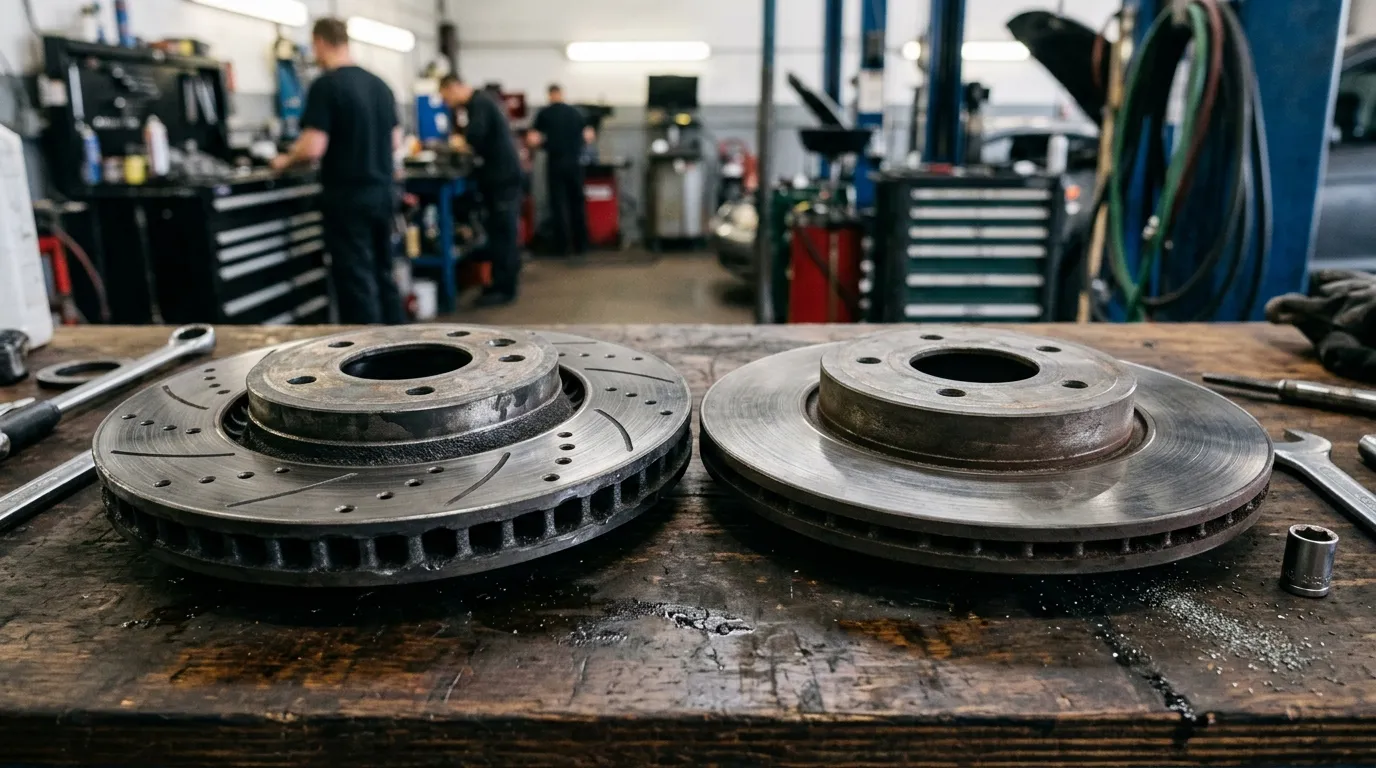
Two cars built in the same year with identical engine badges may use completely different brake rotor sizes, suspension control arms, or oxygen sensors due to mid-year production revisions or factory option packages. Ordering without VIN lookup leads to wrong-part returns, wasted shipping costs, and workshop delays.
This guide breaks down the 17-digit VIN structure, explains how Electronic Parts Catalogs (EPC) process VIN data, and details how to navigate option codes. Source verified fitment parts directly on the REIFTEIL Wholesale Auto Spare Parts Portal.
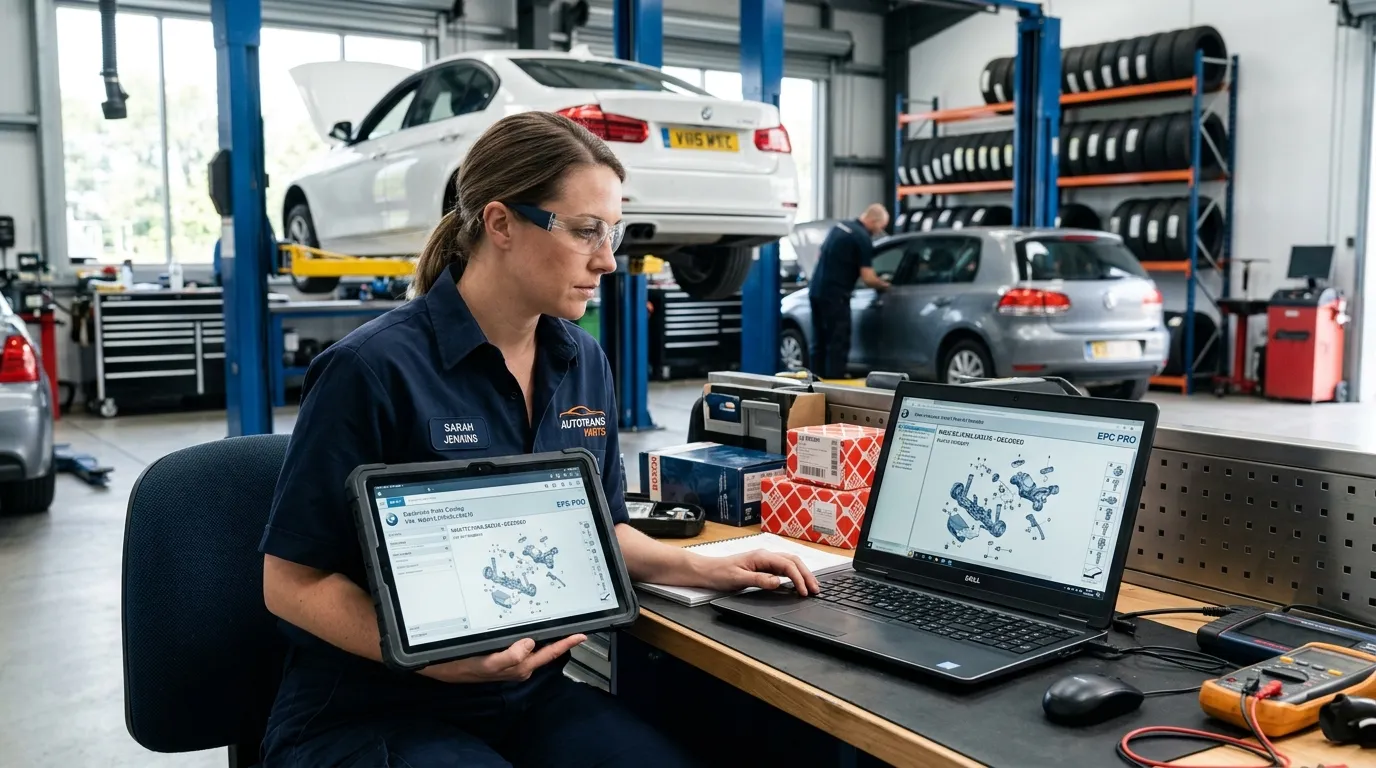
Electronic Parts Catalog (EPC) VIN Audit: Decoding 17-digit VIN numbers to filter chassis build dates, engine codes, and factory brake rotor PR option codes.
Quick Summary: 5 Steps to 100% Accurate VIN Part Identification
Why Model Year and Engine Size Alone Are Not Enough
Searching for parts using a general query like "2018 Volkswagen Golf 2.0 TDI" often returns 3 different front brake disc sizes and 2 different sway bar link lengths. General cataloging fails because:
Mid-Cycle Engineering Revisions
Automakers update component designs mid-year. A vehicle built in March 2018 may use different brake calipers than one built in November 2018.
Factory Option Packages
Sport suspension, towing packages, heavy-duty cooling, and wheel size upgrades change component part numbers on identical-looking trim levels.
Anatomy of a 17-Digit VIN (ISO 3779 Standard)
Every modern automobile carries a unique 17-character VIN divided into three standardized sections. Note that capital letters 'I', 'O', and 'Q' are strictly excluded to prevent visual confusion with numbers 1 and 0:
| Positions | Section Name | Information Encoded | Example (BMW) |
|---|---|---|---|
| 1 – 3 | World Manufacturer Identifier (WMI) | Country of origin, manufacturer, and vehicle division | WBA (BMW Germany) |
| 4 – 8 | Vehicle Descriptor Section (VDS) | Body style, engine model, transmission, restraint system | 3A51 (3 Series Sedan N20) |
| 9 | Check Digit | Mathematical security formula verifying VIN validity | 4 |
| 10 | Model Year Code | Standardized model year character (e.g. J = 2018, K = 2019, L = 2020) | J (2018 Model Year) |
| 11 – 17 | Vehicle Identifier Section (VIS) | Assembly plant location and sequential production chassis serial number | F782910 (Munich Plant) |
To understand how manufacturer OE numbers differ from supplier OEM numbers, read our detailed guide on OE Number vs OEM Number vs Aftermarket Part Number Explained.
How Electronic Parts Catalogs (EPC) Process VIN Data
When a VIN is entered into an official Electronic Parts Catalog (such as VAG ETKA, BMW ETK, Mercedes-Benz WIS/EPC, or Toyota Microcat), the software queries the automaker's central build server to retrieve:
Exact Manufacturing Build Date
Reveals the exact day and month the chassis rolled off the assembly line. This resolves mid-year production cut-offs (e.g. "parts for vehicles built up to 05/2017").
Factory Installed PR / Option Codes
Filters out uninstalled equipment variants (e.g. M-Sport heavy-duty brakes, towing package suspension, or sport chassis tuning).
Navigating VAG PR-Codes (Production Option Codes)
For German vehicles—especially Volkswagen, Audi, SEAT, and Skoda—VIN lookup alone may display two or three brake rotor diameters. In these cases, you must cross-reference PR-Codes (Produktionsnummern):
Real-World PR-Code Brake Rotor Example (VW Golf VII):
- PR Code 1ZE: 288 mm x 25 mm Front Ventilated Brake Disc (OE
1K0 615 301 T) - PR Code 1ZA / 1LV: 312 mm x 25 mm Front Ventilated Brake Disc (OE
1K0 615 301 AA) - PR Code 1LM: 340 mm x 30 mm Performance Front Brake Disc (OE
1K0 615 301 AB)
PR-Codes are printed on the white paper build sticker located inside the driver's service handbook or stuck to the spare tire well floor in the trunk. Learn how to cross-reference these against TecDoc numbers in How to Cross Reference Auto Parts Before Ordering.
What to Do When VIN Lookups Return Multiple Part Options
If an EPC or TecDoc VIN search yields two potential part numbers, take these 4 verification steps:
Order Verified Wholesale Auto Parts with REIFTEIL
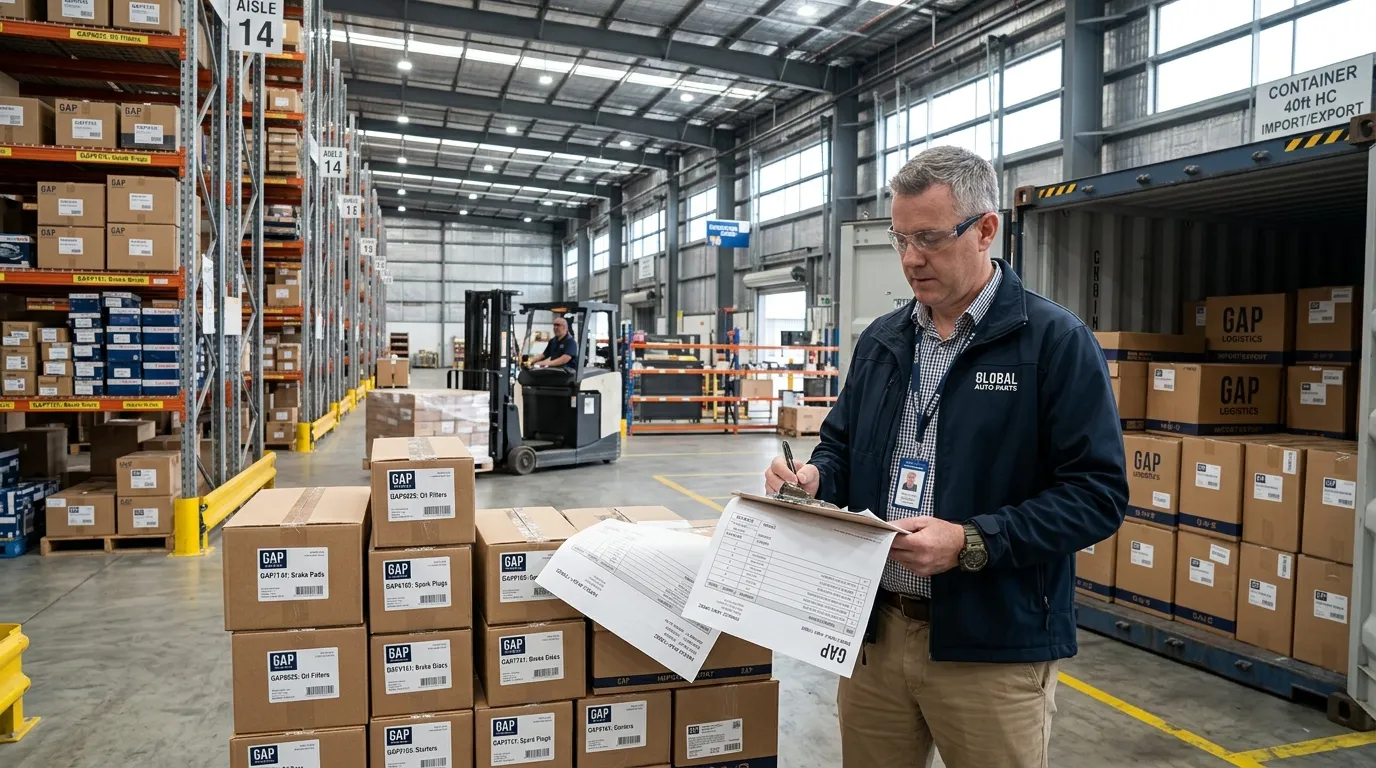
Avoid wrong-part returns. REIFTEIL's technical cataloging team provides VIN verification across all container and mixed-pallet wholesale orders for brake systems, suspension, and engine spares.
Frequently Asked Questions
What is a Vehicle Identification Number (VIN) and where is it located?
A VIN is a unique 17-character alphanumeric code assigned to every vehicle during manufacturing (ISO 3779 standard). It is located on the driver's side lower windshield glass, the B-pillar door jamb sticker, engine firewall, and vehicle registration documents.
Why is vehicle registration year alone insufficient for ordering spare parts?
Vehicles registered in the same calendar year may have been manufactured in different build months with mid-cycle engineering revisions. A 2018 model built in March 2018 may use different brake rotors or control arm bushings than one built in November 2018. VIN decoding reveals the exact build date.
What are VAG PR-Codes (Production Codes)?
PR-Codes are 3-character option codes used by Volkswagen Audi Group (VW, Audi, SEAT, Skoda) to specify exact factory equipment. For example, PR-1KW vs PR-1ZE on a VW Golf indicates whether the front brake disc is 288 mm or 312 mm in diameter.
What is an Electronic Parts Catalog (EPC)?
An EPC is an automaker software database (e.g. ETK for BMW, ETKA for VAG, EPC for Mercedes-Benz, Microcat for Hyundai/Toyota) that filters thousands of vehicle assemblies by VIN to display the precise OE part numbers installed at the factory.
Can letters I, O, and Q appear in a 17-digit VIN?
No. The capital letters 'I', 'O', and 'Q' are strictly excluded from international VIN standards to prevent visual confusion with numbers 1 and 0.
How does TecDoc use VIN data for aftermarket parts matching?
TecDoc decodes the VIN's World Manufacturer Identifier (WMI) and Vehicle Descriptor Section (VDS) to determine the exact KType or Article ID, cross-referencing factory OE numbers with certified aftermarket equivalents.
What should I do if a VIN lookup returns multiple part options?
When VIN decoding yields multiple options, verify chassis cut-off numbers (e.g. 'up to chassis #1F-400000'), inspect PR option codes on the trunk floor sticker, or physically measure component dimensions (disc diameter, spline count) before ordering.
Does REIFTEIL offer VIN-based wholesale order verification?
Yes. REIFTEIL's technical team provides VIN cross-referencing for bulk container and mixed-pallet orders to guarantee 100% fitment accuracy before dispatch.