Building a profitable tire distribution enterprise requires mastering three critical levers: working capital velocity, warehouse density optimization, and hyper-responsive route logistics. Below is the complete operational guide for launching and scaling a distribution hub.
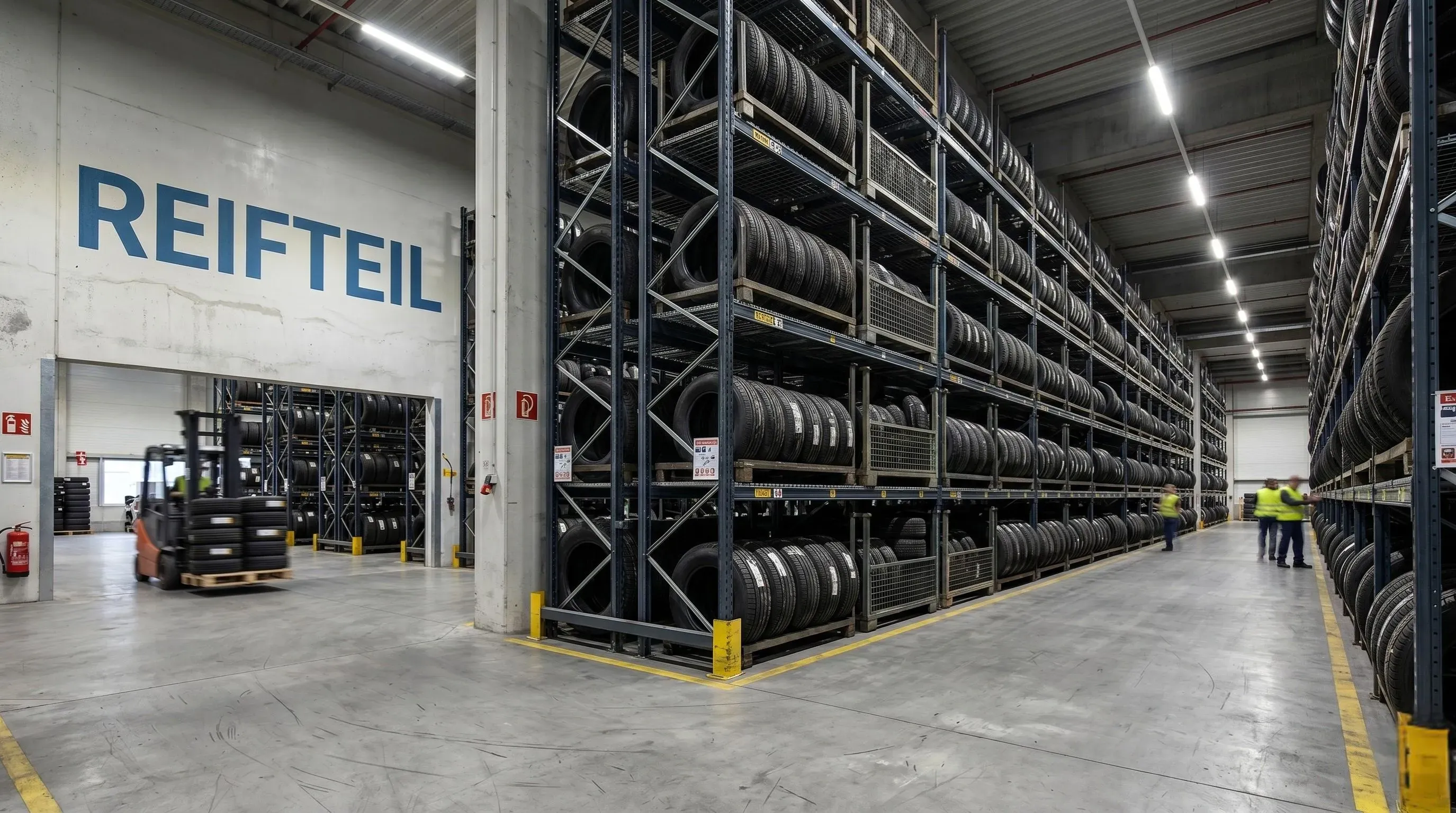
Commercial Tire Distribution: High-density vertical stillage racking, automated dispatch routing, and B2B trade management.
The 4 Pillars of Tire Distribution
Allocate 60% of capital to fast-moving inventory and 20% to warehouse racking and delivery vans.
Utilize modular steel stillages to store 8,000+ tires in an 1,000 m² footprint with forklift agility.
Win dealer loyalty with morning and afternoon scheduled van runs within a 45 km radius.
Enforce strict 30-day limits and SEPA mandates to protect against retail garage insolvencies.
1. Startup Capital Allocation & Operational Roadmap
A 120-day phased execution budget for launching a profitable 1,000 m² regional distribution hub:
| Execution Phase | Capital Required | Core Deliverables & Milestones | Risk Factor & Mitigation |
|---|---|---|---|
| Phase 1: Facility & Racking | €35,000 – €65,000 | Lease 1,000 m² warehouse, install stillages/racks, electric forklift | Ensure 6m ceiling height |
| Phase 2: Initial Container Stock | €120,000 – €250,000 | Order 3–4 containers of Top 10 PCR fast-movers + commercial TBR | Focus on Class-A sizes (80/20 rule) |
| Phase 3: Delivery Vans & WMS | €25,000 – €45,000 | Lease 2 long-wheelbase delivery vans, deploy barcode scanning WMS | Integrate live dealer web portal |
| Phase 4: Dealer Onboarding | €20,000 – €40,000 | Sign 50–100 local repair shops, establish twice-daily delivery routes | Offer 2/10 Net 30 cash terms |
2. Warehouse Architecture: Stillages vs Static Racks
Choosing the right storage system determines your picking speed and floor space utilization:
Maximum Flexibility & Density
Stackable 4-high steel cages holding 80–120 tires each. Stillages can be reconfigured dynamically between summer and winter seasons, reducing fixed racking construction costs.
Rapid Single-Tire Order Picking
Mezzanine pick towers with gravity roller conveyors for fast-moving individual tire picking. Perfect for rapid replenishment of express hot-shot delivery runs.
Frequently Asked Questions (FAQ)
How much capital is required to start a regional tire distribution business?
A regional wholesale operation typically requires €150,000 to €500,000 in initial working capital: €80,000–€250,000 for initial container inventory, €30,000–€60,000 for warehouse lease and stillage racking, €25,000 for delivery vans, and €20,000 for working capital reserves.
What size warehouse is needed to launch a tire distribution hub?
A starter distribution hub requires 800 to 1,500 square meters with a minimum 6-meter clear ceiling height. Using vertical tire stillages or dedicated tire racking, this footprint stores between 5,000 and 12,000 PCR/TBR tires.
What gross profit margins do wholesale tire distributors typically achieve?
Wholesale tire distributors operate on blended gross profit margins of 14% to 22%: 8%–12% on Tier-1 premium brands (Michelin/Continental), 18%–24% on Tier-2 brands (Hankook/Kumho), and 25%–35% on exclusive Tier-3/budget private brands.
How do wholesale distributors secure direct manufacturer supply agreements?
Manufacturers require proven regional dealer networks, minimum annual volume commitments (typically 20,000+ tires/year), proof of financial liquidity or bank guarantees, and dedicated territory marketing plans.
What delivery service level do retail tire shops expect from distributors?
Retail tire dealers expect twice-daily route deliveries (morning run and afternoon run) or 45-minute 'hot-shot' on-demand delivery for fast-moving customer bay orders within a 30–50 km radius.
What software systems are essential for modern tire wholesale management?
A modern distributor requires a specialized Warehouse Management System (WMS) with barcode/RFID tire scanning, an ERP integrating B2B dealer ordering portals with live stock feeds, and automated route dispatch optimization software.
How do distributors manage dealer credit risk and avoid bad debt?
Implement strict credit scoring, mandate personal guarantees for independent garages, enforce credit limits (e.g. €5,000–€15,000), require SEPA direct debit mandates, and offer 2% cash discounts (2/10 Net 30) for early payment.
How can new distributors partner with REIFTEIL to accelerate their startup phase?
New distributors can partner with REIFTEIL as a master import and fulfillment backbone, accessing container-tier pricing on mixed pallets without needing millions in upfront capital or factory-direct MOQs.
Final Verdict: Build Inventory Velocity & Route Dominance
A successful tire distribution business relies on flawless local logistics and sharp inventory control:
The Golden Summary:
- Prioritize Delivery Frequency: Twice-daily delivery captures 80% of local repair bay replenishment.
- Maintain 20%+ Blended Margins: Anchor your inventory with high-margin Tier-2 and Tier-3 brands.
- Scale with REIFTEIL: Partner with REIFTEIL for master container fulfillment and multi-category supply breadth.
Scale Your Tire Distribution Business with REIFTEIL
Access master import pricing, flexible mixed pallet allocations, and full European inventory across PCR tires, TBR tires, Auto Parts for Your Market" class="internal-link font-semibold text-blue-600 hover:text-blue-800 hover:underline decoration-blue-300 decoration-2 underline-offset-2 transition-colors" data-inlink="true">auto parts, and lubricants.