The Warning Signs at a Glance (Critical Checklist)
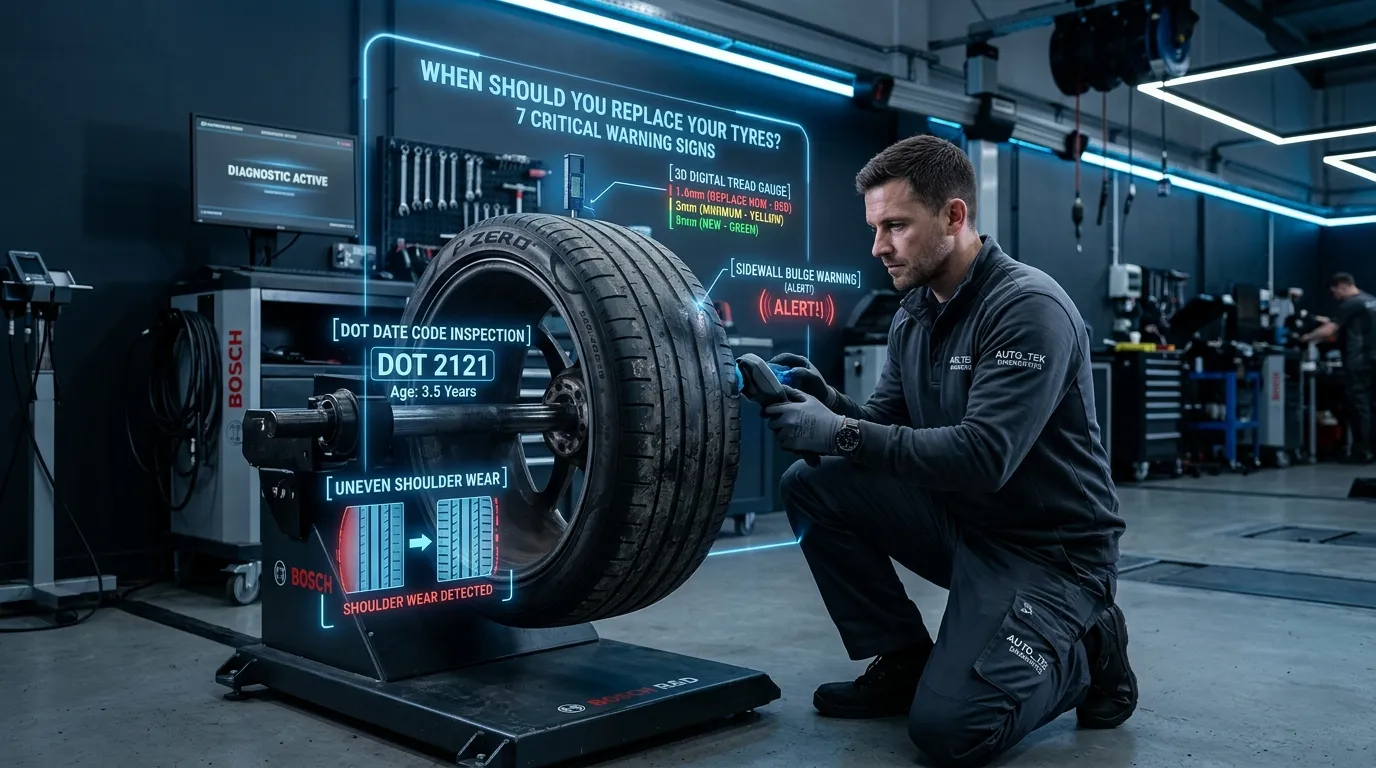
- Tread Depth Approaching 3mm / 1.6mm: Loss of wet water channel evacuation capacity.
- Sidewall Bulges, Bubbles or Deep Cuts: Internal ply cords broken. Immediate blowout hazard!
- Advanced Age (>6 Years via DOT Code): Hardened, oxidized rubber with micro-checking cracks.
- Uneven Shoulder or Center Wear: Alignment toe/camber faults or improper pressure.
- Chronic Repeated Air Pressure Loss: Bead corrosion, hairline alloy cracks, or valve leaks.
- Deteriorated Wet Handling & Vibration: Longer stopping distances, pulling, and road roar.
The 7 Warning Signs To Know it's Time for New Tires
1. Your Tyre Tread Depth Is Too Low
In Germany and throughout the European Union, the legal minimum tread depth is 1.6 mm across the central three-quarters of the tread. However, legal compliance is NOT the same as safety.
| Tread Depth | Tyre Condition | Recommended Action |
|---|---|---|
| 6.0 – 8.0 mm | New or Nearly New | Full aquaplaning safety. No action required. |
| 4.0 – 5.0 mm | Healthy Tread | Safe for summer and winter. Continue regular monitoring. |
| 3.0 mm | ADAC Summer Threshold | Wet braking distances increase significantly. Plan replacement. |
| 2.0 mm | Critically Worn | Severe aquaplaning risk in moderate rain. Replace immediately. |
| 1.6 mm | German Legal Minimum (StVZO) | Mandatory replacement. Fines and TÜV failure if driven. |
2. Visible Cracks, Sidewall Bulges, or Deep Cuts
A tyre can have 7 mm of tread and still be an emergency. When a tyre strikes a sharp pothole or curb, the internal cord carcass can rupture while the outer rubber remains intact.
A localized bubble on the sidewall indicates that the internal structural carcass cords have snapped. The high internal air pressure is held in only by a thin layer of external rubber. This tyre can blow out catastrophically at motorway speeds. Do not drive on it—replace it immediately.
3. Your Tyres Are Getting Old (The 6-Year Rule)
Rubber compounds naturally oxidize, lose plasticizers, and harden over time due to UV sunlight, ozone, and temperature cycles. Even if a spare tyre has sat unused in a dark trunk for 8 years, its rubber has hardened like plastic:
How to Decode the DOT Date Code:
DOT XXXX 3523 → [35 = 35th Week] [23 = Year 2023]
ADAC and German tyre industry associations recommend replacing any passenger car tyre once it reaches 6 to 8 years of age, regardless of remaining tread depth.
4. The Tread Is Wearing Unevenly
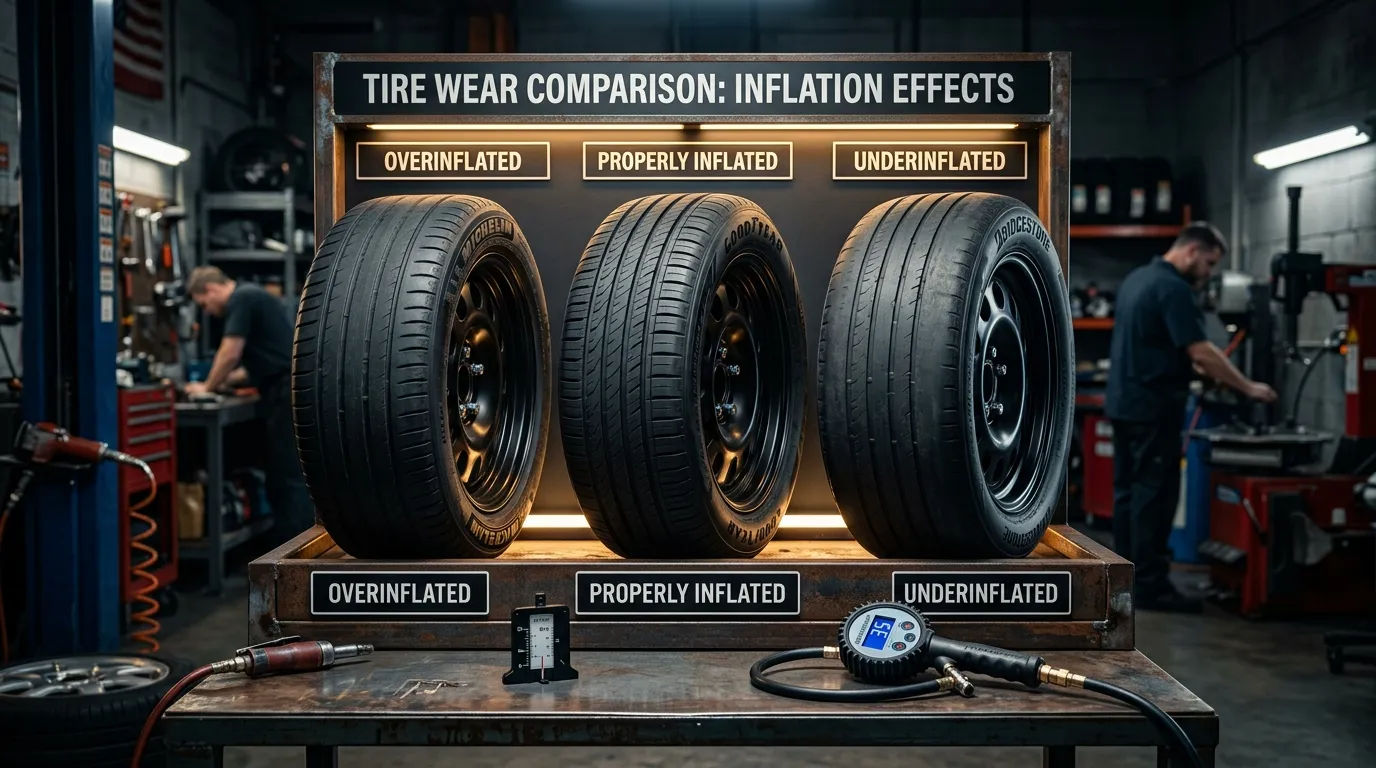
- Inner Shoulder Bald: Excessive negative camber or toe-out misalignment. Wears down to metal cords rapidly.
- Center Rib Worn: Chronic overinflation. The center ballooned out and carried all vehicle weight.
- Both Outer Shoulders Worn: Chronic underinflation. The tyre sagged in the middle, riding on its shoulders.
- Cupping / Scalloping: Worn shock absorbers or suspension bushings allowing the wheel to bounce uncontrollably.
- Feathered Edges: Incorrect toe angle scrubbing the tyre sideways across the road like sandpaper.
- Fix the Underlying Fault: Never fit new tyres without performing a 4-wheel laser alignment to protect your investment.
Sign 5: Repeated Pressure Loss
If a tyre loses 0.3+ bar every week, you have a slow puncture, a corroded alloy wheel bead seal, or a perished valve stem. Driving on underinflated tyres generates massive internal heat buildup.
Sign 6: Your Car Handles Differently
If your vehicle wanders in crosswinds, pulls to the side, generates loud drone noise, or triggers traction control on dry acceleration, the tyre structure or compound has degraded.
Sign 7: Multiple or Unrepairable Punctures
Punctures in the outer shoulder or sidewall are legally unrepairable (BS AU 159). Tyres with more than 2 previous repairs or speed ratings above 240 km/h (V, W, Y) should generally be replaced rather than re-plugged.
How to Perform a 5-Minute At-Home Tyre Inspection
- Step 1: Check Tread: Use a depth gauge or a 1-Euro coin (gold rim is 3 mm wide).
- Step 2: Inspect Sidewalls: Run hands along outer and inner sidewalls to feel for bulges.
- Step 3: Measure Cold Pressure: Check with a digital gauge against the B-pillar placard.
- Step 4: Check DOT Date: Confirm the 4-digit code is less than 6 years old.
- Step 5: Look for Wear Bias: Check for inner/outer shoulder differences across each tyre.
- Step 6: Pay Attention Driving: Notice steering vibrations at 90–120 km/h or vehicle pulling.
Frequently Asked Questions
How often should tyres be replaced?
There is no single mileage limit. Average tyres last 35,000 to 50,000 km or 4 to 6 years. Driving style, wheel alignment, vehicle weight, and road surfaces all influence lifespan.
Is 3 mm tread depth safe to drive on?
It is above the 1.6 mm legal limit, but wet braking distance increases significantly. ADAC recommends planning replacement at 3 mm for summer tyres and 4 mm for winter/all-season tyres.
Why is a tyre sidewall bulge so dangerous?
A bulge means internal carcass structural cords have snapped after a pothole impact. The tyre is held together only by thin outer rubber and can blow out violently at motorway speeds.
How do I check tyre age using the DOT code?
The last 4 digits on the sidewall indicate the manufacture date. For example, DOT 3523 means the 35th week of 2023. Tyres older than 6 years should be replaced regardless of remaining tread.
Can an old tyre still be used if it has plenty of tread?
No. Rubber oxidizes and hardens over time. An 8-year-old tyre with 6 mm of tread will take drastically longer to stop in wet conditions and may crack or delaminate.
What causes uneven tyre wear on the shoulders?
Uneven edge wear is typically caused by improper wheel alignment (camber/toe angles), worn suspension bushings, or improper inflation pressure.
When can a punctured tyre be repaired?
A puncture can only be repaired if it is in the central 75% of the tread (the crown), is under 6 mm in diameter, has no internal cord damage, and was not driven on flat.
Why can't sidewall punctures be repaired?
The sidewall experiences extreme dynamic flexing and lateral shear stress while rolling. Plugs and patches cannot hold securely under these loads and will detach.
Should I replace tyres at 2 mm tread depth?
Yes. At 2 mm, you are dangerously close to the 1.6 mm legal limit. Aquaplaning resistance is almost non-existent in moderate rain, and stopping distances on wet roads double compared to new tyres.
When replacing only two tyres, should they go on the front or rear?
Always fit the new tyres with deeper tread on the rear axle. Rear-axle grip provides lateral stability and prevents dangerous oversteer fishtailing during wet emergency braking, regardless of whether your car is front-, rear-, or all-wheel drive.
Final Verdict
Knowing when to replace your tyres isn't just about watching the tread wear down to 1.6 mm:
The Golden Summary:
- 1. Inspect Beyond Tread: Check age (DOT code), sidewall bulges, and shoulder wear
- 2. Replace at 3mm/4mm: Don't wait for the 1.6mm legal limit to protect wet braking
- 3. Mount on Rear: When fitting two new tyres, always place them on the rear axle
Regular 5-minute inspections give you peace of mind, prevent roadside breakdowns, and ensure peak safety in every driving condition.
Fresh, Premium PCR & SUV Tyres with REIFTEIL
Looking for container-load wholesale supply of freshly manufactured passenger, commercial, and ultra-high-performance tyres? Connect with our international distribution center today.