Simply fitting a new tyre without diagnosing the underlying mechanical cause will result in your brand-new tyre being destroyed in the exact same pattern within 5,000 km. Learning to "read" your tread wear patterns saves hundreds of Euros in premature replacements.
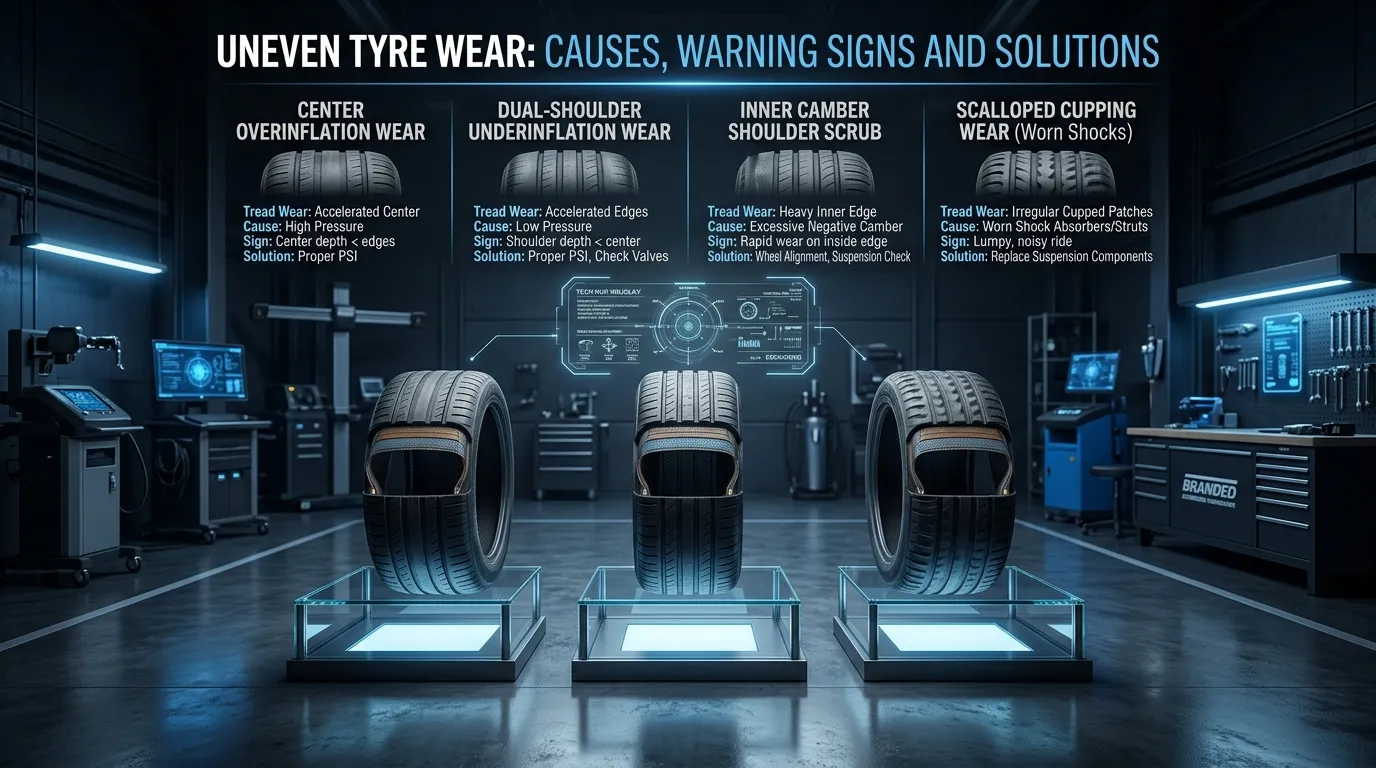
Automotive Diagnostics Workshop: Center Overinflation Profile, Dual-Shoulder Underinflation Wear, Inner Camber Shoulder Scrub, and Scalloped Cupping from Worn Dampers.
The Wear Patterns Explained
Negative camber, toe-out, or worn control arm bushings.
Positive camber, hard cornering, or moderate underinflation.
Chronic overinflation. Center balloons out carrying all load.
Chronic underinflation. Center sags, riding on outer edges.
Worn shock absorbers allowing un-damped wheel bounce.
Incorrect toe angle dragging blocks sideways across tarmac.
The 7 Common Types of Uneven Tyre Wear
1 Wear on the Inner Edge (The Hidden Killer)
The inside edge faces underneath the vehicle, making it almost invisible during a casual glance. Motorists often assume they have 5 mm of tread until a technician reveals exposed steel wire cords on the inside shoulder.
2 Wear on the Outer Edge
When the outside shoulder wears down much faster than the rest of the tread, the outer edge is bearing excessive lateral load.
3 Center Tread Wear (Overinflation)
The center of the tread is worn down while both shoulders have deep remaining tread. Learn more in our guide on how to tell if tires are overinflated or underinflated.
4 Both Shoulders Worn (Underinflation)
Both the inner and outer shoulders are bald while the center has plenty of tread left. Discover why in our analysis of why tires lose pressure.
5 Cupping or Scalloping (Worn Shock Absorbers)
The tread develops a series of scooped-out dips or scalloped depressions around the circumference. It produces a loud humming noise similar to a broken wheel bearing. Read our full technical breakdown on tire cupping and cracking causes and solutions.
6 Feathering (Toe Angle Misalignment)
Run your palm across the tread blocks. They feel smooth sliding in one direction, but catch like a serrated saw blade in the other direction.
7 Patchy or Localized Flat Spots
Isolated bald spots at one specific point on the tyre circumference causing speed-dependent thumping vibrations.
How to Fix Uneven Tyre Wear: Quick Solution Guide
| Wear Pattern | Root Mechanical Cause | Corrective Solution |
|---|---|---|
| Center Tread Wear | Pressure too high | Lower pressure to B-pillar placard value |
| Both Shoulders Worn | Pressure too low | Inflate cold tyres to factory recommendation |
| Inner Edge Wear | Negative camber / toe-out | Perform 4-wheel laser alignment + check bushings |
| Outer Edge Wear | Positive camber / hard cornering | Check alignment angles & adjust driving style |
| Feathered Sawtooth | Incorrect toe angle setting | Adjust steering tie-rod toe calibration |
| Cupping / Scalloping | Worn shock absorbers / imbalance | Replace shock absorbers + balance wheels |
| One Tyre Wearing 2x Faster | Stuck brake caliper / bent link | Inspect brake caliper slider pins & control arms |
How to Perform a 5-Minute DIY Tread Inspection
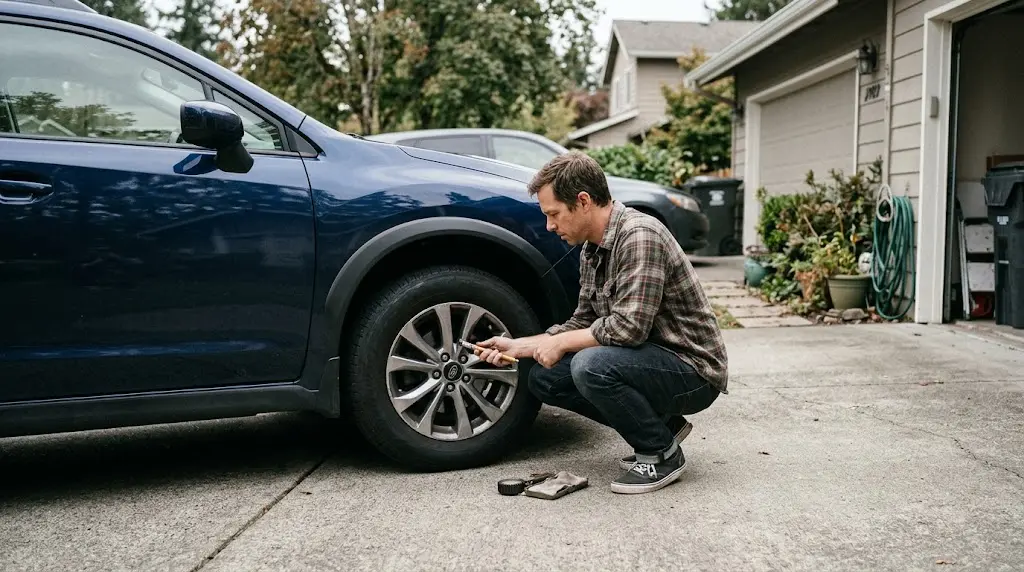
Turn steering wheel fully to the left/right to expose the inner shoulders for inspection.
Measure Used Tire Tread Depth: What Wholesale Buyers Should Know" class="internal-link font-semibold text-blue-600 hover:text-blue-800 hover:underline decoration-blue-300 decoration-2 underline-offset-2 transition-colors" data-inlink="true">tread depth at 3 points: inner groove, center groove, and outer groove.
Feel for cupped valleys or serrated feathered block edges in both directions.
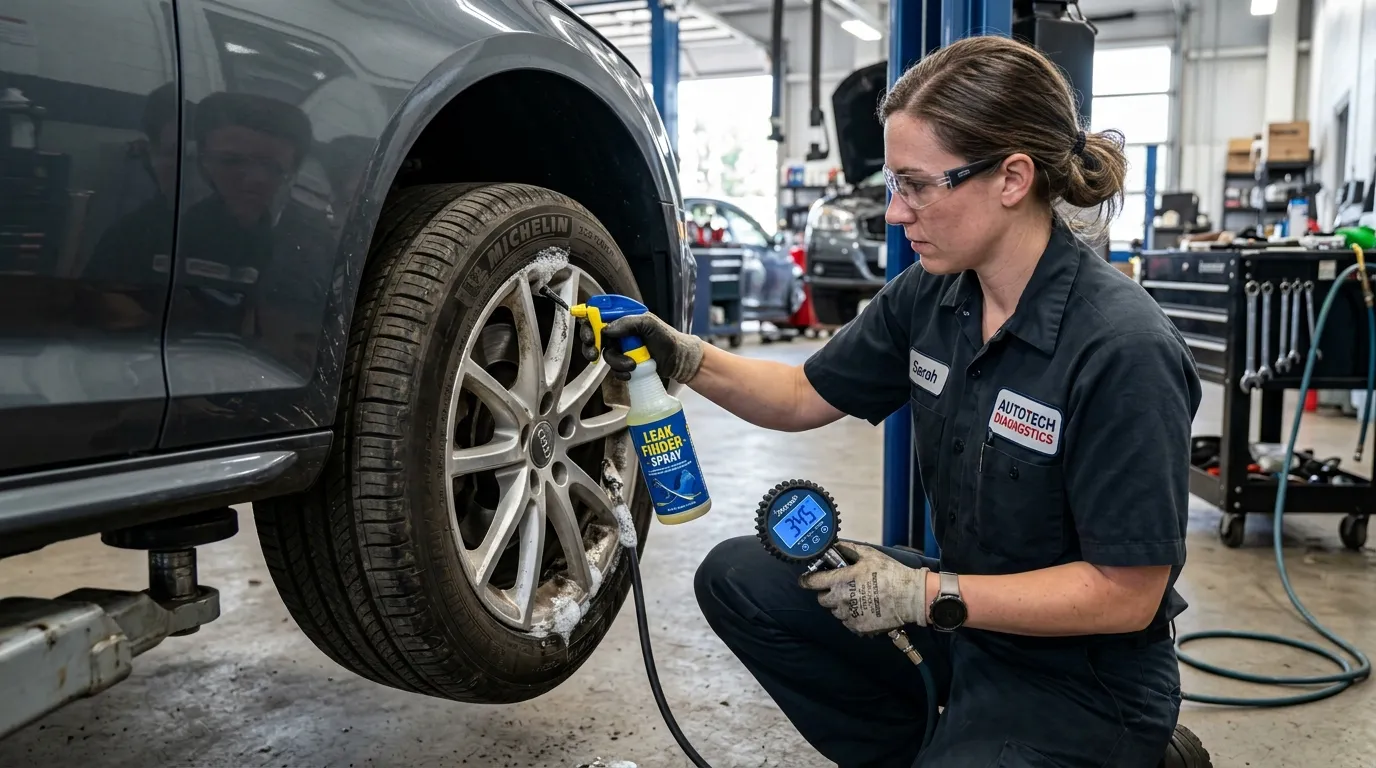
Use a digital gauge before driving and match to the driver door B-pillar sticker.
If front tyres wear 2x faster, schedule a tyre rotation before tread delta exceeds 3 mm.
Harmonic roaring noise at 80 km/h indicates cupping from worn shock absorbers.
Frequently Asked Questions
Why are my tyres wearing unevenly?
The most common causes include incorrect inflation pressure, wheel alignment geometry errors (camber/toe), worn suspension bushings or shock absorbers, dynamic wheel imbalance, and aggressive cornering.
What causes the inside edge of a tyre to wear bald?
Inner edge wear is almost always caused by excessive negative camber (top of wheel tilting inward), incorrect toe-out alignment, or worn control arm bushings that allow the suspension to splay under load.
Why is the center of my tyre tread wearing faster than the edges?
Center tread wear is the classic sign of chronic overinflation. High pressure causes the center of the tyre to balloon outward, forcing the center rib to carry disproportionate vehicle weight.
Why are both outer edges of my tyre wearing faster than the center?
Dual-shoulder wear indicates chronic underinflation. When pressure is too low, the center of the tread sags inward, concentrating contact pressure and friction on the outer shoulders.
What is tyre cupping (scalloping) and what causes it?
Cupping appears as diagonal dips, scoops, or scalloped valleys around the tread circumference. It is caused by worn shock absorbers or struts that fail to dampen wheel oscillation, allowing the tyre to bounce uncontrollably against the tarmac.
What is feathered tyre wear?
Feathering occurs when tread blocks wear smoothly on one edge and sharp/saw-toothed on the other. It is caused by improper toe alignment, which drags the tyre slightly sideways as it rolls forward.
Can unevenly worn tyres be fixed?
The underlying mechanical cause (alignment, pressure, shock absorbers) can be fixed, but rubber that has physically worn away cannot be restored. If any part of the tread has reached the 1.6 mm legal limit or exposed cords, the tyre must be replaced.
Will rotating tyres fix an alignment problem?
No. Rotating tyres only moves the worn tyre to a different axle position; it does not correct the suspension angles. The newly installed tyre will immediately begin wearing unevenly unless a 4-wheel alignment is performed.
Why does tyre cupping make a loud humming or roaring noise?
The irregular peaks and valleys of cupped tread strike the road at harmonic intervals, generating high-frequency acoustic vibrations that sound identical to a failed wheel bearing.
How often should I inspect my tyres for uneven wear?
Perform a visual and tactile inspection at least once a month when checking cold inflation pressure, and always after hitting a severe pothole or curb.
Final Verdict
Uneven tyre wear is an early warning system from your vehicle's chassis:
The Golden Summary:
- Center Wear: Check and lower your tyre pressure
- Shoulder Wear: Check and raise your cold tyre pressure
- Inner/Outer Edge Scrub: Book a 4-wheel laser alignment immediately
- Cupping & Drone Noise: Inspect shock absorbers, struts, and wheel balance
Catching uneven wear early prevents premature tyre replacement and protects the rest of your suspension system.
High-Mileage PCR, SUV & Fleet Tyres with REIFTEIL
Looking for container-load wholesale supply of durable, precision-engineered tyres with advanced tread compounds designed for even wear and high mileage? Contact our German logistics center today.