Corporate diversification away from concentrated Chinese manufacturing into Southeast Asian hubs (frequently framed as the "China Plus One" strategy) faces substantial infrastructure and maritime hurdles. According to Maersk, no single logistics route offers an optimal balance of cost, transit velocity, and reliability across the Asia-Pacific network.
Reported Operational Findings: Feeder Reliances and Inland Deficits
According to the Maersk assessment, the transition of production capacity into markets such as Vietnam, Thailand, Malaysia, Indonesia, and Cambodia has decentralized origin cargo volumes without a matching development in deep-water maritime infrastructure. Key operational points verified in the carrier's evaluation include:
- Transshipment Dependencies: While primary Chinese export gateways (such as Ningbo-Zhoushan, Shanghai, and Shenzhen) offer direct ocean sailings on ultra-large container vessels (ULCVs) to European and North American destination ports, many Southeast Asian manufacturing terminals rely heavily on secondary feeder loops connecting to regional hubs like Singapore, Tanjung Pelepas, or Port Klang.
- Draft and Berth Constraints: Secondary manufacturing locations, including northern Vietnam (Haiphong) and riverine terminals in Thailand and Cambodia, have draft limits preventing direct calls by linehaul vessels, adding double-handling stages and increasing vulnerability to transshipment blank sailings.
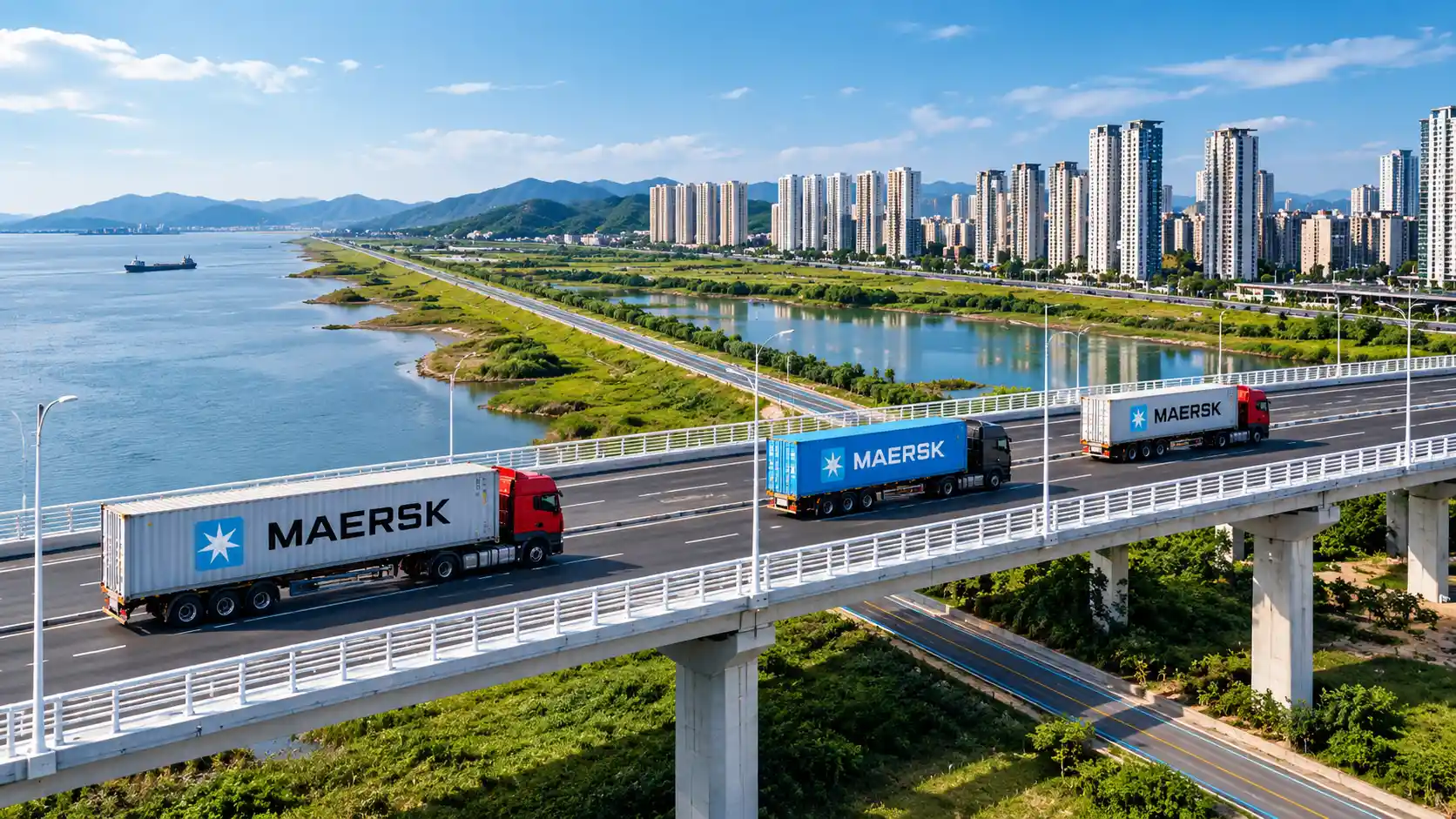
- Cross-Border Land Corridors: Cross-border trucking and rail corridors between Southern China and Southeast Asia—utilized to transfer intermediate industrial goods, chemical precursors, and sub-assemblies—continue to experience periodic border post congestion and divergent customs automation standards.
Tyre and Automotive Industrial Sourcing Exposure
The operational realities outlined by Maersk carry direct consequences for commercial tyre distributors, fleet operators, and automotive spare parts procurement managers. Over the past decade, substantial commercial vehicle radial (TBR) and passenger car radial (PCR) production capacity relocated to Thailand, Vietnam, and Cambodia, primarily driven by international anti-dumping tariffs on Chinese-origin products.
Modern tyre manufacturing still depends heavily on materials sourced from China. These include specialized synthetic rubber, carbon black, bead wire, and tyre cords. Many of these materials are shipped to Southeast Asian factories, where tyres are assembled, vulcanized, inspected, and packed into containers for export to Europe, the Middle East, and the Americas.
Disruptions along regional shipping routes can delay these deliveries. As a result, Southeast Asian factories may face shortages of essential materials, interrupting production schedules and delaying finished tyre shipments.
REIFTEIL Trade Analysis: Practical Procurement Implications
The following assessment represents REIFTEIL's independent trade analysis based on prevailing ocean freight conditions and regional customs handling:
1. Extended Ocean Transit Buffers
Tyre importers purchasing popular TBR fleet fitments (such as 315/80R22.5, 385/65R22.5, and 295/80R22.5) from Southeast Asian plants must account for an additional 7 to 14 days of transit latency compared to direct-call Chinese origins. Feeder transit, transshipment container moves at hub ports, and rolling risks during peak export periods necessitate increasing minimum inventory order buffers from 60 days to 75–90 days of forward consumption.
2. Customs Documentation and Rules of Origin Scrutiny
Importing tyres and components from secondary Southeast Asian manufacturing facilities requires rigorous origin substantiation. Customs authorities in the European Union and the United States continue to inspect non-preferential Certificates of Origin to prevent illicit transshipment or minor-assembly circumvention.
Importers must verify that their suppliers maintain clean, auditable bills of materials confirming substantial transformation occurred within the exporting Southeast Asian nation.
3. Packaging and Container Loading Density
Freight costs can fluctuate due to feeder surcharges and differences in carrier pricing between major Chinese ports and smaller Southeast Asian ports. When containers are not fully loaded, the shipping cost per tyre increases.
To keep costs under control, buyers should maximize container capacity while protecting the tyres from damage. Depending on the tyre type and packaging, this may involve double-stacking or using specialized securing systems. Efficient container loading is essential to preserving the cost advantages of sourcing tyres outside China.