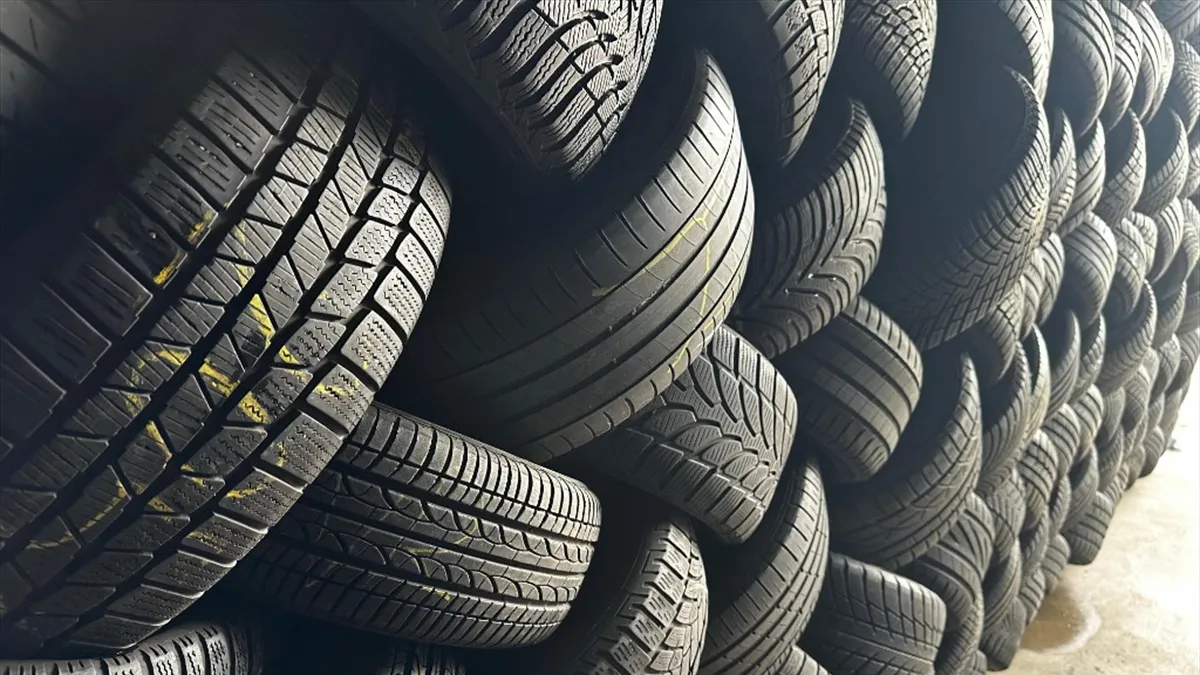
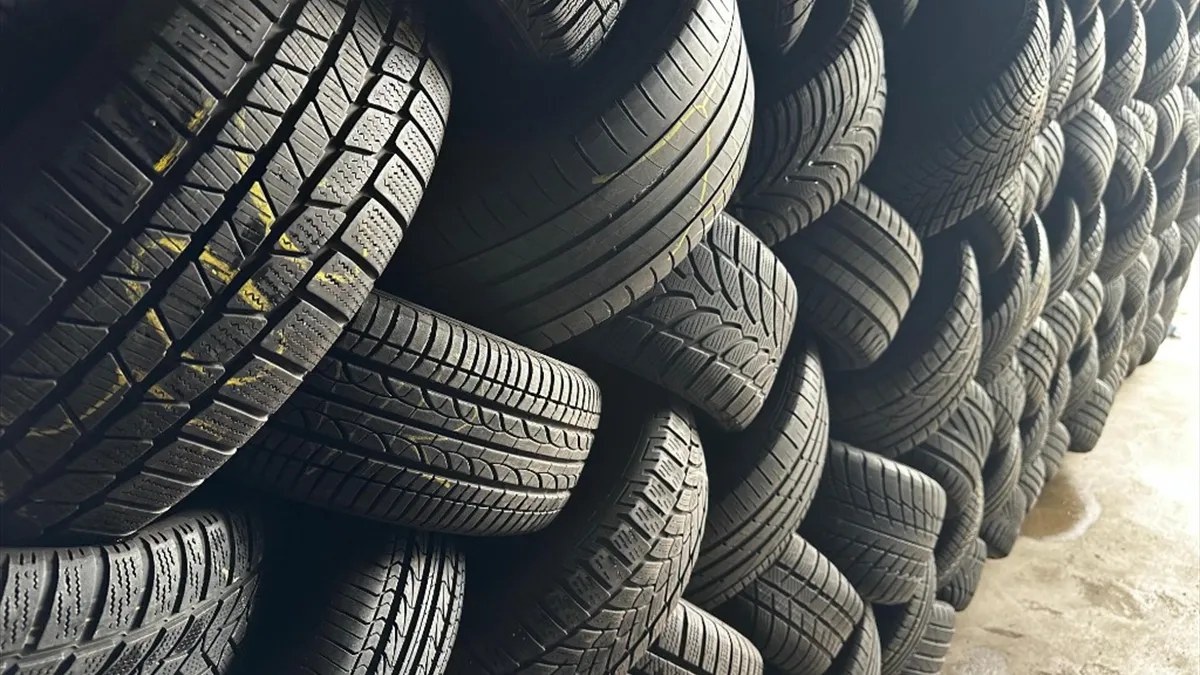
For professional buyers, the goal is not simply to buy cheap used tires.
Before purchasing a pallet, truckload, or container of used tires, you should know exactly what you're buying and how the tires have been inspected. This guide covers the main areas to check when evaluating used tires in bulk.
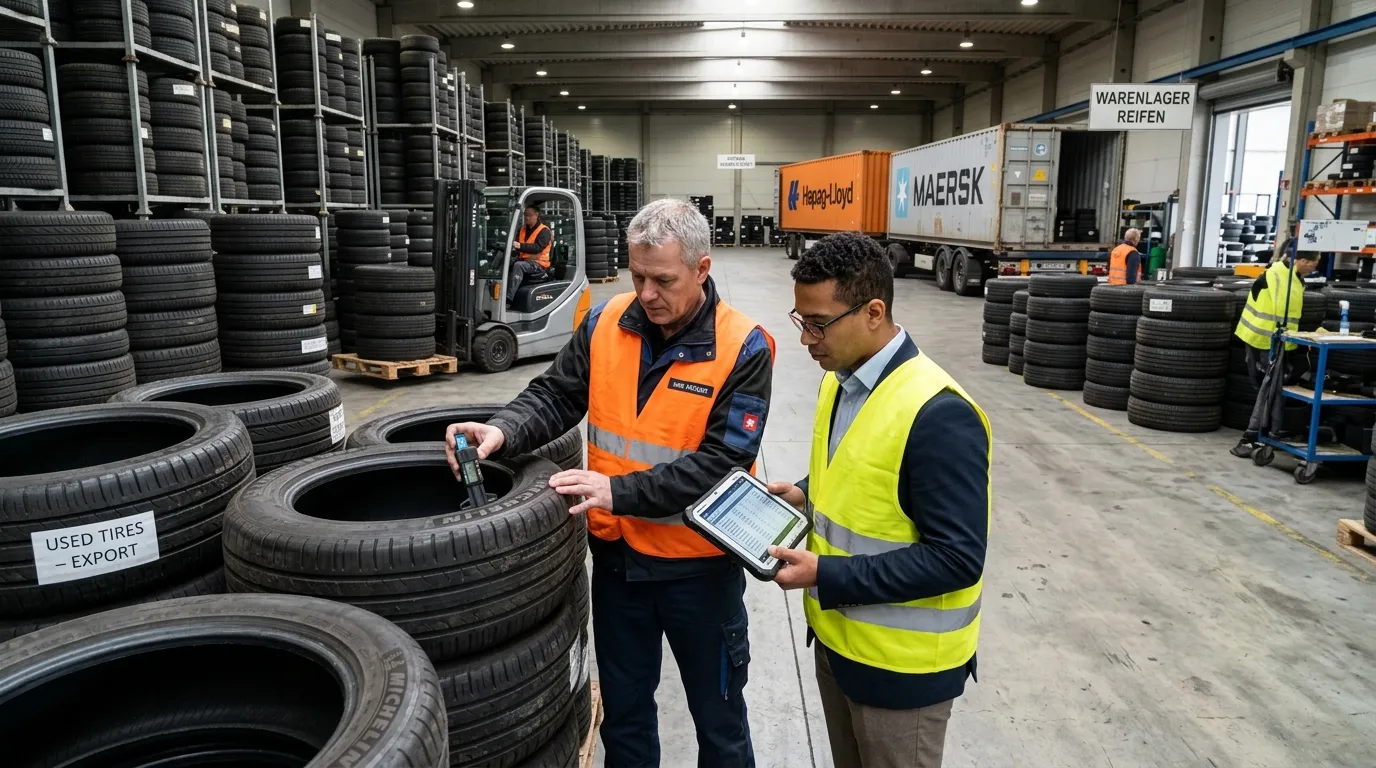
Quality Inspection Protocol: Checking bead seating, tread depth uniformity, and innerliner integrity under inspection lighting.
Why Used Tire Inspection Matters
A used tire can look good from the outside and still have problems that aren't immediately obvious. Potential issues can include:
- Uneven or excessive tread wear
- Sidewall damage or bulges
- Bead rubber tears
- Previous puncture repairs
- Internal carcass damage
- Run-flat rubber powder ruin
- Ozone cracking & aging
- Belt deformation
- Unsuitable tire specifications
When buying a large quantity, a small percentage of unsuitable tires can have a significant effect on the economics of the shipment.
The 10 Things to Check When Buying Used Tires in Bulk
1. Tread Depth
Tread depth is one of the first things buyers should check. However, don't rely solely on an advertised average tread depth.
Ask the supplier for:
- Minimum tread depth
- Typical or average tread depth
- Tread-depth range
- How tread depth is measured
- Whether measurement is taken at multiple points across the profile
What to look for across the tread profile:
- Inner Shoulder
- Inner Ribs
- Center Ribs
- Outer Ribs
- Outer Shoulder
Significant differences across these zones indicate uneven wear and should be investigated.
2. Check for Uneven Tread Wear
A used tire should not be judged by tread depth alone. Look at the wear pattern across the entire tread circumference:
- Inner-Edge Wear: May indicate alignment or negative camber problems on previous vehicle.
- Outer-Edge Wear: Can be associated with positive camber, aggressive cornering, or suspension issues.
- Center Wear: Typically caused by prolonged driving with excessive inflation pressure.
- Shoulder Wear: Both shoulders worn indicates chronic under-inflation or heavy loads.
- Feathering: Tread blocks feel smoother in one direction and sharp/raised in the other (toe error).
- Cupping or Scalloping: Repeated high and low scalloped areas caused by worn shock absorbers or loose bushings.
A small amount of irregular wear does not automatically make a tire unusable, but significant uneven wear drastically reduces resale value and customer satisfaction.
3. Inspect the Sidewalls
The sidewall carries the load and flexes continuously during vehicle operation. Look carefully for:
- Bulges & Bubbles
- Deep Cuts
- Serious Abrasions
- Exposed Cords
- Significant Cracking
- Casing Deformation
- Impact Damage
- Previous Sidewall Patches
4. Check the Bead Area
The bead is the steel-reinforced ring that seals the tire airtight against the wheel rim flange. Damage here makes mounting impossible. Inspect for:
- Torn bead chafer rubber
- Damaged bead seating surface
- Exposed steel reinforcement wires
- Kinked or deformed bead rings
- Dismounting tire lever tears
- Bead heel cuts
This is especially vital with used tires because every unit has undergone dismounting. Ensure supplier inspection protocols actively audit the bead toe and heel.
5. Inspect the Innerliner
The inside halobutyl liner can reveal severe damage completely invisible from the outside. Inspect internally for:
- Hidden puncture entry holes
- Internal rubber abrasion & blisters
- Belt cord separation
- Run-flat rubber powder residue
- Unvulcanized string plugs
- Trapped foreign debris or water
6. Check Previous Repairs
A repaired tire is not automatically disqualified, but buyers must establish explicit repair standards before purchasing.
Ask your supplier:
- Are repaired tires included in this lot?
- What repair types are accepted (mushroom combo patches vs plugs)?
- Where may repairs be located (strictly central tread crown)?
- Are shoulder and sidewall repairs 100% excluded?
- How are repaired units marked on the manifest?
- What maximum percentage of the batch may have repairs?
7. Check Tire Age and DOT Information
The DOT code on the sidewall indicates the exact week and year of manufacture:
Establish acceptable DOT thresholds in writing before ordering. Do not accept vague descriptions like "fresh used tires". Factor in storage history, local legal limits, and rubber elasticity.
8. Check the Brand, Model and Specification
Not all used tires have equal resale value. Speed ratings, load index, seasonal suitability, and brand tiering heavily influence retail margins.
- Premium Tier-1 Brands
- High-Demand PCR Sizes
- SUV & 4x4 Profiles
- Run-Flat Fitments
- Commercial Van Tires
- Summer vs All-Season
- Winter & 3PMSF Spec
- UHP Staggered Sizes
A container full of technically usable tires is a bad investment if the majority of the sizes and specifications have little demand in your regional market.
9. Check Whether Tires Are Matching
If you retail tires to end consumers or workshops, matching pairs and complete vehicle sets carry higher resale premiums than isolated singles. Ask if the lot contains:
- Individual singles
- Matching pairs (same brand/tread)
- Complete matching sets of 4
- Same-brand matching pairs
- Same-model matching pairs
- Same-size mixed-brand stock
Before ordering, inform the supplier whether your business model relies on pairs, sets, or single spare replacements.
10. Check the Quantity and Manifest
Compare the actual contents of the shipment against an agreed itemized manifest:
| Manifest Field | What to Verify |
|---|---|
| Tire size | Correct size dimensions and quantity counts |
| Brand | Agreed brand mix (Premium vs Quality brands) |
| Model | Tread pattern consistency where applicable |
| Grade | Agreed Grade A vs Grade B criteria |
| Tread depth | Guaranteed minimum and range depth |
| Season | Summer, winter (3PMSF), or all-season |
| Category | PCR, SUV, light commercial van, TBR |
| Repairs | According to agreed repair tolerance limits |
| Age / DOT | Within agreed maximum age limit |
| Quantity | Actual physical quantity loaded into container |
The more detailed the manifest specification, the faster discrepancies can be identified and credited.
Don't Buy Used Tires Based on "Grade A" Alone
"What exactly does your Grade A mean?"
Grade A and Grade B are not universal legal standards that guarantee identical quality across every supplier. One supplier's Grade A may be another supplier's Grade B.
A useful grading specification explicitly defines:
- Minimum Tread Depth
- Max Wear Variation
- Repair Criteria
- Sidewall Condition
- Bead Condition
- Age / DOT Limits
- Matching Requirements
- Cosmetic Defect Limits
The grade name matters far less than the technical specification behind the grade.
Ask How the Tires Are Inspected & Pressure Tested
A serious wholesale buyer must understand the supplier's quality-control and testing protocols before placing container orders:
Pre-Loading QC Questions
- Are tires individually inspected on a spreader stand?
- Is tread depth measured at multiple points?
- Are beads and sidewalls checked 360°?
- Are innerliners scanned for puncture repairs?
- Are defective tires physically segregated and scrapped?
- Is stock sorted by verified Grade A/B manifests?
Pressure Testing Verification
- What pneumatic pressure is used (e.g. 2.5 to 3.5 bar)?
- How long is each tire held under pressure?
- Is 100% of the shipment tested, or only a small sample?
- What pressure drop constitutes an automatic failure?
- How are failed units removed and documented?
- Are automated testing logs available upon request?
How to Inspect a Bulk Shipment When It Arrives (6-Step Protocol)
When receiving a container or pallet shipment, do not immediately mix everything into warehouse stock. Follow this 6-step receiving protocol:
- Check Documents: Compare the physical delivery against the purchase order, packing list, and size manifest.
- Sample Representative Lots: Check tires from different sizes, brands, grades, and front/middle/rear container sections.
- Inspect High-Risk Zones: Pay special attention to bead toes, sidewall flex zones, innerliner belly, and repair patches.
- Record All Defects: Photograph and document any tire that does not meet the agreed contract specification.
- Compare Results: Evaluate defect percentages against contract tolerances to trigger credit claims if necessary.
- Segregate Questionable Stock: Do not mix questionable tires into sellable inventory until discrepancy resolution is complete.
Agree on Rejection Criteria Before You Buy
Don't wait until the container arrives at your dock to decide what constitutes an unacceptable tire. Define these four areas in writing:
1. Product Specification
Agreed sizes, brand mix, grade allocations, minimum tread depths, season, and maximum age (DOT).
2. Physical Condition Rules
Zero tolerance for sidewall bulges, torn beads, run-flat powder, string plugs, or ozone cracking.
3. Quantity & Size Ratio
Total piece count, size distribution percentage, brand ratios, and matching pair allowances.
4. Quality Claim Terms
Agreed sampling procedure, photo evidence requirements, credit notes, or replacement terms.
Calculate Cost Per Sellable Tire
Compare two supplier offers to see why advertised price per unit is deceptive:
Supplier A (Cheap Headline Price)
€10 / tireSupplier B (Higher Quality Yield)
€12 / tireWatch the Size Mix & Avoid Overbuying
One of the easiest ways to create dead stock is to buy a mixed lot that doesn't match regional vehicle fitments. Before purchasing:
Build Orders Around Demand
Analyze retail sales data to prioritize fast-moving PCR dimensions (such as 205/55 R16 and 195/65 R15), medium-moving SUV sizes, and commercial profiles. A slightly higher purchase price on fast-moving sizes generates far more cash flow than cheap obsolete stock.
Don't Overbuy Just to Fill a Container
If you need 1,000 tires, adding 500 slow-moving units just to maximize container fill ties up working capital and warehouse space. Balance freight savings against sales velocity and inventory turnover.
Used Tire Bulk Buying Checklist (18-Point Verification)
Audit your procurement workflow with this 18-point checklist before placing your next wholesale order:
How REIFTEIL Approaches Used Tire Quality
For professional buyers, quality must be based on clearly defined specifications rather than vague descriptions like "good condition".
REIFTEIL supplies wholesale used tires for B2B dealers, workshops, and exporters purchasing by pallet, truckload, or container. Sourcing parameters include:
- Custom Sizes
- Grade A / B
- Tread Specs
- PCR / SUV / TBR
- Season Sourcing
- Brand Preferences
- Destination Port
- DOT Thresholds
- 100% Inspection
- Pressure Tested
Request a Custom Used Tire Manifest & Quote
Provide your specific requirements to receive an itemized wholesale offer:
- Target Sizes: Dimensions & size ratios
- Order Volume: Pallets or container loads
- Preferred Grade: Grade A / Grade B
- Application: PCR / SUV / 4x4 / TBR
- Season: Summer / All-Season / Winter
- Destination: Port of delivery & customs requirements
Questions to Ask Your Used Tire Supplier
Before placing a large order, evaluate your supplier across these 4 operational categories:
1. About the Tires
- What does your Grade A or Grade B classification mean?
- What is the guaranteed minimum tread depth?
- What percentage of the shipment is expected to meet the agreed grade?
- Are repaired tires included, and what repair types are accepted?
- What is the expected DOT/age distribution?
2. About Inspection
- How are tires inspected (spreader stands vs floor visual)?
- Are tread depths measured at multiple points across all ribs?
- Are the innerliner and bead bundle inspected 360°?
- Are tires checked for pneumatic air retention?
- How are defective scrap units physically removed?
3. About the Shipment
- Can I receive an itemized manifest prior to loading?
- Can the size mix be customized to our market?
- What quantity can be loaded in the selected container (single/doubled/tripled)?
- What shipping documents are provided (BOL, manifest, EUR.1/REX)?
4. About Quality Discrepancies
- What happens if the shipment doesn't match the agreed specification?
- How are rejected tires documented and credited?
- What credit, replacement, or claim procedure applies?
Frequently Asked Questions (FAQ)
What are the most critical inspection areas when buying used tires in bulk?
The 10 key inspection areas are tread depth and distribution, uneven wear patterns, sidewall integrity, bead condition, innerliner condition, previous repair history, tire age and DOT codes, brand/model specifications, matching pair/set availability, and manifest accuracy.
Why is tread depth distribution more important than an average figure?
An advertised 5mm average tread depth could mean uniform 5mm tires, or an inconsistent mixture of 7mm and 3mm units. Evaluating the minimum, typical range, and measurements across inner, center, and outer ribs reveals true resale value and uneven wear.
Why is bead inspection critical for used tires?
Because used tires have already been mounted and dismounted, improper tire lever use can tear the chafer rubber or bend internal steel wires. A damaged bead cannot seal against the wheel rim, rendering the tire unusable scrap.
What does internal tire inspection (innerliner) reveal?
Internal inspection detects hidden puncture damage, internal abrasion, belt separation, improper external-only plug repairs, and crumb rubber powder residue which indicates the tire was driven while severely underinflated (run-flat damage).
What types of puncture repairs are acceptable on wholesale used tires?
Acceptable repairs are typically limited to professional internal vulcanized combo mushroom patches strictly located in the central tread crown. Sidewall and shoulder repairs, as well as temporary external string plugs, should be rejected.
How do you read a tire DOT date code?
The last four digits of the DOT serial indicate the manufacture date. For example, DOT XXXX 3523 means the tire was produced in the 35th week of 2023. Agree on acceptable age thresholds before placing an order.
What is the receiving inspection protocol for a container of used tires?
A standard 6-step receiving protocol includes: 1) Checking shipping documents and manifest, 2) Inspecting representative sample tires across sizes, 3) Checking high-risk zones (beads, sidewalls, innerliner), 4) Photographing and recording defects, 5) Comparing findings against the purchase contract, and 6) Separating questionable stock before acceptance.
How does REIFTEIL ensure quality on wholesale used tire shipments?
REIFTEIL supplies wholesale used tires with clearly defined Grade A and Grade B specifications, 100% visual and pneumatic pressure testing, custom size manifests, and transparent contract criteria tailored to B2B tire dealers and exporters.
Final Thoughts: Turning Bulk Purchasing into a Controlled B2B Decision
Buying used tires in bulk can be a profitable business opportunity, but the cheapest shipment is not necessarily the best shipment.
Before You Buy, Always Evaluate:
- Tread Depth
- Wear Pattern
- Sidewalls
- Bead Bundles
- Innerliner
- Repairs
- DOT Age
- Brand Mix
- Size Mix
- QC Procedures
The Strategic Takeaway
Agree on the quality specification before the tires are loaded. When you compare suppliers, look at the cost per sellable tire—that is what turns a bulk tire purchase from a gamble into a controlled B2B procurement decision.
Source Inspected Wholesale Used Tires with REIFTEIL
Eliminate receiving scrap risks. REIFTEIL supplies 100% visual and pressure-tested Grade A and Grade B used tires by the pallet or container load with itemized size manifests from European hubs.