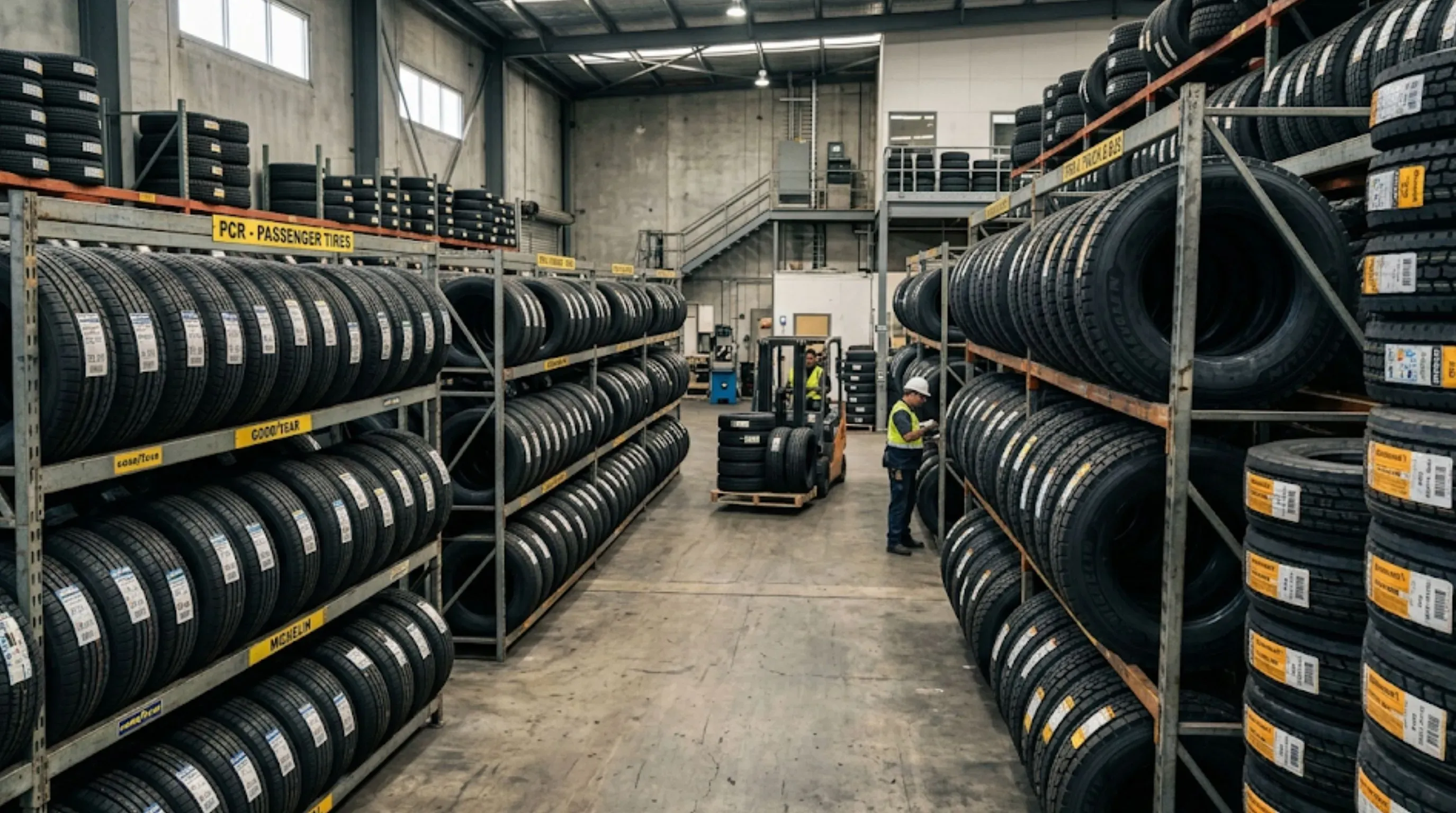
To protect your business investment, every bulk tire purchase must be audited against international legal standards, physical manufacturing tolerances, and chemical safety rules before issuing final factory payments.
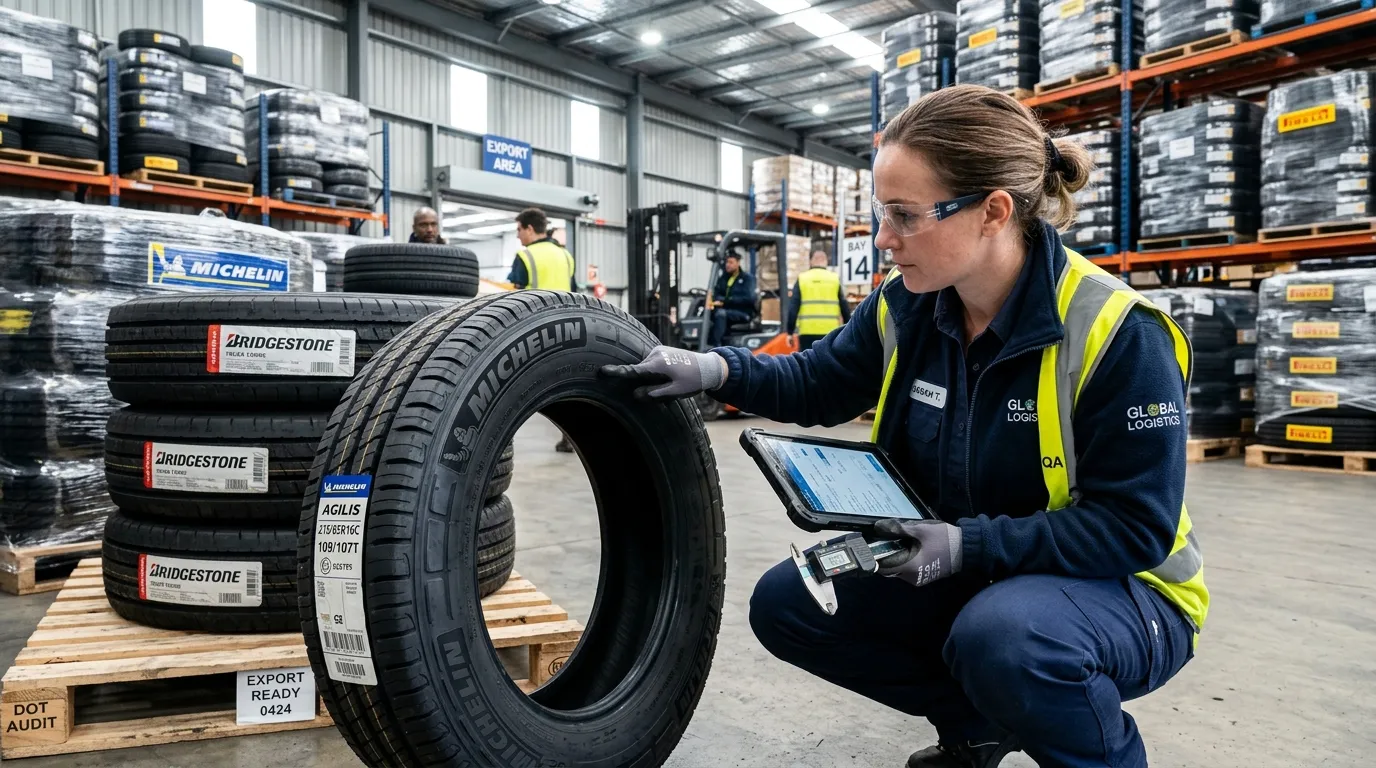
Pre-Import Inspection: Auditing DOT date codes, ECE R117 certifications, and tire bead structural dimensions.
The 4 Non-Negotiable Pre-Import Checks
Confirm legal embossed E-mark stamps for rolling resistance, wet grip, and pass-by noise.
Mandate in writing that all tires feature 4-digit DOT production date codes under 18 months old.
Verify geographic GPS coordinates for natural rubber plantations complying with EU deforestation law.
Deploy SGS or TÜV inspectors to test radial runout, bead thickness, and lacing compression.
1. Pre-Import Due-Diligence Checklist Table
Audit prospective bulk tire purchases across these 8 core compliance checkpoints:
| Compliance Area | Required Verification | Risk of Non-Compliance | Mandatory Document |
|---|---|---|---|
| 1. ECE E-Mark Homologation | Embossed E-number + approval code | Immediate customs impound & seizure | UNECE Homologation Certificate |
| 2. 3PMSF Alpine Winter Rating | Three-peak mountain snowflake symbol | Illegal to sell as winter tires in EU | R117 Snow Traction Test Report |
| 3. EUDR Deforestation Rule | Plantation GPS plot coordinates | Port confiscation & heavy corporate fines | EU Due Diligence Statement (DDS) |
| 4. DOT Production Freshness | 4-digit date code <18 months old | Customer rejection & dead inventory | Pre-Shipment Photo Audit |
| 5. REACH Chemical Standards | PAH extender oil limits (EC 1907/2006) | Environmental health recall | Chemical Lab Test Report |
| 6. Container Lacing Quality | Uncompressed herringbone stacking | Permanent bead distortion & mounting failure | Loading Supervision Report |
2. Key European Regulatory Benchmarks
Ensure every factory batch meets these statutory requirements:
ECE Regulation 117 (R117)
Mandates strict limits on tire rolling sound emissions, minimum wet grip braking performance, and rolling resistance coefficient (RRC) ratings. Uncertified tires cannot be sold legally in the UK or EU.
EUDR Rubber Compliance
The European Deforestation Regulation requires full supply chain traceability for natural rubber down to the exact farm plot, verifying that no deforestation occurred post-2020.
Frequently Asked Questions (FAQ)
What happens if imported tires lack embossed ECE E-marks at European customs?
If tires lack valid embossed ECE E-marks (ECE R30 for passenger cars, R54 for commercial trucks, R117 for noise and wet grip), customs authorities will impound the container, reject clearance, and mandate either re-exportation at buyer expense or destruction.
How does the EU Deforestation Regulation (EUDR) affect natural rubber tire imports?
Under EUDR regulations, tire importers must provide verifiable geolocation coordinates of the rubber plantation plots where the natural rubber was harvested, confirming the land was not deforested after December 31, 2020.
What is the maximum acceptable DOT date age when importing container tires?
The industry standard for imported wholesale tires is a maximum DOT age of 12 to 18 months from production at the time of customs clearance. Anything exceeding 24 months should be rejected or heavily discounted.
What is the difference between M+S and 3PMSF markings on imported tires?
M+S (Mud and Snow) is an unverified manufacturer self-declaration. 3PMSF (Three-Peak Mountain Snowflake) requires standardized physical snow-braking traction testing under UNECE R117, which is legally mandatory for winter driving in Germany and across the EU.
What third-party inspection should be conducted before paying the factory balance?
Conduct a Final Random Inspection (FRI) through an accredited agency (SGS, TÜV, or Bureau Veritas) based on ISO 2859-1 (AQL 2.5) sampling, testing visual appearance, dimensional conformity, DOT codes, and container packing lacing.
How do you verify if a factory tire compound complies with REACH chemical laws?
Request certified laboratory test reports (PAH content analysis) confirming extending oils and rubber vulcanization chemicals comply with EU REACH Regulation (EC) No 1907/2006 regarding polycyclic aromatic hydrocarbons.
Why is tire bead compression and lacing pattern important during pre-shipment checks?
Improper container lacing (excessive pressing or tight herringbone stacking) permanently deforms the bead wire and inner liner, creating mounting failures and air leakage when retail fitters attempt inflation.
How does REIFTEIL ensure 100% pre-import compliance for its tire inventory?
REIFTEIL enforces strict quality protocols: every container undergoes rigorous laboratory compliance verification, guaranteed DOT freshness under 18 months, full ECE/3PMSF homologation, and complete EUDR documentation.
Final Verdict: Quality Due Diligence Protects Margins
A comprehensive pre-import quality audit guarantees seamless customs clearance and customer satisfaction:
The Golden Summary:
- Verify E-Mark Stamping: Ensure ECE R30/R54/R117 marks are physically embossed on sidewalls.
- Mandate Fresh DOT: Reject any batch containing tires older than 18 months.
- Demand EUDR Evidence: Secure rubber plantation GPS coordinates prior to departure.
Source 100% Certified Wholesale Tires with REIFTEIL
Eliminate compliance risks. All REIFTEIL tire shipments feature guaranteed embossed ECE/3PMSF marks, DOT freshness under 18 months, and full EUDR certification with zero customs hassle.