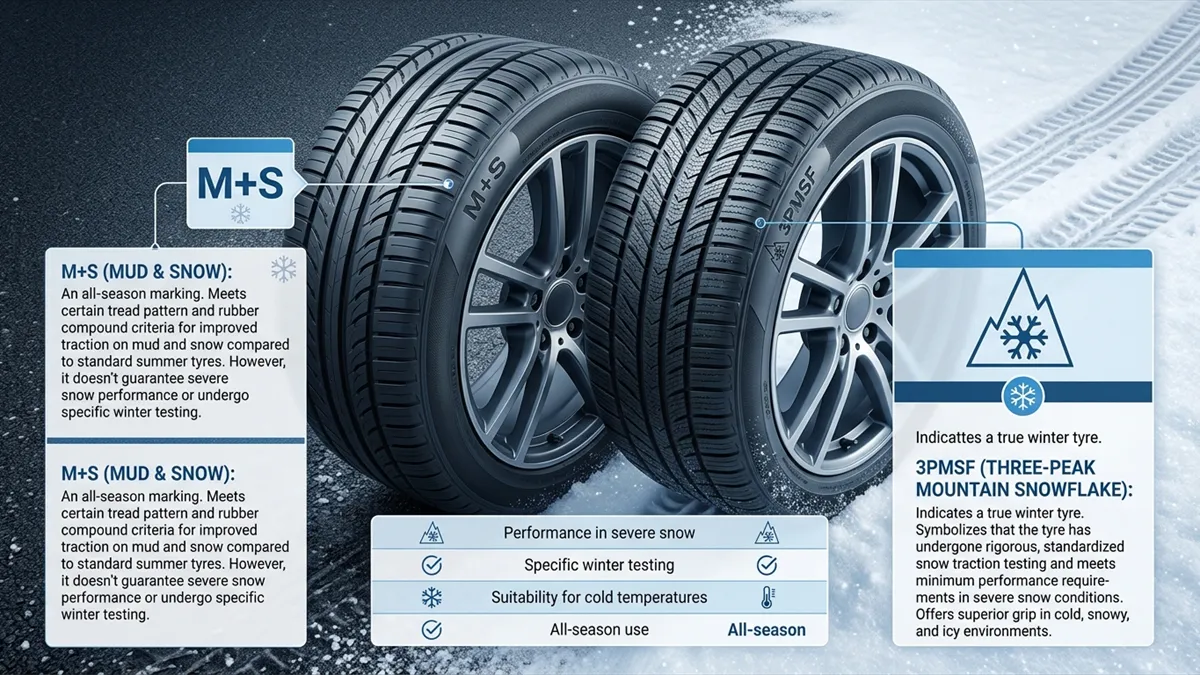
Understanding what each section of the DOT serial string represents ensures that wholesale buyers purchase legally compliant inventory, maintain product safety, and prevent costly customer warranty disputes.
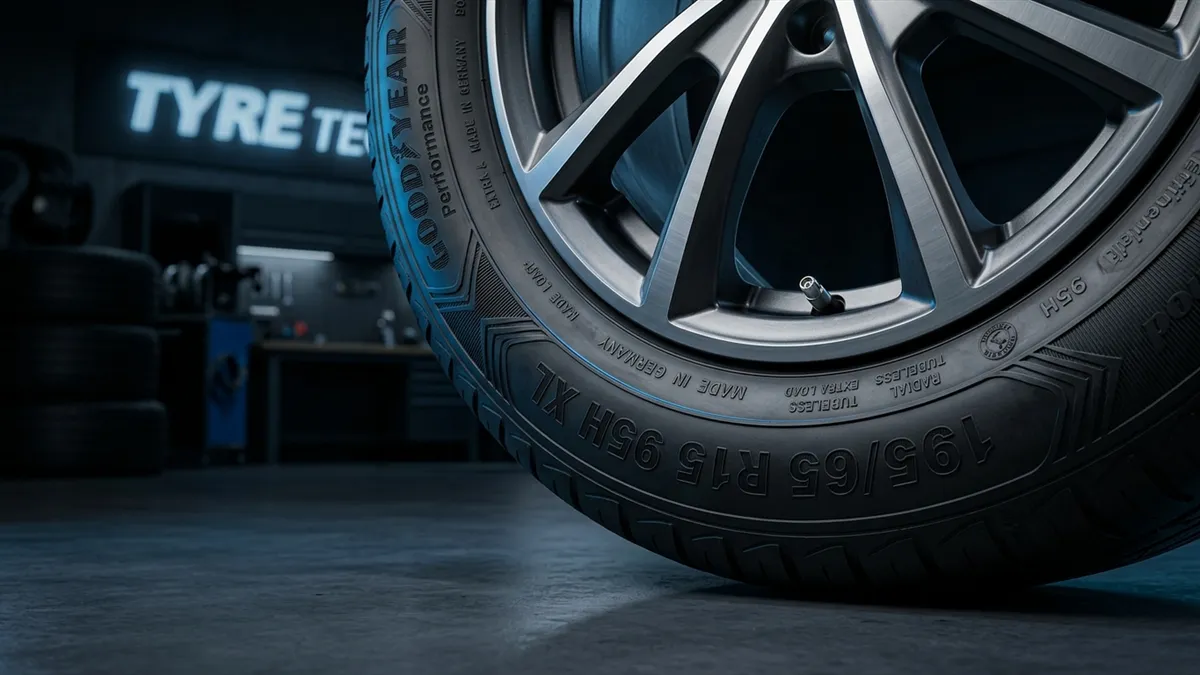
DOT Code Architecture: Deconstructing plant identification, sizing matrices, and the 4-digit date stamp.
4 Pillars of DOT Code Meaning
Confirms the tire meets strict FMVSS safety standards required for international road use.
The 2–3 character plant code identifies the exact factory, country, and curing press origin.
The last 4 digits (WWYY) provide 7-day batch precision for accurate age tracking and recall isolation.
Serves as the chronological baseline to assess natural polymer oxidation and tire shelf life.
1. Full DOT Tire Identification Number (TIN) Structure
How the full 12–13 character DOT code is organized across international manufacturers:
| Segment | Length | Function | Commercial Relevance |
|---|---|---|---|
| DOT Prefix | 3 letters | Regulatory compliance symbol | Confirms global roadworthiness |
| Plant Code | 2 or 3 chars | Identifies manufacturing factory | Essential for quality audits & tariffs |
| Size & Mold Code | 2 chars | Tire dimension & construction spec | Internal factory mold tracking |
| Brand / Option Code | 3 or 4 chars | Manufacturer internal compound code | Pinpoint recall batch isolation |
| Date Code (WWYY) | 4 digits | Week and Year of vulcanization | Determines market value & shelf life |
2. Rubber Oxidation: The Science Behind the Date
Why does the manufacturing date matter even if a tire has zero mileage on the road?
Age Hardening
Rubber continues to crosslink slowly over years, causing compound hardness to increase and reducing wet braking grip.
Protective Wax Layer
Factory waxes bloom to the surface during tire flexing. In static warehouse storage, un-flexed tires require UV and climate protection.
Casing Integrity
Aging weakens the bonding cement between steel belts and rubber plies, increasing blowout risks past 10 years of age.
Frequently Asked Questions (FAQ)
What does the acronym 'DOT' stand for on a tire?
DOT stands for the United States Department of Transportation. When stamped on a tire, it certifies that the tire complies with federal safety and performance standards (FMVSS 109/119/139).
Why is the DOT date code represented as a calendar week instead of a calendar month?
Using a 2-digit week (01 to 52) provides tire manufacturers and regulatory safety agencies with 7-day batch precision, enabling pinpoint isolation during safety recalls without recalling an entire month of global production.
What is the difference between a tire's DOT code and its ECE E-mark?
The DOT code is a US safety standard specifying manufacturing origin, dimension, and date. The ECE E-mark (e.g. E4) is the European Economic Commission standard certifying noise (sound), wet grip, and rolling resistance performance.
Does the DOT date mean a tire expires after a specific number of years?
There is no statutory expiration date stamped on tires. However, major automotive manufacturers (Mercedes-Benz, BMW, Toyota) and tire associations recommend removing any tire from service after 6 to 10 years regardless of remaining Used Tire Tread Depth: What Wholesale Buyers Should Know" class="internal-link font-semibold text-blue-600 hover:text-blue-800 hover:underline decoration-blue-300 decoration-2 underline-offset-2 transition-colors" data-inlink="true">tread depth.
How does rubber oxidize over time even if a tire is never mounted?
Atmospheric oxygen and ozone break the flexible polymer chains and sulfur crosslinks in the rubber matrix. Over time, plasticizers evaporate, causing the rubber to become brittle, hard, and prone to dry rot cracking.
Can a tire with a DOT code older than 3 years be sold as new?
Yes, under European ETRTO standards, a properly stored tire retains full chemical elasticity and is commercially considered 'factory new' for up to 3 years and can be sold as new for up to 5 years.
What happens if a wholesale buyer purchases tires with partial DOT serial numbers?
Tires often have the plant and size code stamped on one sidewall and the complete 4-digit date code on the opposite side. If a tire lacks the 4-digit date on both sidewalls, it is non-compliant and illegal for commercial sale.
How does REIFTEIL ensure transparency regarding DOT date codes?
REIFTEIL provides full batch traceability and upfront DOT disclosure on wholesale catalogs and pallet manifests, guaranteeing that all supplied PCR and TBR tires carry fresh, compliant production dates.
Final Verdict: The DOT Code Is Your Core Safety and Value Metric
Understanding DOT markings empowers dealers to make informed procurement decisions:
The Golden Summary:
- Forensic Traceability: The DOT string identifies plant origin and 7-day batch accuracy.
- Chemical Age Baseline: Natural oxidation occurs over time; always target fresh inventory.
- Partner with REIFTEIL: Guaranteed full batch traceability and fresh DOT production dates.
Source 100% Traceable Tires with REIFTEIL
Gain full peace of mind. REIFTEIL provides full batch documentation, certified ECE compliance, and fresh DOT production dates on all wholesale allocations.