You’ve likely seen the headlines about the ongoing U.S.-Iran conflict and the blockade of the Strait of Hormuz. But while the geopolitical stalemate unfolds thousands of miles away, the true impact is currently parking itself right in your driveway and hitting your business ledger.
With critical shipping lanes restricted and crude oil prices enduring extreme volatility, the global automotive supply chain is fracturing. Whether you are just trying to keep your daily commuter on the road, looking to replace balding tires, or managing a business that relies on imported goods, this is no longer just a foreign policy issue—it is an aggressive tax on your everyday logistics.
Here is exactly how this global shock is rewiring your bottom line.
Your Commute and Maintenance Costs Are Surging
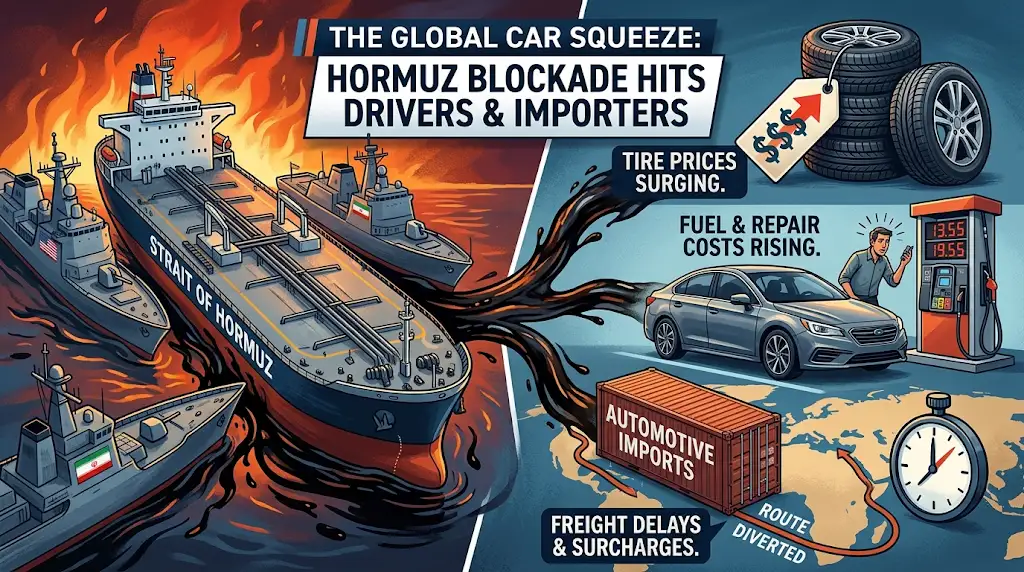
If you own a car, the most obvious pain point is the pump, where diesel prices have seen severe surges, drastically increasing the cost of moving freight globally. But the hidden toll is under your hood.
Modern vehicles are heavily dependent on petroleum-based plastics and petrochemicals. As crude oil prices ripple downstream into manufacturing, the cost of replacement parts—from simple plastic housing to complex synthetic components—is inflating.
Automakers and parts suppliers are being squeezed by these raw material costs, meaning that your next trip to the mechanic will carry a premium. Furthermore, industry analysts have warned that the global light-vehicle production forecast may drop significantly, and the shortage of parts could trigger supply chain issues rivaling the post-pandemic shortages.
The Urgent Warning for Tire Buyers
If your tread is getting low, you need to act immediately. Tires are heavily reliant on synthetic rubber and carbon black, both of which are direct petroleum derivatives. With Middle Eastern petrochemical output disrupted by infrastructure attacks and shipping delays, the supply of synthetic rubber has drastically tightened.
Tire manufacturers are scrambling, and the manufacturing costs for heavy tires have already jumped. Because this cost inflation gets passed on directly to the consumer, you are looking at retail pricing that will only climb higher in the coming months.
Waiting to buy new tires until the winter season will almost certainly mean paying a severe premium as retail inventories price in the current geopolitical risk.
The Nightmare for Importers
If your business relies on importing vehicles, parts, or general freight, the map has effectively been redrawn. The closure of the Strait of Hormuz and risks in the Red Sea have forced commercial shipping to detour around the southern tip of Africa.
For you as an importer, this creates a three-front war:
- Surcharges and Fuel Spikes: Carriers protect their margins by applying automatic fuel surcharges indexed to the current cost of diesel. You are footing the bill for the massive quantities of fuel required for these 10,000-mile detours.
- Stranded Capital: Longer transit times mean your inventory is tied up on the water for weeks longer than projected. This reduces your schedule reliability, increases lead times, and demands higher working capital just to maintain your baseline inventory.
- Insurance Premiums: Vessels navigating near high-risk zones are being hit with astronomical insurance premiums, driving up your total landed cost of goods.
How to Navigate the Squeeze
You can no longer rely on the "just-in-time" supply chain. If you are an importer, you need to lock in transparent fuel surcharge clauses, secure drayage capacity ahead of port congestion, and diversify your sourcing. If you are a consumer, accelerating your maintenance schedule—buying those tires and parts now before replacement costs adjust to the new market reality—is the most effective way to protect your wallet.
The standoff in the Middle East shows no signs of a rapid resolution, and the World Trade Organization warns that sustained high energy prices could slow global trade growth significantly. Volatility is the new baseline—prepare accordingly.