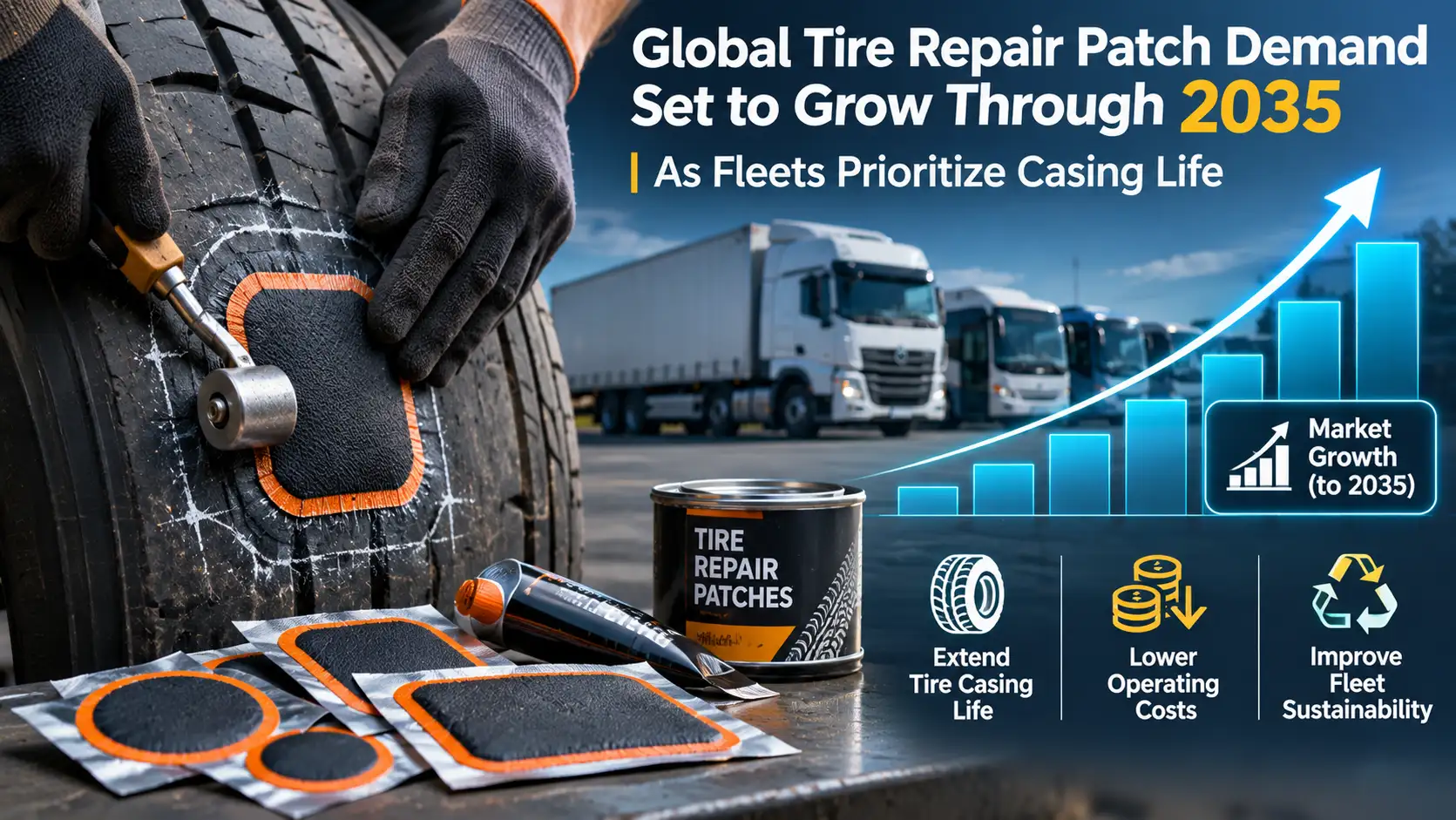
A comprehensive market assessment published on November 21 by industry analytics firm IndexBox indicates that global demand for tire repair patches and related repair consumables will grow steadily through 2035.
The expansion is primarily driven by the increasing average age of passenger cars and commercial vehicle fleets worldwide, alongside escalating replacement tire acquisition costs that force transport operators to maximize casing mileage through structural repairs and retreading.
Core Market Findings and Technical Segmentation
The IndexBox report identifies the commercial transport sector as a primary volume driver for heavy-duty radial repair units.
With new tire input costs remaining elevated due to raw material fluctuations in natural rubber, carbon black, and synthetic polymers, transport fleets are actively extending maintenance cycles. Rather than scrapping damaged casings prematurely, workshops are prioritizing certified puncture and section repairs.
Key segments highlighted in the long-term forecast include:
- Radial Repair Patches: Multi-ply, fabric-reinforced units designed to handle flex fatigue in steel-belted radial casings, particularly in high-stress sizes such as 315/80R22.5, 385/65R22.5, and 295/80R22.5.
- Combination Repair Units (Plug-Patches): Pre-molded rubber stem and patch assemblies engineered to seal the injury channel while reinforcing the innerliner, widely mandated by safety standards for crown injuries up to 8 mm to 10 mm.
- Chemical vs. Thermal Vulcanization Systems: Fast-curing chemical (cold) vulcanizing systems dominate field workshops, whereas heavy section repair patches utilized in retreading operations increasingly rely on heat-cure systems processed inside autoclaves or section molds.
REIFTEIL Technical Analysis: Commercial Fleet Implications
From an operational standpoint, REIFTEIL notes that increased reliance on tire repair patches presents both margin opportunities and structural risks for fleet maintenance directors and tire importers.
Extending casing life via patch repairs must adhere strictly to international standards, such as ECE R108/R109 regulations and industry tire and rim association guidelines.
Casing Preservation and Retreading Economics
For European and international fleet managers running long-haul operations, a premium TBR casing represents a significant capital asset intended for at least two to three retread cycles. Inadequate or improper patch installation poses severe commercial risks:
- Moisture Ingress and Belt Corrosion: Surface-only repairs or poorly sealed injury channels allow road moisture to penetrate the steel belt package, causing rapid oxidation, delamination, and sudden carcass failure.
- Sidewall and Shoulder Limitations: While crown punctures within the steel belt package are routinely repairable with radial patches, injuries to the shoulder and sidewall flex zones require rigorous casing inspection via shearography or high-pressure inflation tests to verify structural integrity before applying large reinforced section patches.
- Thermal Stability under High Axle Loads: In long-haul logistics operating under continuous high-temperature, high-load conditions, vulcanized patches must maintain shear adhesion without adhesive creep or rubber reversion.
Procurement, Chemical Compliance, and Logistics Factors
For aftermarket importers and tire consumables distributors, sourcing tire repair patches involves critical supply chain considerations beyond the physical patch itself:
- Solvent and Adhesive Logistics: Cold vulcanization patches require vulcanizing accelerators and cements containing chemical solvents (e.g., heptane or trichloroethylene blends). These products are classified under international transport regulations (ADR/IMDG) as Class 3 Flammable Liquids, incurring specialized packaging, hazardous cargo surcharges, and stricter customs clearance requirements under European REACH frameworks.
- Shelf-Life and Storage Conditions: Cushion gum and self-vulcanizing layers on repair patches are sensitive to ambient temperature and UV exposure. Distributors importing containerized repair materials must monitor warehouse storage conditions to prevent premature polymerization, which compromises bonding strength.
The market trajectory mapped by IndexBox through 2035 confirms that maintenance consumables are shifting from ancillary workshop items to strategic fleet cost-control tools.
Tyre distributors and retreaders who align procurement toward certified, reinforced radial patch systems will be best positioned to capture this expanding aftermarket volume.
